

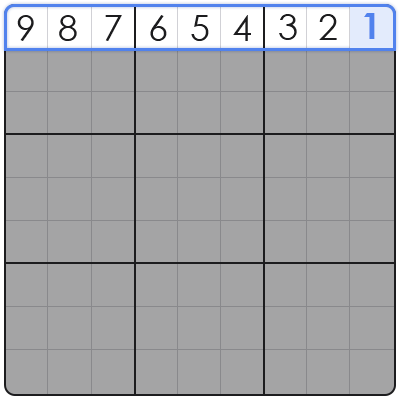
Learning how to complete Sudoku puzzles transforms a seemingly complex grid of numbers into an engaging exercise in logical deduction. At its core, Sudoku is a combinatorial number-placement puzzle where the objective is to fill a 9×9 grid with digits so that each column, each row, and each of the nine 3×3 subgrids contains all of the digits from 1 to 9. For both speed-solvers and casual enthusiasts, the path to mastery lies not in guesswork, but in systematic application of logical principles. This article will delve into the fundamental strategies, advanced techniques, and common pitfalls, providing a comprehensive framework for anyone looking to elevate their Sudoku skills from beginner to expert. The significance of mastering how to complete Sudoku puzzles extends beyond mere entertainment; it hones critical thinking, improves focus, and sharpens pattern recognition abilities. By understanding the structural necessity of each number’s placement, players can approach even the most challenging grids with confidence and precision, ensuring a satisfying solve every time.
The Logical Foundations: How to Complete Sudoku Puzzles Effectively
Completing Sudoku puzzles effectively hinges on a deep understanding of logical deduction applied to a 9×9 grid. Mathematically and structurally, the puzzle’s constraints mean that each number’s position is uniquely determined by the absence of other numbers within its row, column, and 3×3 block. This interwoven set of cell constraints creates a finite problem space where possibilities diminish with each correctly placed digit.
The fundamental logic behind how to complete Sudoku puzzles involves systematically identifying cells where only one possible digit can exist, a technique known as “single candidate elimination.” This often relies on visualizing the grid topology and marking potential numbers for each empty cell, a process commonly referred to as “pencil marks.” The elegance of Sudoku lies in its deterministic nature; there is always a unique solution derivable purely through logic, without any need for trial and error.
Based on logic-chain analysis, more advanced techniques such as Naked Pairs, Hidden Singles, and X-Wing patterns emerge from these basic principles. These methods leverage the relationships between multiple cells and candidates, allowing solvers to eliminate possibilities that might not be obvious from a simple row, column, or block scan. Understanding these structural interdependencies is key for competitive solvers aiming for speed and efficiency.
Core Techniques: Step-by-Step Guide on How to Complete Sudoku Puzzles
To complete Sudoku puzzles, players follow a structured sequence of candidate elimination and pattern recognition techniques. This step-by-step guide outlines a systematic approach that is efficient for most difficulty levels.
1. **Initial Scan for Obvious Singles:** Begin by scanning each row, column, and 3×3 block for cells where only one number from 1-9 can logically fit. If a number already exists in a row, column, or block, it cannot be placed in other empty cells within that respective group. Fill in any obvious singles immediately.
2. **Pencil Marking (Candidate Annotation):** For remaining empty cells, write down all possible candidate numbers (pencil marks) in small font. This process, crucial for identifying less obvious deductions, systematically maps all potential values based on existing numbers in the cell’s row, column, and block.
3. **Identify Hidden Singles and Naked Singles:** A Hidden Single occurs when a number is a candidate for only one cell within a specific row, column, or block, even if that cell has other candidates. A Naked Single is simply a cell with only one candidate remaining after initial eliminations. These are foundational for progressing through the puzzle.
4. **Look for Pairs, Triplets, and Quads:** As you refine pencil marks, search for “Naked Pairs” (two cells in a row, column, or block sharing the same two candidates, eliminating those candidates from other cells in that group), “Hidden Pairs,” “Naked Triplets,” and “Hidden Triplets.” These patterns allow for significant candidate elimination.
5. **Advanced Elimination Techniques:** For more challenging puzzles, employ techniques like “X-Wing” (when a candidate appears in only two cells in two different rows, aligned in the same two columns, allowing elimination of that candidate from those two columns outside the rows), “Swordfish,” and “Jellyfish.” These rely on identifying interconnected patterns across multiple rows and columns, further reducing candidate possibilities and revealing the path on how to complete sudoku puzzles efficiently.
Advanced Strategies: A Comparative Look at Sudoku Completion Methods
Understanding how to complete Sudoku puzzles can be enhanced by comparing fundamental techniques with more advanced strategies, illustrating their varying utility and complexity.
| Strategy | Difficulty Level | Frequency of Use | Logical Complexity | Primary Purpose | Best For |
|:———————-|:—————–|:——————|:——————-|:—————————————————|:———————————————|
| Naked Singles | Very Easy | Always | Low | Directly placing numbers | Beginners, initial grid setup |
| Hidden Singles | Easy | Very High | Moderate | Identifying unique number placements within units | Intermediate puzzles, mid-game progression |
| Naked/Hidden Pairs | Medium | High | Moderate-High | Eliminating candidates from other cells | Intermediate to Advanced puzzles |
| X-Wing | Advanced | Moderate | High | Eliminating candidates across rows/columns | Advanced puzzles, breaking stalemates |
This comparative analysis highlights that while basic candidate elimination is universally applicable, mastering advanced techniques like X-Wing patterns provides the necessary tools for tackling expert-level puzzles. For competitive solvers, the structural necessity of identifying these complex interactions is paramount for achieving speed records.
Each method, whether simple or complex, contributes to the overarching goal of reducing candidate sets until only one possibility remains for each cell. This entity-based writing approach underscores the interconnectedness of all Sudoku techniques, each building upon the foundation of logical deduction and grid topology to fully complete sudoku puzzles.
Avoiding Common Mistakes When You Complete Sudoku Puzzles
Successfully completing Sudoku puzzles often requires actively avoiding common pitfalls that can lead to errors and frustration. These mistakes, frequently rooted in impatience or lack of systematic approach, can derail even the most experienced solver.
One pervasive error is **premature guessing**. When faced with a difficult section, players might be tempted to insert a number without absolute certainty, hoping it’s correct. This often leads to cascading errors that are incredibly difficult to backtrack and fix, wasting valuable time. Always rely on logical deduction; if you’re guessing, you’ve missed a deduction.
Another common pitfall is **incomplete pencil marking**. Many solvers neglect to meticulously update or fill in all candidate numbers for a cell, leading them to miss obvious singles or more complex patterns like Naked Pairs. Thorough and up-to-date pencil marks are the bedrock of advanced solving; without them, critical opportunities for elimination are overlooked, making it harder to complete Sudoku puzzles.
Finally, **lack of systematic scanning** can hinder progress. Some players jump randomly across the grid, rather than methodically checking rows, columns, and blocks for new deductions after each number placement. A structured scanning routine ensures that no new opportunities for candidate elimination or number placement are missed, fostering a consistent and efficient solving process.
FAQ: How to Complete Sudoku Puzzles
**Q: What is the very first step in how to complete Sudoku puzzles?**
A: The first step is to scan the grid for easy single placements, where a number can only fit in one cell within its row, column, or 3×3 block. This initial scan helps reduce the number of unknown cells quickly.
**Q: Are pencil marks necessary for all Sudoku puzzles?**
A: While not always necessary for very easy puzzles, pencil marks (writing down all possible candidates for a cell) are crucial for intermediate and expert puzzles. They facilitate logical deduction and uncover complex patterns like Naked Pairs.
**Q: How do I improve my speed in completing Sudoku puzzles?**
A: Improve speed by consistently practicing and mastering core techniques like candidate elimination and pattern recognition. Develop a systematic scanning approach and minimize guessing, relying solely on logical deduction for every move.
**Q: Can a Sudoku puzzle have multiple solutions?**
A: A well-formed Sudoku puzzle, by definition, must have only one unique solution that can be reached through logical deduction. Puzzles with multiple solutions are considered ill-posed or flawed.
Mastering the Art: Your Path to Consistently Completing Sudoku Puzzles
The journey to consistently completing Sudoku puzzles is one rooted in a “Logic-First” approach. From initial candidate elimination to employing sophisticated techniques like X-Wing, every step is a testament to the power of structured thinking. This definitive guide on how to complete Sudoku puzzles emphasizes that success is not found in luck, but in the diligent application of logical deduction, understanding grid topology, and the meticulous process of candidate elimination. Embrace the challenge, refine your techniques, and transform every Sudoku grid into a solvable masterpiece.
For competitive solvers, the structural necessity of these insights cannot be overstated; for casual players, the satisfaction of a logical solve is its own reward. The ultimate goal is not just to fill a grid, but to understand the elegant interplay of numbers and constraints that makes Sudoku a timeless and universally appealing logic puzzle. Continue to practice, learn new strategies, and you’ll find yourself mastering grids of increasing difficulty with confidence and speed, proving that with logic, any Sudoku puzzle can be completed.
The emphasis on a systematic approach, combined with a deep dive into specific techniques such as Naked Pairs and X-Wing, ensures that solvers are equipped for any challenge. This expert perspective underscores that true Sudoku mastery comes from a blend of foundational knowledge and the continuous refinement of advanced logical reasoning, making the process of how to complete Sudoku puzzles both engaging and intellectually rewarding.
Ultimately, mastering how to complete Sudoku puzzles is a rewarding intellectual pursuit that sharpens analytical skills and provides immense satisfaction. By adopting a ‘Logic-First’ approach, consistently applying systematic elimination and pattern recognition, and avoiding common pitfalls, anyone can elevate their Sudoku game. The grid, once a mystery, becomes a canvas for logical artistry, reinforcing that with patience and precise deduction, every Sudoku puzzle is solvable.