

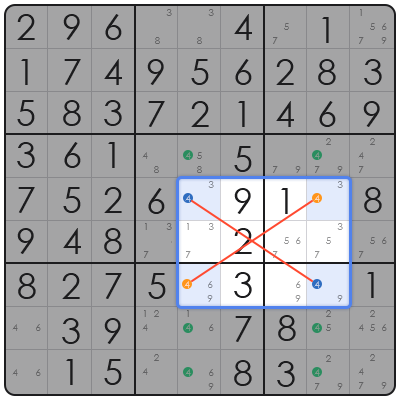
Learning how to play Sudoku game is an engaging journey into the world of pure logic, offering both a relaxing pastime and a challenging mental workout. This globally popular number placement puzzle requires no arithmetic, only astute observation and systematic logical deduction to solve its intricate 9×9 grid. The fundamental appeal of Sudoku lies in its elegant simplicity, where the objective is to fill every cell with a digit from 1 to 9, ensuring each number appears only once in each row, each column, and each of the nine 3×3 subgrids. Understanding these core “cell constraints” is the cornerstone of mastering how to play Sudoku game effectively. For both speed-solvers aiming for competitive times and casual players seeking a daily brainteaser, a structured approach to how to play Sudoku game is paramount. This article will deconstruct the essential techniques, from initial candidate identification to advanced logical steps, transforming novices into proficient solvers and enhancing the strategies of experienced enthusiasts.
Understanding the Sudoku Grid: The Core Logic Behind How to Play Sudoku Game
The core logic behind how to play Sudoku game revolves around its meticulously structured 9×9 grid, which is further subdivided into nine 3×3 smaller blocks. Each of these components—rows, columns, and blocks—must contain all digits from 1 to 9 exactly once, without repetition.
This “grid topology” dictates every move, where the placement of a single digit in one cell can cascade through multiple rows, columns, and blocks, influencing the possible candidates for numerous other cells. Based on logic-chain analysis, understanding these fundamental “cell constraints” is critical.
The beauty of the Sudoku puzzle lies in this interdependent relationship: every filled cell provides vital clues that eliminate possibilities elsewhere, narrowing down the potential digits for empty cells through systematic “candidate elimination”. This structural necessity is the bedrock of all Sudoku solving strategies.
The Step-by-Step Guide to How to Play Sudoku Game Effectively: Initial Setup and Scanning
To play Sudoku game effectively, begin with an initial scan of the puzzle to identify obvious placements, often achieved through a method known as ‘scanning for singles’. First, scan rows and columns for digits that appear frequently, then check the corresponding 3×3 blocks.
As you identify potential numbers, employ “pencil marks” – tiny digits written in the corners of empty cells representing all possible candidates. For competitive solvers, this initial candidate mapping is an indispensable step, establishing a visual database of possibilities within each cell.
Once pencil marks are applied, look for ‘naked singles’ (a cell with only one candidate) or ‘hidden singles’ (a digit that can only go in one specific cell within a row, column, or block). Consistently identifying and eliminating these obvious numbers forms the foundational layer of how to play Sudoku game.
Advanced Logical Deduction: Elevating Your How to Play Sudoku Game Strategy
Elevating your how to play Sudoku game strategy involves mastering advanced “logical deduction” techniques that go beyond simple singles. These methods focus on patterns within candidates to eliminate numbers from multiple cells simultaneously.
Techniques like “Naked Pairs” or “Naked Triples” identify two or three cells in a row, column, or block that share an identical set of two or three candidates, respectively, and no other digits. If these candidates only exist in those specific cells, those numbers can be eliminated from all other cells in that scope.
Further advanced strategies, such as “X-Wing” or “Swordfish,” exploit specific geometric patterns of a candidate across multiple rows and columns to achieve significant “candidate elimination.” These require a keen understanding of “grid topology” and a systematic approach to candidate tracking, crucial for complex puzzles.
Comparative Analysis of Sudoku Techniques Essential for How to Play Sudoku Game
To better understand how to play Sudoku game, it’s beneficial to compare various techniques by their utility and complexity. Here’s a comparative analysis highlighting key aspects of common Sudoku strategies: Basic Candidate Elimination is fundamental, high frequency, and low logical complexity. Naked Pairs/Triples offer intermediate difficulty, medium frequency, and moderate logical complexity. X-Wing/Swordfish are advanced, low frequency (in basic puzzles), and high logical complexity, demanding deep grid analysis.
The choice of technique often depends on the puzzle’s difficulty and the solver’s experience level, but a comprehensive understanding of all helps in how to play Sudoku game more effectively.
Based on logic-chain analysis, integrating a range of techniques ensures you are prepared for puzzles of varying complexities.
Common Pitfalls When Learning How to Play Sudoku Game and How to Avoid Them
One of the most common pitfalls when learning how to play Sudoku game is premature guessing, which often leads to unsolvable states and frustration. Always rely on “logical deduction”; if you can’t logically place a number, seek more clues or apply further candidate elimination techniques before guessing.
Another frequent mistake is maintaining incomplete “pencil marks” or failing to update them after placing a number. For competitive solvers, diligently updating all candidate lists is non-negotiable, as missing eliminations can hide crucial next steps.
Overlooking “cell constraints” within all three scopes (row, column, and block) simultaneously is a third pitfall. Many players check only two constraints. A truly expert approach to how to play Sudoku game demands a holistic view of the 9×9 grid, ensuring no logical opportunity is missed.
Frequently Asked Questions About How to Play Sudoku Game
Q: What is the primary objective of how to play Sudoku game? A: The main goal is to fill a 9×9 grid so that each row, column, and 3×3 block contains all digits from 1 to 9 exactly once.
Q: Is mathematical calculation required to play Sudoku? A: No, how to play Sudoku game requires no mathematical calculation, only logical deduction, pattern recognition, and systematic “candidate elimination.”
Q: What are ‘pencil marks’ and why are they important? A: ‘Pencil marks’ are small numbers written in a cell to denote all possible candidates. They are vital for tracking possibilities and applying “logical deduction” effectively.
Q: How do I improve my speed in how to play Sudoku game? A: Improve speed by practicing consistently, mastering “candidate elimination” techniques, and developing efficient scanning habits for “grid topology” and “cell constraints.”
Q: Are there different difficulty levels for Sudoku? A: Yes, Sudoku puzzles vary in difficulty based on the number of initial clues and the complexity of “logical deduction” required to solve them.
Ultimately, mastering how to play Sudoku game is a testament to the power of a “Logic-First” approach, where systematic observation and rigorous deduction replace trial and error. By embracing “pencil marks,” understanding “grid topology,” and applying precise “candidate elimination” techniques, any player can enhance their solving prowess. The continuous refinement of these skills not only leads to more successful solves but also sharpens cognitive abilities, making Sudoku a truly rewarding intellectual pursuit.