

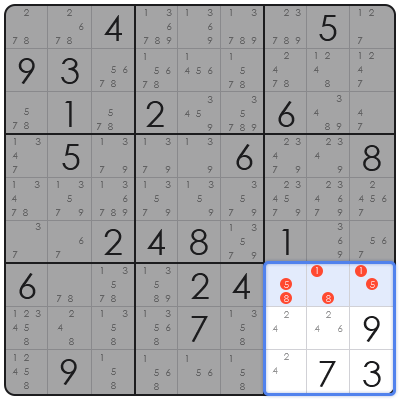
How to solve Sudoku puzzles involves employing logical deduction and pattern recognition to fill a 9×9 grid with digits 1 through 9, ensuring each number appears only once in each row, column, and 3×3 subgrid. This popular logic puzzle transcends mere number placement; it is a test of structured thinking and systematic elimination, offering mental agility benefits for all ages. For speed-solvers, mastery is paramount for competitive edge; for casual players, satisfaction comes from the structured challenge and gradual progress. The journey from novice to proficient solver hinges on understanding fundamental rules and progressing to advanced strategies. This article will demystify core mechanics, elucidate powerful techniques, and guide you through the intricacies of how to solve Sudoku puzzles effectively, transforming a daunting grid into an enjoyable mental exercise.
Understanding the Core Logic of How to Solve Sudoku Puzzles
How to solve Sudoku puzzles fundamentally relies on unique placement within constrained topological structures: rows, columns, and 3×3 blocks. Each of these nine units must contain every digit from 1 to 9 exactly once, establishing mutually exclusive possibilities across the 81-cell grid.
Based on logic-chain analysis, initial given numbers create fixed cell constraints. These propagate, eliminating candidates for adjacent cells within the same row, column, or block. This initial phase, often called scanning or cross-hatching, identifies direct placements where only one possible number remains for a cell, or where a number fits in only one cell within a unit.
The structural necessity of these rules means every cell’s value is ultimately predetermined. Expert solvers apply logical deduction to identify “hidden” or “naked” subsets of candidates. For instance, if two cells in a unit can only be ‘2’ or ‘5’, they form a naked pair, eliminating ‘2’ and ‘5’ from other cells in that unit. This elegant interplay of elimination and inference is central to advanced strategies.
A Step-by-Step Guide to How to Solve Sudoku Puzzles
To effectively learn how to solve Sudoku puzzles, begin with a systematic approach combining scanning, candidate marking, and pattern identification. The process starts by thoroughly analyzing given numbers for immediate, obvious placements.
**Step 1: Single Candidate Identification (Cross-Hatching).** Scan each row, column, and 3×3 block for cells where only one number can be placed. Use existing numbers to deduce the sole remaining digit for an empty cell. For instance, if a column needs a ‘7’ and other cells preclude it, the remaining cell must be ‘7’. Repeat grid-wide until no more direct placements are possible.
**Step 2: Pencil Marks (Candidate Elimination).** For cells without immediate solutions, note all possible candidate numbers. For each empty cell, list digits (1-9) not present in its row, column, or 3×3 block. This systematic approach, leveraging cell constraints, is crucial for tracking potentials and forms the bedrock for advanced logical deduction.
**Step 3: Hidden and Naked Singles/Pairs/Triples.** Continuously re-evaluate the grid after each number placement. A “naked single” means only one candidate remains in a cell. A “hidden single” is when a candidate number appears in only one cell within a unit. Extend this to “naked pairs” (two cells in a unit with two identical candidates) and “hidden pairs” (two candidates appearing only in two specific cells within a unit). These patterns allow significant candidate elimination.
**Step 4: Advanced Techniques (X-Wing, Swordfish).** For challenging puzzles, understanding how to solve Sudoku puzzles necessitates advanced entity-based strategies like the X-Wing. An X-Wing identifies a candidate number aligning across two rows and two columns, permitting elimination from other cells in those columns. Techniques like Swordfish extend this logic for more complex candidate eliminations based on grid topology.
Comparing ‘How to Solve Sudoku Puzzles’ with Advanced Sudoku Strategies
While the foundational principles of how to solve Sudoku puzzles involve basic logical deduction, their application builds towards more complex, entity-based strategies such as Naked Pairs, Hidden Triples, and X-Wings. Each technique serves to eliminate candidates and reveal definitive digits.
The core “how to solve Sudoku puzzles” methodology, encompassing scanning and pencil marking, forms the base logical complexity, used with high frequency in nearly all puzzles for identifying singles. Naked Pairs (two cells in a unit with only two identical candidates) escalate logical complexity, requiring deeper relationship scans but are frequently used in medium-to-hard puzzles for candidate elimination.
Further up the difficulty scale are methods like the X-Wing, which leverages grid topology. An X-Wing identifies a candidate number aligned across two rows and two columns, permitting elimination from other cells in those columns. This technique has a lower frequency of use, appearing in harder puzzles, and demands significantly higher logical complexity and pattern recognition. Mastery evolves from obvious fills to systematically applying these layered deduction methods.
Common Pitfalls When Learning How to Solve Sudoku Puzzles
When attempting to understand how to solve Sudoku puzzles, players often encounter several common mistakes that hinder progress or lead to incorrect solutions. Recognizing and avoiding these pitfalls is crucial for developing proficiency and maintaining accuracy.
A primary pitfall is the failure to systematically manage candidate elimination. Many solvers neglect pencil marks or don’t update them meticulously after each number placement. This oversight makes identifying hidden singles or advanced patterns nearly impossible, leading to reliance on guesswork. Consistently updating pencil marks is non-negotiable for robust solving.
Another frequent error is overlooking the ‘block’ constraint. While rows and columns are intuitive, players sometimes forget to cross-reference numbers within the 3×3 subgrids when making deductions, leading to false positives or missed elimination opportunities. For competitive solvers, ensuring comprehensive checks across all three dimensions—row, column, and block—is paramount.
Finally, impatience and jumping to conclusions can derail progress. Rushing to fill a cell without thorough validation against all three constraints (row, column, block) is a recipe for error. A single incorrect number can cascade into multiple incorrect deductions, making the puzzle unsolvable. The structural necessity of careful, deliberate verification cannot be overstated.
Frequently Asked Questions About How to Solve Sudoku Puzzles
**Q: What is the very first step in how to solve Sudoku puzzles?** A: The first step is “cross-hatching” or scanning. Identify obvious placements where a number can only fit in one cell within a row, column, or 3×3 block based on existing numbers.
**Q: Should I use pencil marks for how to solve Sudoku puzzles?** A: Yes, unequivocally. Pencil marks are essential for tracking candidate numbers in each cell, enabling logical deduction for advanced techniques like Naked Pairs and Hidden Singles, and preventing errors.
**Q: How can I improve my speed in how to solve Sudoku puzzles?** A: Consistent practice and mastery of fundamental techniques are key. Focus on systematic scanning, efficient pencil marking, and learning to spot patterns like Naked and Hidden Singles/Pairs quickly.
**Q: What are common advanced techniques for how to solve Sudoku puzzles?** A: Beyond basic elimination, advanced techniques include Naked/Hidden Pairs/Triples, X-Wing, Swordfish, and chaining methods. These rely on complex candidate elimination and grid topology analysis.
**Q: Is Sudoku purely logical or does it involve math?** A: Sudoku is purely a logic puzzle, not a mathematical one. It requires logical deduction, pattern recognition, and systematic elimination, rather than arithmetic calculations.
Ultimately, mastering how to solve Sudoku puzzles is a rewarding journey rooted in a “Logic-First” approach. By systematically applying fundamental rules, embracing the power of candidate elimination through pencil marks, and progressively learning advanced entity-based strategies, any player can transform from a novice to an expert. The satisfaction of unraveling a complex grid, driven purely by logical deduction and the elegant interplay of cell constraints, solidifies Sudoku’s place as a timeless mental challenge.