

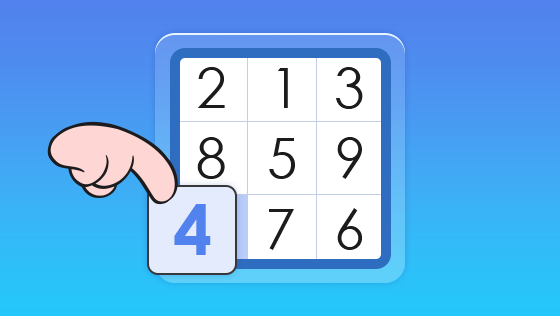
3D Sudoku represents an advanced evolution of the classic number puzzle, fundamentally challenging spatial reasoning and logical deduction by extending the grid into three dimensions. From a framework perspective, it significantly elevates cognitive demand, requiring solvers to manage interconnected planes and volumetric constraints simultaneously. This expanded complexity redefines pattern recognition and systematic elimination, pushing traditional puzzle-solving boundaries. In practical application, 3D Sudoku addresses the demand from experienced 2D Sudoku solvers for greater intellectual stimulation. The conventional 9×9 grid eventually becomes predictable. 3D Sudoku introduces a novel constraint system preventing rote memorization, compelling solvers to develop adaptive strategies and a nuanced understanding of inter-grid dependencies, ensuring a rigorous mental experience. Based on structural analysis, solving 3D Sudoku integrates classic techniques with sophisticated spatial visualization. It demands understanding how numbers interact across layers and within shared volumetric blocks. Success hinges on systematic possibility reduction, meticulous candidate tracking, and multi-dimensional information cross-referencing. This article deconstructs these strategies, offering a professional roadmap to conquer this intricate puzzle.
Technical and Structural Breakdown of 3D Sudoku
The technical breakdown of 3D Sudoku reveals an intricate, multi-layered logical system extending 2D rules into a volumetric space. Typically, it comprises multiple 9×9 grids stacked as a cube, where each plane functions as a conventional Sudoku. Its defining feature is additional 3D constraints: numbers must be unique along columns piercing layers and within shared “blocks” spanning across them, creating complex dependencies.
From a framework perspective, 3D Sudoku designs often involve three “views” (e.g., top-to-bottom, front-to-back, left-to-right layers). Each 9×9 view independently satisfies classic Sudoku rules. Crucially, 3x3x3 volumetric blocks further complicate the system. A number placed in one cell impacts multiple rows, columns, and 3×3 blocks across different dimensions simultaneously, demanding holistic candidate elimination.
The underlying logic derives from combinatorial mathematics and constraint satisfaction. Unlike 2D Sudoku’s planar constraints, 3D introduces volumetric ones. A number at (x,y,z) affects its current Z-plane’s row, column, and 3×3 block, plus the z-column through all X-Y planes at (x,y), and potentially 3x3x3 blocks. This simultaneous multi-axis impact defines its elevated difficulty and need for advanced visualization.
Step-by-Step Implementation of Solving Strategies
Implementing effective strategies to solve a 3D Sudoku puzzle requires a systematic, multi-dimensional approach, integrating familiar 2D techniques with enhanced spatial reasoning. Understanding the specific grid representation (flattened or interactive 3D) is an initial step, influencing how you visualize and track candidates across layers.
1. Layer-by-Layer Simplification: Begin by treating each individual 9×9 layer as a separate 2D Sudoku. Apply fundamental 2D techniques (single candidate, hidden single, naked pairs) within each layer to fill obvious numbers. This initial phase establishes a foundational understanding of each layer’s internal state. Use systematic notation, marking all possible candidate numbers.
2. Cross-Layer Constraint Application: Next, apply 3D-specific rules by analyzing columns and blocks spanning across planes. Identify “vertical” columns penetrating all layers at the same (x,y) coordinates; each must contain digits 1-9 once. Similarly, analyze 3x3x3 volumetric blocks. This cross-referencing enables powerful eliminations, as a number’s presence in one cell impacts its corresponding positions in other dimensions.
3. Advanced Deduction and Visualization: As the puzzle progresses, advanced techniques requiring strong spatial visualization become necessary. Look for “X-Wing” or “Swordfish” patterns extending across layers. Mentally projecting numbers onto empty cells across dimensions can reveal conflicts or forced placements. Based on structural analysis, tracking numbers via consistent notation or digital tools aids visualization. When stuck, “forcing chains” can break stalemates, but apply judiciously with backtracking.
Comparative Analysis: 3D Sudoku vs. Related Logic Puzzles
A comparative analysis against related logic puzzles like 2D Sudoku and Samurai Sudoku highlights 3D Sudoku’s unique position in complexity, cognitive load, and solution space. While all are number-placement puzzles, 3D Sudoku redefines the problem by introducing a third dimension of interconnected constraints, distinguishing it from purely planar or multiply linked 2D grids.
From a framework perspective, understanding these differences is crucial for appreciating 3D Sudoku’s heightened analytical demands. The following table outlines key distinctions.
| Feature | 2D Sudoku (Standard 9×9) | Samurai Sudoku (Multi-Grid 2D) | 3D Sudoku (Layered 9x9xN) | | :— | :— | :— | :— | | **Complexity** | Low to Medium | Medium to High (due to overlapping grids) | High to Very High (due to volumetric constraints) | | **Efficiency of Solving** | High (well-established algorithms, quick candidate reduction) | Moderate (requires careful propagation across linked grids, slower) | Low (demands extensive cross-referencing, multi-planar visualization, significant mental overhead) | | **Cognitive Load** | Focus on pattern recognition within a single plane | Focus on managing dependencies between linked, planar grids | Focus on simultaneous multi-planar and volumetric constraint satisfaction; requires strong spatial reasoning | | **Solution Space** | 9×9 grid, 3 primary constraint types (row, col, block) | Multiple 9×9 grids with shared 3×3 blocks as linking points | Multiple 9×9 layers with vertical columns and 3x3x3 blocks as additional constraints |
Common Pitfalls and Professional Solutions in 3D Sudoku
Navigating 3D Sudoku often presents specific pitfalls, primarily stemming from underestimating volumetric constraints and insufficient systematic tracking. Professional solvers employ targeted strategies to mitigate these, transforming potential roadblocks into solvable elements.
Pitfall 1: Overlooking Cross-Layer Constraints. Treating 9×9 layers independently too long, ignoring vertical column and 3x3x3 block rules, leads to errors. Professional Solution: Cultivate a “volumetric mindset” from the outset. After initial single-layer passes, immediately integrate cross-layer checks. For every number, mentally sweep all three dimensions it impacts: its current row/column/block, its vertical column across layers, and its 3x3x3 block. Consistent multi-dimensional candidate removal is paramount.
Pitfall 2: Inefficient Candidate Tracking and Visualization. The number of cells and intersecting constraints makes manual tracking error-prone, especially across layers. Professional Solution: Implement a robust notation system. Use small pencil marks for all candidates, highlight “locked” numbers for physical puzzles. Leverage digital system features. For complexity, use grid coloring or temporary assumption trees to visualize choice impact before committing.
Pitfall 3: Premature Guessing Without Sufficient Deduction. Faced with apparent stalemates, novice 3D Sudoku solvers might resort to guessing. Professional Solution: True stalemates in well-formed Sudoku are rare. Instead of guessing, meticulously revisit previous steps for missed interactions or hidden patterns. Focus on advanced deduction like X-Wings or forcing chains spanning multiple layers. Patience and persistent logical deduction are far more effective than arbitrary guesses.
Frequently Asked Questions (FAQ) about 3D Sudoku
This section addresses frequently asked questions about how to solve a 3D Sudoku puzzle, providing concise, actionable insights for both new and experienced solvers aiming for “Position Zero” eligibility.
Q: What is the fundamental difference between 2D and 3D Sudoku rules? A: 3D Sudoku extends 2D rules by adding a third dimension. Beyond rows, columns, and 3×3 blocks on each plane, numbers must also be unique in “vertical” columns spanning layers and within 3x3x3 volumetric blocks, creating interconnected constraints across all dimensions.
Q: How do I effectively start solving a 3D Sudoku puzzle? A: Begin by treating each individual 9×9 layer as a separate 2D puzzle to apply basic elimination techniques. Once initial numbers are placed, systematically integrate cross-layer rules by checking vertical columns and 3x3x3 blocks to identify additional candidate eliminations.
Q: What are the best visualization techniques for 3D Sudoku? A: Mentally “rotating” the puzzle to view it from different axes (top, front, side) is crucial. Use consistent notation, like small pencil marks for candidates, and consider color-coding for specific numbers or potential conflicts to visually track their impact across layers.
Q: Is 3D Sudoku significantly harder than other advanced Sudoku variants? A: Yes, 3D Sudoku is generally considered significantly harder than most 2D variants due to its exponential increase in interconnected constraints and the demand for superior spatial reasoning. It requires a more complex mental model and meticulous cross-referencing.
Q: Can 2D Sudoku strategies be applied directly to 3D puzzles? A: Basic 2D strategies (single candidates, hidden singles) are foundational and applicable within individual layers. However, they are insufficient on their own. Advanced 3D solving necessitates integrating these with strategies that specifically address the unique volumetric and inter-layer constraints.
In summary, mastering how to solve a 3D Sudoku puzzle is a profound journey into advanced analytical reasoning, spatial visualization, and systematic problem-solving, transcending two-dimensional logic. Its strategic value lies in honing cognitive flexibility, meticulous attention to detail, and multi-dimensional thinking—skills highly transferable to complex real-world scenarios. From a framework perspective, 3D Sudoku represents the vanguard of logical challenges. The principles embedded in solving these intricate grids—decomposition, identification of interdependencies, and systematic elimination—will remain invaluable for professionals navigating interconnected data landscapes and multi-faceted problem domains.