

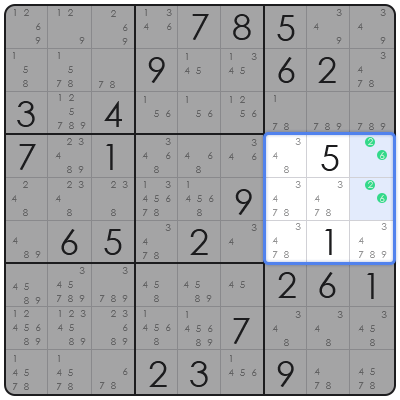
How do we play Sudoku? Sudoku is a ubiquitous logic-based, combinatoric number-placement puzzle, fundamentally challenging individuals to complete a 9×9 grid with digits 1 through 9. This seemingly simple objective underpins a rich tapestry of deductive reasoning, pattern recognition, and systematic problem-solving strategies, making it a cornerstone in cognitive exercise and analytical skill development across various fields. The significance of engaging with Sudoku extends beyond mere pastime; it serves as a practical simulator for mental agility, demanding acute focus and strategic foresight. From a framework perspective, successfully navigating a Sudoku puzzle hones critical thinking by requiring players to evaluate multiple possibilities, eliminate incorrect paths, and logically deduce the singular correct placement for each digit. In the current landscape, where data analysis and precise decision-making are paramount, the primary problem Sudoku solves is the cultivation of structured analytical thought. It offers an accessible, low-stakes environment to practice complex reasoning, enhancing one’s ability to approach intricate challenges with methodical precision and an iterative refinement process, mirroring professional problem-solving methodologies.
The Fundamental Mechanics of Sudoku Play
The fundamental mechanics of Sudoku play revolve around a 9×9 grid, which is further subdivided into nine 3×3 subgrids, where the core objective is to place digits 1 through 9 such that each digit appears exactly once in each row, each column, and each 3×3 subgrid. Players begin with a partially filled grid, where certain numbers are pre-populated, serving as the immutable starting points for all subsequent deductions.
Based on structural analysis, the grid’s design enforces three cardinal rules: Row Uniqueness, Column Uniqueness, and Block Uniqueness. These interlinked constraints create a highly interdependent system where every digit placement has ripple effects across multiple dimensions of the puzzle. Understanding these foundational rules is paramount, as all advanced strategies derive from the systematic application of these basic principles.
In practical application, the initial phase involves visually scanning the grid for immediate, obvious placements. This includes identifying ‘naked singles’—cells where only one possible digit can be placed due to existing numbers in its row, column, and block—and ‘hidden singles’—cells where a specific digit can only be placed in that one cell within its row, column, or block, despite other candidates existing for that cell. This systematic observation forms the bedrock of efficient puzzle resolution.
Systematic Approaches to Solving Sudoku Puzzles
Systematic approaches to solving Sudoku puzzles involve a series of logical steps, progressing from basic candidate elimination to more complex pattern recognition, enabling players to progressively fill the grid. The initial step, often termed ‘scanning,’ is crucial for uncovering readily apparent solutions and establishing a robust foundation for deeper analysis.
A key strategy in practical application is ‘pencil marking’ or ‘candidate tracking,’ where all possible digits for each empty cell are lightly noted. This externalizes the internal deductive process, allowing for easier identification of constraints and potential solutions. As digits are placed, candidates in affected rows, columns, and blocks are meticulously erased, narrowing down possibilities and frequently revealing new singles.
Furthering this, techniques like ‘cross-hatching’ involve systematically checking rows and columns for the placement of specific numbers within a 3×3 block. This often leads to identifying ‘locked candidates’ (a digit restricted to a specific row or column within a block) or ‘naked pairs/triples’ (two or three cells in a row, column, or block that share the same two or three candidates, respectively, thereby eliminating those candidates from other cells in that same unit). These techniques accelerate the elimination process and expose more complex interdependencies.
Advanced Deductive Techniques for Complex Grids
Advanced deductive techniques for complex Sudoku grids extend beyond basic candidate elimination, utilizing sophisticated pattern recognition to resolve situations where simple deductions are insufficient. These strategies are essential for expert-level puzzles and involve identifying specific geometric arrangements of candidates that reveal hidden constraints.
From a framework perspective, the ‘X-Wing’ is a foundational advanced technique. An X-Wing exists when a specific candidate number appears in exactly two cells in two different rows, and these cells form a rectangle. If these candidates are also in the same two columns, then that candidate can be eliminated from all other cells in those two columns. This principle can be extended to ‘Swordfish’ and ‘Jellyfish,’ involving three or four rows/columns respectively, significantly reducing the candidate pool.
In practical application, ‘Chaining’ techniques, such as the ‘XY-Wing’ or ‘Forcing Chains,’ represent even higher-order deductions. An XY-Wing involves three cells (a pivot and two pincer cells) where the pivot shares one candidate with each pincer. If the pivot has candidates (A, B), one pincer has (A, C) and the other has (B, C), then any cell that ‘sees’ both pincer cells can have candidate C eliminated. These strategies demand a meticulous understanding of conditional logic and the ability to visualize complex interconnected possibilities across the grid, allowing solvers to break through seemingly impassable stalemates.
Comparative Analysis: Sudoku Against Other Logic Puzzles
Comparing how do we play Sudoku against other logic puzzles reveals distinct characteristics in terms of complexity, strategic depth, and time investment. While all logic puzzles challenge cognitive abilities, their underlying mechanisms and required skill sets often diverge, appealing to different facets of problem-solving.
From a framework perspective, if we consider puzzles like Kakuro (Cross Sums) or Hitori, Sudoku generally offers a more streamlined rule set, focusing exclusively on number placement and uniqueness constraints without arithmetic operations or cell elimination rules. Kakuro, for instance, adds an arithmetic dimension, requiring sums within defined regions, which introduces an additional layer of calculation complexity beyond pure deduction. Hitori, on the other hand, involves shading cells to eliminate duplicates and ensure connectivity, introducing spatial reasoning and pathfinding elements not present in Sudoku.
In practical application, the strategic depth of Sudoku often lies in the sheer number of interdependent possibilities and the elegance of its advanced deductive chains, demanding a high degree of patience and methodical application. Compared to the often quicker, localized deductions in simpler puzzles, a complex Sudoku can require significant time investment, sometimes hours, due to the need for extensive candidate tracking and the identification of subtle patterns across the entire grid. While all these puzzles enhance logical thinking, Sudoku’s unique blend of simplicity in rules and profound depth in strategy makes it a distinctive and highly valued exercise in pure logical deduction.
Overcoming Common Obstacles in Sudoku Solving
Overcoming common obstacles in Sudoku solving requires identifying frequent pitfalls and systematically applying professional advice to mitigate them, transforming frustration into methodical progress. Many players encounter periods of stagnation or make errors that lead to unresolvable grids.
A prevalent mistake, based on structural analysis, is the failure to consistently update candidate lists or making premature guesses without sufficient logical backing. This often leads to ‘painting oneself into a corner’—reaching a point where a cell has no valid candidates or a number must be placed twice in a unit. The solution lies in rigorous candidate tracking through pencil marks, ensuring that every elimination or placement is accurately reflected across the entire grid. Regularly reviewing the grid for overlooked singles or simple pairs after each major placement can prevent these cumulative errors.
Another common obstacle is ‘tunnel vision,’ where players focus too intently on a single area of the grid, missing opportunities for deductions elsewhere. Professional advice emphasizes stepping back and systematically scanning the entire grid, rather than getting fixated on one row, column, or block. Furthermore, taking short breaks when stuck can provide a fresh perspective, allowing the brain to reset and often revealing previously unseen patterns or relationships. From a framework perspective, a systematic, iterative review process, rather than a linear charge, is crucial for sustained progress.
Frequently Asked Questions on Sudoku Play
Q: What is the primary goal when you play Sudoku? A: The primary goal is to fill a 9×9 grid so that each row, column, and 3×3 subgrid contains all digits from 1 to 9, without repetition.
Q: Are there different difficulty levels in Sudoku, and how do they differ? A: Yes, difficulty levels range from ‘Easy’ to ‘Evil’. They differ by the number of pre-filled cells and the complexity of the deductions required to solve them.
Q: What is a common mistake beginners make when playing Sudoku? A: A common mistake is not using ‘pencil marks’ (notation for possible candidates) or making unsupported guesses, which often leads to errors later in the puzzle.
Q: How does playing Sudoku benefit cognitive skills? A: Playing Sudoku significantly enhances logical reasoning, critical thinking, pattern recognition, and sustained concentration, which are valuable cognitive assets.
Q: Is there always only one solution to a properly constructed Sudoku puzzle? A: Yes, for a ‘well-posed’ Sudoku puzzle, there is indeed only one unique solution, a testament to its elegant mathematical foundation.
In conclusion, understanding how do we play Sudoku transcends mere recreational engagement; it represents a profound exercise in applied logic and systematic problem-solving, offering transferable skills relevant across various analytical domains. The iterative process of candidate elimination, pattern recognition, and advanced deductive reasoning cultivates a disciplined approach to complex challenges. The long-term strategic value of regularly engaging with Sudoku lies in its ability to continually sharpen cognitive faculties, fostering mental agility and resilience. Forward-looking industry insight suggests that the principles honed through Sudoku—precision, patience, and methodical analysis—remain evergreen assets in an increasingly data-driven world, reinforcing its role as a timeless intellectual pursuit.