

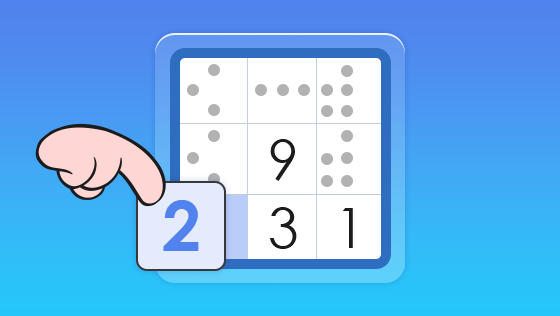
Within the realm of Puzzle Solving and Logic Games, understanding how to do 5 star sudoku signifies an elevated proficiency in strategic thinking and pattern recognition. This highest difficulty tier of Sudoku transcends mere number placement, demanding a rigorous application of advanced logical deductions to unravel its intricate grids. It represents the pinnacle challenge for enthusiasts seeking to refine their cognitive prowess and systematic problem-solving skills. Five-star Sudoku puzzles are meticulously designed to resist simpler techniques, often featuring sparse initial clues that necessitate multi-layered inferential leaps. The core problem it solves for experienced players is the stagnation that can come from easily conquerable puzzles; it offers a fresh, demanding landscape where conventional wisdom often falls short. Based on structural analysis, these puzzles are not just harder, but fundamentally different in their solve path, requiring a mastery of underlying logical frameworks. From a framework perspective, approaching 5-star Sudoku requires shifting from an additive number-finding mindset to a subtractive, candidate-elimination methodology. This article will deconstruct the sophisticated techniques and strategic foresight essential for consistently conquering these formidable puzzles, equipping solvers with the mental toolkit required for true mastery. We will delve into the specific mechanics that differentiate these puzzles and provide a roadmap for successful engagement.
Deconstructing 5-Star Sudoku: The Underlying Logic and Advanced Mechanics
Understanding how to do 5 star sudoku begins with appreciating its distinct logical architecture compared to easier variants. While the fundamental rules of Sudoku remain constant (each row, column, and 3×3 block must contain digits 1-9 exactly once), 5-star puzzles are engineered with minimal initial givens, forcing reliance on complex interconnected deductions. This necessitates moving beyond simple ‘naked single’ or ‘hidden single’ identifications.
The core mechanics of 5-star Sudoku revolve around sophisticated candidate elimination techniques. This includes methodologies such as ‘naked pairs,’ ‘hidden pairs,’ ‘naked triplets,’ and ‘hidden triplets,’ which involve identifying groups of two or three cells within a row, column, or block that can only contain a specific set of numbers, thereby eliminating those numbers as candidates from other cells in that same unit. Based on structural analysis, these foundational advanced techniques are crucial entry points into the puzzle’s deeper layers.
Beyond these, solvers must master pattern-based eliminations like ‘X-Wing,’ ‘Swordfish,’ and ‘Jellyfish.’ An X-Wing, for instance, occurs when two rows (or columns) have candidate numbers in only two common columns (or rows), allowing for elimination of that candidate from other cells in those common columns (or rows). These patterns are not immediately obvious and demand a systematic scan of the entire grid, often across multiple units, to identify their presence and leverage their power for significant candidate reduction. From a framework perspective, these are the ‘big moves’ that unlock large portions of a stubborn grid.
Strategic Execution: A Step-by-Step Guide to Cracking 5-Star Sudoku
Successfully engaging with how to do 5 star sudoku requires a disciplined, multi-stage approach, moving from global scans to targeted, complex deductions. In practical application, the first step involves a comprehensive initial scan of the entire grid to identify any immediate ‘naked singles’ or ‘hidden singles.’ This involves meticulously marking all possible candidates (pencil marks) in every empty cell, as this comprehensive candidate list is the bedrock for all subsequent advanced strategies.
Once initial singles are exhausted, the next phase focuses on identifying ‘naked pairs/triplets’ and ‘hidden pairs/triplets’ within rows, columns, and 3×3 blocks. This requires a careful examination of candidate lists: if two cells in a unit only share two common candidates, those candidates can be eliminated from other cells in that unit. This process of systematic candidate reduction is iterative and must be applied consistently across the entire grid.
The third critical step involves deploying ‘X-Wing’ and ‘Swordfish’ patterns. This demands looking for candidates that align in specific geometric configurations across multiple rows and columns. For instance, if the number ‘7’ only appears as a candidate in two cells in Row A, and those same two columns are the *only* places ‘7’ appears as a candidate in Row B, then ‘7’ can be eliminated from all other cells in those two columns. This sophisticated pattern recognition is paramount for making progress in heavily constrained puzzles. Subsequently, exploring ‘XY-Wing’ and ‘forcing chains’ becomes essential, where a ‘what if’ analysis of interconnected candidates can lead to powerful eliminations.
Advanced Techniques: Leveraging Complex Patterns for Breakthroughs
Mastering how to do 5 star sudoku inherently involves a deeper dive into advanced techniques that go beyond simple candidate groupings. These strategies often involve ‘Chains’ and ‘Loops,’ such as ‘Alternating Inference Chains (AIC).’ An AIC involves a sequence of deductions where the truth of one candidate implies the falsehood of another, which in turn implies the truth of a third, and so on, eventually leading to a definitive conclusion or elimination. Based on structural analysis, these chains can span multiple cells, rows, columns, and blocks, demanding exceptional mental agility.
Another powerful category includes ‘Nishio forcing chains’ and ‘Sudoku cycles.’ These techniques involve assuming a number for a particular cell and following the logical implications to see if a contradiction arises. If a contradiction is found (e.g., placing a ‘2’ in Cell A forces a ‘2’ into another cell in the same row), then the initial assumption for Cell A must be false, allowing for the elimination of that candidate. In practical application, this trial-and-error, albeit highly structured, approach is often indispensable when other direct elimination methods stall.
Furthermore, understanding ‘unique rectangles’ and ‘coloring’ strategies can provide critical breakthroughs. Unique rectangles involve identifying specific patterns of four cells that, if filled in a certain way, would lead to multiple solutions, which is forbidden in standard Sudoku. ‘Coloring’ involves assigning ‘colors’ (often arbitrary labels like ‘A’ and ‘B’) to candidate cells that are logically linked, helping to identify cells that must or must not contain a certain number. From a framework perspective, these are not brute-force methods but rather highly refined logical shortcuts derived from the fundamental principle of a single, unique solution.
Comparative Analysis: 5-Star Sudoku in Context
To fully appreciate how to do 5 star sudoku, it’s beneficial to compare its characteristics with other popular logic puzzles within the Puzzle Solving and Logic Games industry. This comparative analysis highlights its unique demands and positioning. From a framework perspective, while all Sudoku variants share core principles, the execution and required strategic depth vary significantly, influencing solver engagement and skill development.
Five-star Sudoku stands out due to its reliance on intricate, indirect deduction and multi-step candidate elimination, demanding a high level of persistence and systematic thinking. Other puzzle types, while challenging, often engage different primary cognitive functions. For instance, Killer Sudoku combines Sudoku rules with arithmetic, adding an extra layer of calculation, whereas Samurai Sudoku involves interlocking grids that test spatial reasoning and coordination across multiple puzzles.
In practical application, the choice of puzzle often aligns with specific skill development goals. 5-star Sudoku hones pure logical inference and systematic pattern recognition, making it a cornerstone for advanced logical training. Its complexity, efficiency of solving, and required skill level are distinct, positioning it as a benchmark for serious Sudoku enthusiasts.
| Feature | 5-Star Sudoku | Standard Sudoku (2-3 Star) | Killer Sudoku | Samurai Sudoku |
|——————–|———————————–|———————————–|—————————————|—————————————|
| **Complexity** | Very High (Advanced Deduction) | Medium (Basic-Intermediate Logic) | High (Logic + Arithmetic) | High (Interlocking Grids, Spatial) |
| **Efficiency** | Low (Time-intensive, meticulous) | Medium (Moderate pace) | Medium-Low (Calculation & Logic) | Medium-Low (Coordination across grids)|
| **Skill Level** | Expert-Level | Beginner-Intermediate | Intermediate-Advanced | Intermediate-Advanced |
| **Primary Focus** | Indirect Deduction, Candidate Chains | Direct Placement, Singles | Sums & Sudoku Rules | Grid Coordination, Multi-Puzzle Logic |
Navigating Obstacles: Common Pitfalls and Expert Solutions
Even for experienced players, engaging with how to do 5 star sudoku presents specific challenges that can lead to frustration or errors. A common pitfall is an over-reliance on basic ‘naked single’ or ‘hidden single’ techniques, or expecting quick breakthroughs. Based on structural analysis, 5-star puzzles are designed to resist such simplistic approaches. The solution lies in a mental pivot: accepting that extensive candidate marking and the systematic application of advanced techniques (like X-Wings, Swordfish, and chaining) are not optional, but fundamental.
Another frequent mistake is a lack of meticulousness in candidate elimination or premature guessing. In practical application, one small error in marking candidates or making an unsubstantiated guess can quickly cascade into an unsolvable state. Expert advice emphasizes the importance of double-checking all eliminations and never guessing. If a puzzle appears stuck, it’s usually because an advanced pattern has been missed or an earlier mistake has occurred. Re-scanning for these patterns and cross-referencing all candidate lists is crucial.
Finally, solvers often give up too early when confronted with complex, interconnected chains or a seemingly impenetrable grid. The perceived difficulty can be daunting. From a framework perspective, this is where persistence and a structured approach truly pay off. Instead of staring blankly, systematically review each row, column, and block for every single advanced technique in your arsenal. Often, taking a short break and returning with a fresh perspective can reveal previously overlooked patterns, demonstrating the psychological component inherent in sustained logical problem-solving.
Frequently Asked Questions: Your 5-Star Sudoku Queries Answered
**Q: What defines a 5-star Sudoku puzzle?** A: A 5-star Sudoku is characterized by its minimal initial clues and the requirement for complex, indirect logical deductions like X-Wings, Swordfish, and forcing chains. It cannot be solved using only basic single-cell techniques.
**Q: How long does a 5-star Sudoku typically take to solve?** A: The time varies significantly by solver and puzzle, but an expert might take 20 minutes to over an hour. Beginners attempting one might find it takes several hours or remains unsolved due to its advanced logical demands.
**Q: Are there specific apps or tools to practice how to do 5 star sudoku?** A: Yes, many Sudoku apps (e.g., Sudoku.com, Enjoy Sudoku) and dedicated puzzle websites offer ‘Expert’ or ‘Extreme’ difficulty settings that correspond to 5-star Sudoku. Look for features that allow candidate marking.
**Q: What’s the most common mistake in tackling 5-star Sudoku?** A: The most common mistake is failing to systematically apply advanced candidate elimination techniques and relying solely on basic deductions, or making unchecked assumptions/guesses, which quickly leads to an incorrect solution path.
**Q: Can beginners attempt 5-star Sudoku to improve?** A: While ambitious, it’s generally recommended for beginners to master easier levels (1-3 star) first. Jumping straight into 5-star can be overwhelming and counterproductive without a solid foundation in fundamental and intermediate techniques.
In conclusion, understanding how to do 5 star sudoku is a testament to an individual’s capacity for profound logical analysis and sustained strategic thought within the Puzzle Solving and Logic Games industry. It moves beyond simple recreational activity to become a rigorous exercise in cognitive enhancement, sharpening critical thinking, attention to detail, and systematic problem-solving. From a framework perspective, the techniques mastered here are transferable, applicable to complex challenges in various professional and personal domains. The long-term strategic value lies not just in solving puzzles, but in cultivating a mindset resilient to ambiguity and adept at uncovering hidden patterns, positioning 5-star Sudoku as an invaluable tool for intellectual development in a world increasingly reliant on complex problem-solving.