

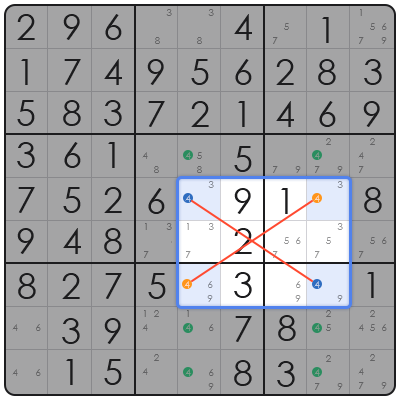
How to do Sudoku refers to the systematic application of logical deduction to solve a number placement puzzle. This globally popular game, typically presented as a 9×9 grid, challenges players to fill every cell with a digit from 1 to 9 such that each number appears only once in each row, each column, and each of the nine 3×3 subgrids. From a framework perspective, Sudoku is not merely a pastime but a profound exercise in pattern recognition and constraint satisfaction, requiring meticulous attention to detail and iterative analytical processes. Its significance in enhancing cognitive functions is well-documented, making it a valuable tool for developing problem-solving skills, improving concentration, and fostering logical thinking across various age groups. The primary problem it solves in the current landscape of information overload and distraction is providing a structured, engaging, and screen-free method for mental focus and intellectual stimulation. It offers a clear set of rules and a defined goal, contrasting with the often ambiguous challenges of daily life. Based on structural analysis, the simplicity of Sudoku’s rules belies the depth of strategy required to master it, transitioning from basic identification to complex deduction. This article will delve into the core mechanics, practical implementation, and strategic insights necessary to effectively engage with and conquer how to do Sudoku puzzles, equipping readers with an expert-level understanding.
The Foundational Logic Behind how to.do sudoku: A Structural Analysis
How to do Sudoku fundamentally relies on three core constraints that define its logical structure: each row must contain all digits from 1 to 9 exactly once, each column must contain all digits from 1 to 9 exactly once, and each of the nine 3×3 subgrids (often called “blocks” or “boxes”) must also contain all digits from 1 to 9 exactly once. These rules establish a dense network of interdependencies across the 81 cells, where the placement of a single number can significantly impact possibilities in adjacent rows, columns, and blocks. Understanding these foundational rules is the first step in any analytical approach.
From a framework perspective, the solving process begins with the identification of “givens” – the numbers pre-filled in the grid – which serve as fixed points from which deductions can be made. Players then use these givens to eliminate potential candidates for empty cells. For any given empty cell, the possible numbers are those from 1 to 9 that are not already present in its respective row, column, or 3×3 block. This initial candidate identification forms the bedrock of all subsequent logical steps, establishing the universe of possibilities for each unsolved position.
In practical application, initial scans of the grid involve systematically checking rows, columns, and blocks for numbers that are nearly complete. For instance, if a row is missing only one number, that number can be immediately placed. Similarly, if a specific number (e.g., ‘7’) appears twice in two different blocks within the same larger band (three horizontal blocks), its position in the third block of that band can often be narrowed down to just a few cells, or even a single cell, by applying the row/column constraints. This methodical sweeping for “naked singles” or “hidden singles” in initial stages accelerates progress and sets the stage for deeper deductions.
Core Strategies for Solving how to.do sudoku Puzzles
Based on structural analysis, moving beyond initial placements, proficient how to do Sudoku involves identifying “naked singles” and “hidden singles” with precision. A naked single occurs when a cell, after considering all row, column, and block exclusions, has only one possible candidate number left. Conversely, a hidden single exists when a specific number, though appearing as a candidate in multiple cells within a row, column, or block, can only be placed in one unique cell within that scope, because all other potential cells for that number are blocked by other constraints.
From a framework perspective, “pointing pairs” and “claiming pairs” are crucial intermediate techniques. A pointing pair/triple occurs when a number, as a candidate, is restricted to a single row or column within a 3×3 block. This restriction implies that the number cannot appear in that specific row or column outside the block, allowing for eliminations in other blocks. A claiming pair/triple is the inverse: when a candidate number is restricted to cells within a single block from the perspective of a row or column, allowing for eliminations from cells outside that block but within the same row/column.
In practical application, these strategies are iterative. After placing a number, it’s essential to re-evaluate the entire grid, as new placements open up new possibilities for naked singles, hidden singles, and more advanced deductions. This cyclical process of placing, eliminating candidates, and re-scanning is central to how to do Sudoku effectively. Expert solvers often use a systematic approach, perhaps focusing on one number at a time across the entire grid, or tackling one block/row/column exhaustively before moving to the next.
A Step-by-Step Approach to Solving Any how to.do sudoku
The journey on how to do Sudoku begins with a meticulous initial setup, which involves thoroughly scanning the grid for immediate placements. Start by looking for numbers that appear frequently in the givens. For each number from 1 to 9, scan its occurrences across rows, columns, and blocks. If a number is present in two of the three blocks within a band (horizontal or vertical), its position in the third block can often be deduced immediately. Mark obvious naked singles as you find them, ensuring each placement is confirmed by row, column, and block constraints.
Once obvious placements are made, the next critical step is systematic candidate marking. For every empty cell, lightly pencil in all possible numbers (1-9) that do not violate the row, column, or block rules. This comprehensive list of candidates is the foundation for all subsequent deductions. From a framework perspective, this process transforms the puzzle from a search for single numbers into a combinatorial analysis of all potential positions. As numbers are placed, candidates in affected cells must be immediately updated and removed, triggering new deductions.
In practical application, the solver then engages in iterative deduction, constantly looking for patterns among the candidates. This includes identifying hidden singles (where a candidate number only appears in one cell within a specific row, column, or block), naked pairs/triples/quads (where a set of N candidates is confined to N cells within a row, column, or block, allowing those candidates to be eliminated from other cells), and increasingly complex techniques like X-Wing, Swordfish, and chaining. Each deduction, no matter how small, simplifies the grid and moves the solver closer to the final solution, emphasizing that persistence and methodical review are key to mastering how to do Sudoku.
Comparative Analysis: how to.do sudoku’s Unique Place in Logic Puzzles
From a framework perspective, comparing how to do Sudoku to other popular logic puzzles like KenKen and Kakuro reveals distinct characteristics in their complexity and approach. Sudoku’s complexity primarily stems from its constraint satisfaction, demanding pure logical deduction based on number placement within defined boundaries. KenKen, in contrast, integrates arithmetic operations (addition, subtraction, multiplication, division) within ‘cages’ on the grid, requiring both logical placement and calculation skills, inherently increasing its cognitive load beyond Sudoku’s singular focus.
Based on structural analysis, the efficiency of puzzle solving also varies significantly across these types. Sudoku relies heavily on spatial and numerical pattern recognition, allowing for relatively fast resolution once core techniques like candidate marking and elimination are mastered. Kakuro, which involves placing numbers into grids based on provided sums for rows and columns, can often necessitate more trial-and-error and iterative sum calculations, potentially making it less efficient for rapid problem-solving but offering a different type of numerical reasoning challenge.
In practical application, the primary cognitive benefit of how to do Sudoku is its unparalleled ability to hone deductive reasoning, concentration, and systematic thinking. While KenKen develops arithmetic fluency alongside logic, and Kakuro sharpens numerical estimation, Sudoku specifically strengthens the ability to infer information from a complex set of constraints and manage multiple possibilities simultaneously. The time investment for a typical Sudoku puzzle can range from minutes to hours depending on difficulty, but its universal rules and widespread availability (high frequency) make it an accessible and consistently rewarding mental exercise.
Common Obstacles and Expert Solutions in how to.do sudoku Solving
One of the most frequent mistakes encountered when learning how to do Sudoku is rushing or resorting to guessing when faced with difficulty. From a framework perspective, guessing introduces an immediate risk of propagating errors throughout the grid, often leading to insurmountable contradictions later in the puzzle. This not only wastes time but also undermines the logical integrity that is central to Sudoku. Instead, expert advice emphasizes absolute adherence to logical deduction. If a cell has no obvious solution, it means more candidates need to be identified or more advanced patterns must be sought across the broader grid.
Based on structural analysis, another common pitfall is overlooking possibilities or failing to update candidates meticulously after each placement. Solvers might place a number, but then neglect to remove that number from the candidate lists of affected cells in its row, column, and block. This oversight can prevent the identification of new naked or hidden singles, halting progress. The solution lies in developing a rigorous habit of verification: every time a number is placed, pause to sweep its corresponding row, column, and block, erasing it from all relevant candidate lists.
In practical application, getting “stuck” is a common frustration, particularly when only complex patterns like X-Wings or advanced chaining techniques remain. The solution is often to revisit the entire grid with a fresh perspective, systematically checking each row, column, and block for missed simple deductions. If still stuck, a methodical review of your pencil marks for errors or inconsistencies is essential. Sometimes, a subtle miscalculation in a candidate list is the root cause. Furthermore, learning and practicing these advanced techniques through dedicated tutorials can provide the tools needed to break through these impasses, transforming apparent dead ends into solvable pathways.
Frequently Asked Questions About how to.do sudoku
Q: What is the primary objective of how to.do sudoku? A: The primary objective is to fill a 9×9 grid with digits 1 through 9 such that each row, column, and 3×3 block contains all nine digits exactly once, using pure logical deduction.
Q: How can beginners improve their how to.do sudoku skills? A: Beginners should focus on systematic scanning for naked singles, diligently marking all possible candidates for each empty cell, and consistently updating candidates after every number placement.
Q: Are there advanced how to.do sudoku strategies? A: Yes, advanced strategies include techniques like X-Wing, Swordfish, XY-Wing, and various chaining methods, which allow for the elimination of candidates based on complex interactions and patterns within the grid.
Q: What are the cognitive benefits of how to.do sudoku? A: Playing Sudoku enhances deductive reasoning, improves concentration and focus, strengthens memory, and fosters systematic problem-solving skills, contributing positively to overall brain health.
Q: How long does a typical how to.do sudoku puzzle take? A: The time varies significantly by difficulty and solver experience, ranging from a few minutes for easy puzzles to several hours for expert-level ones requiring complex logical steps.
In conclusion, how to do Sudoku transcends its classification as a mere game, establishing itself as a robust platform for developing critical analytical and strategic thinking skills. Its elegant rule set and infinite variations provide a consistently challenging yet rewarding mental workout, fostering a profound appreciation for logic and systematic problem-solving. Based on structural analysis, the process of navigating a Sudoku grid, from initial candidate identification to the application of advanced deduction techniques, mirrors the iterative problem-solving methodologies crucial in numerous professional and academic fields. The long-term strategic value of regularly engaging with Sudoku lies not just in solving individual puzzles, but in honing the cognitive tools necessary to approach complex challenges with clarity, patience, and methodical precision, securing its place as an invaluable exercise for mental acuity in a rapidly evolving world.