

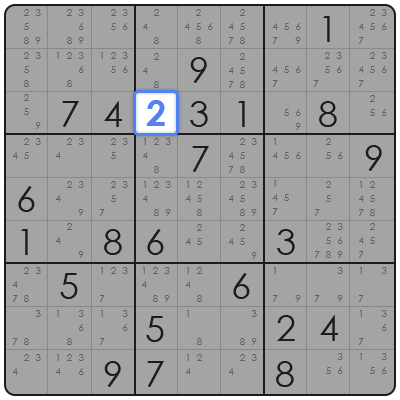
How to solve Sudoku involves systematic logical deduction to fill a 9×9 grid, ensuring each row, column, and 3×3 subgrid contains digits 1-9 without repetition. Mastering Sudoku, from a framework perspective, is a profound exercise in pattern recognition and constraint satisfaction, developing critical thinking skills. It addresses the need for robust cognitive agility in problem-solving. A structured approach to Sudoku demystifies complex puzzles into manageable steps, honing the brain’s ability to identify intricate relationships and extrapolate solutions. Based on structural analysis, the grid’s inherent constraints provide an ideal environment for developing rigorous, error-checking methodologies crucial for high-stakes decision-making. This deep-dive article dissects the core mechanics of Sudoku solving, offering a comprehensive guide from fundamental techniques to advanced strategies. We explore underlying logic, provide a step-by-step framework, compare methodologies, address common pitfalls, and offer insights for broader application, equipping readers with definitive expertise.
Understanding the Core Mechanics of How to Solve Sudoku
Understanding how to solve Sudoku requires grasping immutable rules: a 9×9 grid where each row, column, and 3×3 box must contain digits 1-9 exactly once. This triple-constraint system forms the bedrock of all deductive solution strategies. Based on structural analysis, initial pre-filled numbers provide the essential clues.
Each of the grid’s 81 cells participates in three distinct constraint sets: its row, column, and 3×3 block. Successful solving hinges on identifying how these intersections limit candidates. Systematic elimination narrows possibilities until only one valid digit remains, revealing the solution.
In practical application, initial solving involves visually scanning for obvious placements—rows, columns, or blocks nearly complete—to deduce missing digits. This ‘singles hunting’ quickly reduces complexity, exemplifying constraint satisfaction by ruling out digits within a set.
Essential Strategies for How to Solve Sudoku
Essential strategies for how to solve Sudoku begin with identifying “Singles”—cells where only one digit is possible. A Naked Single is a cell where, after considering existing numbers in its row, column, and block, only one digit remains valid, such as ‘9’ if 1-8 are present in its constraints.
Hidden Singles are a fundamental technique: a digit is the only possible candidate for a specific cell within its row, column, or block. This requires analyzing the entire set, not just the individual cell, to find its unique placement. From a framework perspective, this is a more subtle form of deduction.
Candidate marking is critical for identifying all Singles and advanced techniques. Meticulously noting all possible digits for each empty cell transforms the puzzle into a clear data set. This systematic approach makes patterns explicit, crucial for professional solvers, ensuring no potential solution is overlooked.
Practical Application: A Step-by-Step Guide to How to Solve Sudoku
In practical application, the first step to how to solve Sudoku efficiently is an initial sweep to identify all obvious Naked Singles. Systematically scan each row, column, then block, marking determined numbers immediately. This leverages direct constraint satisfaction, significantly reducing grid complexity.
The second crucial step involves meticulously listing all potential candidates (pencil marking) for every remaining empty cell. Cross out digits present in its row, column, and block; the remaining are candidates. This systematic documentation is indispensable for advanced techniques, visualizing possibilities.
Once candidates are noted, the third step applies advanced pattern recognition, starting with Hidden Singles. Look for digits appearing only once in a constraint’s candidate list. Then search for Naked Pairs/Triples in cells sharing a constraint, eliminating those candidates from others. This iterative process defines professional methodology.
Exploring Advanced Techniques in How to Solve Sudoku
Beyond basic singles, advanced techniques for how to solve Sudoku involve sophisticated candidate eliminations, starting with Naked Pairs, Triples, and Quads. A Naked Pair means two cells in the same constraint share only two specific candidates, which must reside there, eliminating them from other cells.
Complementing Naked Sets are Hidden Pairs, Triples, and Quads. A Hidden Pair occurs when two candidates are unique to only two cells within a row, column, or block. These must be in those two cells, even if other candidates are present. Based on structural analysis, other candidates can then be eliminated.
For challenging puzzles, X-Wing and Swordfish are pinnacle strategies. These involve a candidate appearing in specific alignments across multiple rows/columns, allowing eliminations from other cells. These techniques demonstrate deep grid interdependencies for single candidates, elevating problem-solving.
Comparing Sudoku Solving Methods and Their Efficacy
Comparing various Sudoku solving methods reveals efficacy tied to puzzle complexity and desired speed. Human solvers use a hierarchy of logical techniques. From a framework perspective, method choice impacts cognitive load and error potential. An adaptive strategy, blending quick scans with systematic candidate management, is most effective.
The core objective when learning how to solve Sudoku is to balance methodical progress with efficient deduction. Methods range from visual scanning to structured candidate elimination, each offering tradeoffs in speed, mental effort, and reliability. Below is a comparative analysis of common human-centric methodologies.
In practical application, understanding these differences allows solvers to select appropriate techniques. Basic Scanning and Singles (low complexity/load, high efficiency). Candidate Marking and Pairs (medium complexity/load, intermediate puzzles). Advanced Pattern Recognition (high complexity/load, indispensable for expert Sudoku). Starting simple and escalating is robust.
Navigating Challenges: Common Pitfalls in How to Solve Sudoku
A frequent pitfall in how to solve Sudoku is making assumptions or guessing, rather than relying strictly on logical deduction. This violates Sudoku’s fundamental principle: every placement must be provable. The solution is rigorous discipline, only placing unequivocally determined digits, always double-checking deductions.
Another common mistake is failing to systematically manage candidates, leading to overlooked opportunities. Avoiding pencil marking limits identifying Hidden Singles or advanced patterns. An incomplete candidate list causes confusion. Professional advice: adopt a consistent, clear candidate notation system for every empty cell.
Getting “stuck” is pervasive when no immediate Singles are apparent, often from lack of advanced technique proficiency. The solution involves reviewing the grid for complex patterns like Naked/Hidden Pairs/Triples. Iterating through techniques and re-checking previous entries for errors often reveals the blockage.
FAQ: Quick Answers on How to Solve Sudoku
Q: What is the fastest way to solve Sudoku? A: It combines systematic scanning for singles, meticulous candidate marking, and advanced pattern recognition. Consistent practice significantly increases speed and efficiency through improved visual processing.
Q: Is Sudoku good for your brain? A: Yes, Sudoku is excellent for your brain, enhancing logical reasoning, memory, concentration, and problem-solving skills. Regular engagement maintains cognitive agility and analytical thinking across various domains. Q: What are the hardest Sudoku techniques? A: X-Wing, Swordfish, Jellyfish, and various chaining forms. These involve complex multi-cell logic.
Q: Can every Sudoku puzzle be solved? A: Most published puzzles have a unique solution discoverable by logical deduction. A well-formed Sudoku guarantees one unique, logically derivable solution. Q: What does ‘wsolve’ mean in Sudoku? A: This is likely a typo for ‘solve’, referring to filling the grid using logical deduction.
In conclusion, mastering how to solve Sudoku serves as a powerful discipline for honing critical analytical and problem-solving faculties. Applying deductive logic, from simple singles to complex patterns, builds a robust framework for approaching any constrained system. The strategic value extends beyond the grid, fostering patience, precision, and systematic thinking essential for professional challenges. Continued practice reinforces neural pathways for efficient information processing and decision-making, offering forward-looking insight into logical mastery.