

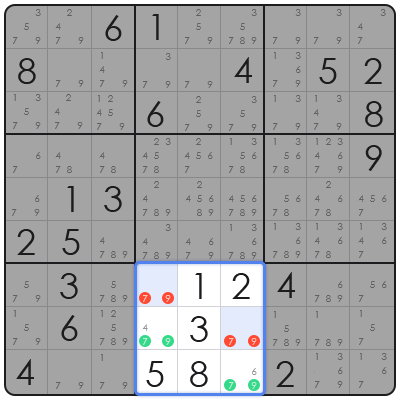
Solving a hard Sudoku puzzle is a formidable cognitive challenge that demands more than mere number placement; it requires a deep understanding of logical deduction, pattern recognition, and systematic elimination. This process, far from being a simple pastime, acts as a rigorous mental workout, sharpening analytical skills and fostering patience. In an era where complex problem-solving abilities are increasingly valued, the techniques employed in tackling a difficult Sudoku grid offer valuable insights into approaching intricate systems and data structures. From a framework perspective, the core of how do you solve a hard Sudoku puzzle lies in transitioning from basic candidate identification to advanced elimination strategies. Beginners often rely solely on single-candidate cells, which quickly proves insufficient for harder grids. The primary problem it solves in the current landscape of casual gaming is providing a structured pathway for enthusiasts to overcome seemingly impossible configurations, moving beyond trial-and-error to a state of mastery grounded in logical principles. This deep dive will explore the definitive methodologies and advanced tactical considerations necessary to systematically dismantle even the most stubborn Sudoku puzzles. We will dissect the underlying mechanics, provide a step-by-step implementation guide for advanced techniques, compare different strategic approaches, highlight common pitfalls, and offer expert solutions, ultimately revealing the profound logic behind achieving Sudoku resolution.
The Foundational Logic of Hard Sudoku Resolution
The foundational logic of how do you solve a hard Sudoku puzzle extends far beyond simple row, column, and block constraints, delving into complex interdependencies and hidden patterns. Hard Sudokus necessitate the application of advanced techniques such as Naked Pairs/Triples/Quadruples, Hidden Pairs/Triples/Quadruples, X-Wings, Swordfish, and various chaining strategies. These methods are rooted in identifying cells where a specific candidate number can be definitively placed or eliminated, even when it’s not immediately obvious, by analyzing its presence and absence across multiple dimensions of the grid.
Based on structural analysis, techniques like Naked Pairs operate on the principle that if two cells within a house (row, column, or 3×3 block) contain only two identical candidates, those two candidates must reside in those two cells. Consequently, those candidates can be eliminated from all other cells within that same house. This significantly reduces the possibilities for other cells, progressively simplifying the grid and revealing new deductions. The same logic applies to Triples and Quadruples, extending the complexity of the pattern recognition required.
More advanced strategies, such as the X-Wing, leverage specific candidate placements across two rows and two columns (or vice-versa) to eliminate candidates from other cells. If a candidate appears only twice in two different rows, and these appearances line up in the same two columns, then that candidate can be eliminated from those two columns in any cells outside of those two rows. This sophisticated form of elimination often unlocks critical breakthroughs in otherwise intractable puzzles, requiring a holistic view of the grid rather than localized scanning.
Systematic Application: A Step-by-Step Guide to Cracking Complex Grids
Applying advanced Sudoku techniques systematically is crucial for how do you solve a hard Sudoku puzzle, transitioning from brute-force checking to elegant logical deduction. Begin by exhaustively scanning the entire grid for ‘singles’ – cells where only one possible candidate remains after considering row, column, and block exclusions. Fill these in immediately, as they often create new singles or simplify the grid for subsequent steps. This initial phase, while basic, is fundamental for establishing a clean slate before moving to more intricate strategies.
Next, meticulously mark all potential candidates in every empty cell. This step is non-negotiable for hard puzzles, as it creates the visual data necessary to identify advanced patterns. Utilize a small pencil notation within each cell, or a digital tool that manages candidates automatically. Once candidates are marked, systematically search for Naked and Hidden Pairs, Triples, and Quadruples within each row, column, and 3×3 block. Eliminating candidates based on these patterns often uncovers new singles or simplifies other parts of the grid, allowing for iterative progress.
From a framework perspective, if basic eliminations and Naked/Hidden sets stall, pivot to advanced techniques like X-Wings and Swordfish. Identify cells with two candidates, then look for repeating patterns across rows and columns. If even these complex patterns fail to yield progress, the last resort is ‘guessing and backtracking’. Choose a cell with two candidates, tentatively place one, and proceed. If a contradiction arises, revert to the choice point and try the other candidate. While less elegant, this systematic trial-and-error, when logically controlled, can be a valid path to resolution for the most challenging grids, provided a robust backtracking mechanism is employed.
Comparative Analysis of Advanced Sudoku Solving Techniques
Understanding the comparative strengths and weaknesses of different Sudoku solving techniques is essential for a strategic approach to how do you solve a hard Sudoku puzzle. Different methods offer varying degrees of complexity, efficiency, and application frequency, influencing their utility in diverse puzzle scenarios.
Simple Candidate Elimination, which involves scanning for single possible numbers in cells, rows, columns, or blocks, is characterized by low complexity and very high application frequency, especially at the start of any Sudoku puzzle. Its efficiency is high for easier puzzles but diminishes rapidly as the grid becomes denser with possibilities, requiring a shift to more advanced tactics.
Naked and Hidden Sets (Pairs, Triples, Quadruples) represent a medium complexity tier. These techniques are highly efficient for removing multiple candidates simultaneously, often unlocking significant progress in moderately hard puzzles. Their application frequency is medium; they appear regularly enough to be fundamental but require more focused pattern recognition than simple elimination. Mastering these is a critical bridge to tackling truly hard Sudokus.
Techniques such as X-Wings and Swordfish, which identify candidate patterns across multiple rows and columns, are high in complexity due to their non-local nature. While their application frequency is lower – they might only appear once or twice in a puzzle, if at all – their efficiency is exceptionally high when found, often resolving deadlocks that simpler methods cannot touch. These techniques are pivotal for solving the most difficult Sudokus, demanding a broader, more integrated view of the grid.
Navigating Common Obstacles in Hard Sudoku Solving
In practical application, several common pitfalls can hinder progress when attempting how do you solve a hard Sudoku puzzle. One frequent mistake is over-reliance on basic scanning techniques. While fundamental, sticking solely to singles and easily identifiable pairs will quickly lead to a standstill on hard grids. The professional advice is to proactively learn and practice advanced patterns. Dedicate time to understanding the logic behind Naked/Hidden sets, X-Wings, and more, as these are the tools specifically designed for complex scenarios.
Another significant obstacle is inconsistent or messy candidate notation. When candidates are not clearly marked or are updated haphazardly, it becomes virtually impossible to spot the intricate patterns required for advanced techniques. From a framework perspective, a systematic approach is vital. Either use a digital Sudoku solver that handles candidate marking automatically or develop a strict, clear manual notation system (e.g., small numbers consistently placed, erasing candidates immediately upon elimination). A clean grid is a decipherable grid.
A third common pitfall is premature guessing without exhausting all logical deductions. While ‘guessing and backtracking’ is a valid last resort, resorting to it too early can lead to extensive and frustrating backtracking, making the puzzle feel arbitrary rather than logical. The insight here is to exhaust every logical technique available first. Only when no more deductions can be made through advanced patterns should a controlled guess be considered, ideally on a cell with only two candidates. Always ensure you have a clear ‘undo’ point for any speculative move.
Frequently Asked Questions About Hard Sudoku Solving
Q: What defines a ‘hard’ Sudoku puzzle? A: A hard Sudoku puzzle typically requires the use of advanced logical deduction techniques beyond simple singles, such as Naked/Hidden Pairs/Triples, X-Wings, and other chaining methods, to solve, rather than relying on trial-and-error.
Q: Is guessing ever a valid strategy for hard Sudokus? A: Yes, ‘guessing and backtracking’ (or branching) is a valid last-resort strategy for the absolute hardest puzzles when all logical deductions have been exhausted. It should be systematic and controlled, not random.
Q: How can I improve my speed in solving difficult puzzles? A: Improving speed involves consistent practice, mastering pattern recognition for advanced techniques, and developing a systematic approach to candidate marking and elimination. Focus on accuracy first, then speed.
Q: Are there software tools to help learn advanced techniques? A: Many online Sudoku solvers and mobile apps offer features like candidate marking, ‘hint’ buttons that explain the next logical step, and ‘solver’ functions, which can be invaluable for learning new strategies.
Q: What’s the hardest Sudoku technique to master? A: Techniques like ‘Swordfish’ or ‘Jellyfish’, along with various ‘forcing chains’ and ‘XY-Wings’, are generally considered among the hardest due to their multi-cell, multi-house interconnected logic and abstract pattern requirements.
In conclusion, mastering how do you solve a hard Sudoku puzzle transcends mere entertainment, evolving into a rigorous exercise in advanced logical reasoning and systematic problem-solving. The strategic value lies not only in completing the grid but in the cultivation of mental agility, patience, and a methodical approach to complex challenges. By understanding and applying sophisticated techniques, enthusiasts can consistently unlock even the most intricate puzzles, transforming frustration into intellectual triumph.