

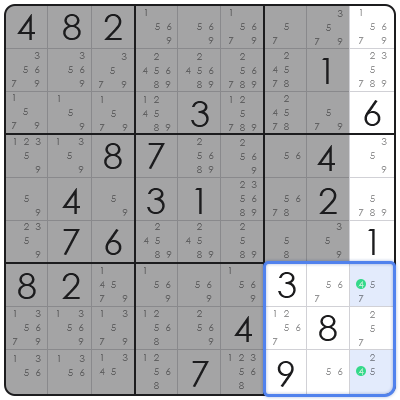
Teaching a child Sudoku fundamentally involves guiding them through this non-mathematical, pure logic puzzle, emphasizing its core rules of placing numbers 1-9 uniquely within rows, columns, and 3×3 blocks. Its significance lies in its powerful ability to cultivate critical thinking, problem-solving skills, and patience, offering a distinct advantage in a child’s early developmental stages. The primary problem it solves is providing an engaging, screen-free activity that proactively strengthens foundational logical reasoning skills often overlooked or passively addressed in conventional early education curricula. From a framework perspective, effective Sudoku instruction for children transcends mere puzzle-solving; it cultivates a structured and systematic approach to problem identification and resolution. This foundational skill set is crucial for long-term academic success across various disciplines and forms a robust mental framework essential for tackling increasingly complex challenges in their future intellectual endeavors. In practical application, introducing Sudoku early can significantly mitigate the over-reliance on rote memorization prevalent in some educational methods, instead fostering an environment where children actively deduce, hypothesize, and verify solutions. This active cognitive engagement is paramount for achieving deep learning, enhancing memory retention, and ensuring sustained cognitive growth beyond the immediate task.
The Fundamental Logic Behind Teaching Sudoku to Children
Teaching a child Sudoku fundamentally involves demystifying its core rules: ensuring each row, each column, and each 3×3 block contains every digit from 1 to 9 exactly once. Based on structural analysis, this deceptively simple premise forms the bedrock of all Sudoku puzzles, irrespective of their difficulty or grid size, making it a pure logic exercise rather than a mathematical one that requires advanced calculations.
From a framework perspective, the grid’s inherent constraints—the unique number requirement across three distinct planes (rows, columns, and blocks)—create a finite set of possibilities, thereby guiding the child towards deductive reasoning. Understanding these interdependent relationships between individual cells, their respective rows, columns, and blocks is the first critical step, enabling children to systematically eliminate possibilities and identify definitive number placements.
In practical application, children are taught to scan for areas within the grid that have fewer empty cells or numbers that appear frequently, using these as strategic starting points to narrow down choices. This iterative process of focused observation, systematic elimination, and logical deduction is not only key to solving the puzzle but, more importantly, to developing strong analytical habits and fostering a methodical approach to problem-solving.
A Progressive Approach to Introducing Sudoku to Young Learners
Introducing Sudoku to young learners effectively requires a progressive, step-by-step methodology that is specifically designed to build confidence and skill incrementally without causing frustration. A structured approach invariably involves starting with smaller grids, typically 4×4 or 6×6, before gradually transitioning to the more complex standard 9×9 format, as this reduces initial cognitive load and focuses on fundamental principles.
Based on structural analysis, the initial stages of instruction should exclusively focus on identifying single missing numbers within a confined area, such as a single row, column, or a small 2×2/3×2 block. This isolates the problem, allowing the child to practice basic scanning and elimination techniques. For example, if a 4×4 row already contains the numbers 1, 2, and 4, the child can readily deduce that the missing number must be 3.
From a framework perspective, once single-cell deductions are mastered consistently, the next crucial step involves introducing the concept of “candidate numbers” or “pencil marks,” where children are encouraged to tentatively note down all possible numbers for an empty cell. This visual representation of potential possibilities is invaluable for more advanced techniques, such as identifying hidden singles or naked pairs, and fundamentally helps to organize their intricate thought processes.
In practical application, regular, short learning sessions, ideally 10-20 minutes, have proven to be significantly more beneficial than infrequent, prolonged ones for maintaining engagement and preventing burnout. Consistently celebrating small victories, such as correctly filling a row or a block, profoundly reinforces positive learning behaviors and encourages sustained engagement, gradually preparing them for the greater logical demands of standard Sudoku puzzles.
The Cognitive Benefits of Early Sudoku Engagement
Engaging children with Sudoku at an early age provides a multitude of profound cognitive benefits that extend far beyond mere puzzle-solving, significantly enhancing their critical thinking and overall problem-solving abilities. Based on structural analysis, the consistent application of logical rules within a constrained and predictable system strengthens vital neural pathways associated with deductive reasoning, sequential processing, and sophisticated pattern recognition.
From a framework perspective, successfully navigating a Sudoku puzzle inherently demands sustained focus and considerable patience, requiring children to meticulously check their work and deliberately avoid impulsive or hasty decisions. This deliberate cultivation of methodical thinking, unwavering attention to detail, and impulse control is invaluable for academic performance across various subjects, fostering a disciplined approach to complex tasks.
In practical application, the intellectual challenge presented by Sudoku also plays a crucial role in building resilience and improving frustration tolerance. Children learn through direct experience that errors are an integral and natural part of the learning process and that backtracking, re-evaluating assumptions, and persisting are necessary steps towards finding a solution, thereby instilling a growth mindset essential for overcoming future intellectual hurdles. It actively encourages a systematic trial-and-error approach, continually refining their ability to learn effectively from mistakes.
Navigating Common Challenges When Teaching Sudoku
When teaching a child Sudoku, several common pitfalls can unfortunately hinder progress and dampen their enthusiasm, yet these can be effectively addressed with a strategic and empathetic approach. One frequent mistake is inadvertently treating Sudoku as a purely mathematical exercise, which can immediately deter children who perceive themselves as “not good at math.” The professional solution lies in consistently emphasizing that Sudoku is fundamentally about logical placement and deduction, not arithmetic, even suggesting the use of colors or shapes instead of numbers initially if necessary to bypass this misconception.
From a framework perspective, another significant challenge arises when children become genuinely overwhelmed by the perceived complexity of larger grids or begin to perceive the puzzle as too difficult, leading inevitably to frustration and disengagement. In practical application, the expert advice is to always start with very easy, simplified puzzles (4×4 or 6×6) and only gradually increase the difficulty as their confidence and skill develop. Providing explicit encouragement, celebrating even the smallest successes, and continually reminding them that it’s perfectly okay to make mistakes are all crucial for maintaining motivation and fostering a positive learning environment.
A third common issue is the tendency to rush the child or to provide too much direct assistance, which can inadvertently prevent them from independently developing their own robust problem-solving strategies. Based on structural analysis, the key is to guide rather than provide direct answers. Ask leading questions such as “What numbers are still missing in this particular row?” or “Which number logically cannot go in that specific box because it’s already there?” This Socratic method fosters truly independent thinking and allows the child to experience the profound satisfaction of personal discovery and mastery.
Frequently Asked Questions About Teaching Sudoku to Children
Q: What age is best to start teaching Sudoku to children? A: Based on structural analysis, children can typically begin learning Sudoku effectively around ages 6-8, starting with simplified grids, as this age range aligns with their developing logical reasoning skills and number recognition.
Q: Is Sudoku beneficial for a child’s brain development? A: From a framework perspective, yes, Sudoku significantly enhances a child’s problem-solving, critical thinking, pattern recognition, and sustained focus, all of which contribute positively to overall cognitive growth and academic readiness.
Q: How long should a child spend on Sudoku at one time? A: In practical application, short, focused sessions of 10-20 minutes are generally ideal to prevent mental fatigue and maintain optimal engagement, allowing for consistent practice without causing burnout or frustration.
Q: Can Sudoku help with a child’s math skills? A: While Sudoku is primarily a logic puzzle and not a direct mathematical exercise, its consistent use of numbers and reliance on numerical recognition can indirectly reinforce number familiarity and systematic thinking, which are highly beneficial for developing foundational math skills.
Q: What kind of Sudoku puzzles are best for beginners? A: Start with 4×4 or 6×6 grids specifically designed for children, featuring fewer empty cells and very clear, obvious solutions, before gradually moving on to the more complex standard 9×9 puzzles.
In conclusion, how to teach a child sudoku is not merely about introducing them to an entertaining game; it is fundamentally about implanting and nurturing foundational cognitive skills that are critical for their future intellectual development. The profound strategic value lies in its unique ability to cultivate logical deduction, enhance patience, and strengthen problem-solving capabilities through an engaging, inherently screen-free medium. From an industry insight perspective within educational psychology and child development, as modern educational paradigms increasingly prioritize critical thinking, adaptability, and analytical reasoning over rote memorization, activities like Sudoku will continue to gain prominence as essential tools for nurturing agile, analytical, and resilient young minds, thoroughly preparing them for an increasingly complex and dynamic world.