

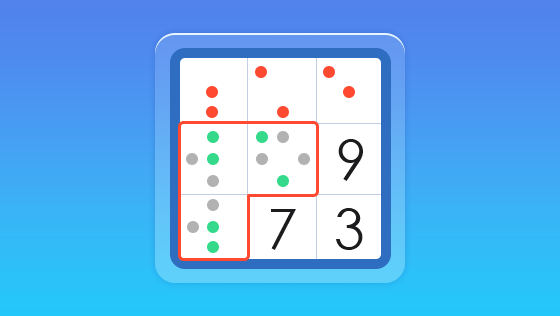
4×4 Sudoku for kids is a simplified version of the classic number-placement puzzle, designed to introduce fundamental Sudoku logic to younger players. This version uses a 4×4 grid divided into four 2×2 subgrids, requiring numbers 1-4 to be placed in each row, column, and subgrid without repetition. Its significance lies in its accessibility, offering a less intimidating entry point into the world of logic puzzles. For speed-solvers, it hones pattern recognition and rapid deduction skills, while for casual players, it builds confidence and a foundational understanding of numerical constraints and logical deduction. This scaled-down format is ideal for developing critical thinking and problem-solving abilities in a fun and engaging way, preparing them for the more complex 9×9 grids. This introductory grid size allows for quicker puzzle completion, providing immediate satisfaction and encouraging continued engagement with logic-based challenges. The core principles of Sudoku are distilled to their essence, making the learning curve gentle yet effective.
The Logical Foundation of 4×4 Sudoku
The logic behind 4×4 Sudoku is fundamentally the same as its larger 9×9 counterpart, operating on the principle of constraint satisfaction. Mathematically, it’s a form of Latin Square puzzle where specific adjacency rules are imposed by the subgrids. The core constraint is that each number from 1 to 4 must appear exactly once in every row, every column, and every 2×2 subgrid.
Structurally, the 4×4 grid’s topology is simple yet robust enough to demonstrate essential Sudoku techniques. The limited number of cells and candidates (1-4) makes the application of logical deduction more immediate. For instance, if a ‘3’ is already present in a row and a column, any cell at their intersection within a particular 2×2 subgrid can be immediately eliminated as a possibility for that number. This process, known as candidate elimination, is the bedrock of solving any Sudoku puzzle, regardless of size.
The reduced size also means that fewer numbers need to be tracked, allowing young solvers to visualize the possibilities more easily. The interaction between row, column, and subgrid constraints creates a system where logical inference becomes the primary tool for discovery. The structural necessity of placing each number in its unique row, column, and block ensures that every clue significantly narrows down the options for other cells.
Step-by-Step Guide to Solving 4×4 Sudoku
To begin solving a 4×4 Sudoku puzzle, first scan each row, column, and 2×2 subgrid to identify which numbers (1-4) are already placed. Then, for any empty cell, determine which numbers are missing from its corresponding row, column, and subgrid. The number that is not present in any of these three constraints is the only possible candidate for that cell.
Next, look for cells where only one possible number can be placed. This is often achieved by examining a specific number (e.g., ‘2’) and checking all rows, columns, and subgrids where it’s missing. If a ‘2’ can only fit into one specific empty cell within a given row or column, then that cell must contain a ‘2’. This is a direct application of logical deduction based on cell constraints.
A crucial technique is to use ‘pencil marks’ or ‘candidates’—small numbers written lightly in empty cells to represent the possible numbers that could go there. For example, if a cell is in a row with ‘1’ and ‘3’, and a column with ‘2’, its candidates would be ‘1’ and ‘4’. If another cell in the same subgrid can only be ‘1’ or ‘4’, and you later confirm the first cell must be ‘4’, then the second cell must be ‘1’. This step-by-step elimination is fundamental to progressively filling the grid.
Continue this process of scanning for missing numbers and identifying cells with only one possible candidate. As you fill in numbers, they provide new information that can help unlock further deductions in other rows, columns, and subgrids. The key is to consistently apply the rules and systematically check possibilities until the grid is completely filled without any violations.
Common Mistakes and How to Avoid Them
One common pitfall for beginners is overlooking a previously placed number, leading to a violation of Sudoku rules. Always double-check your entries against the row, column, and subgrid constraints before moving on. A systematic scan of all constraints for each new number placed significantly reduces this error.
Another mistake is making assumptions about where a number *should* go rather than where it *logically must* go. For example, assuming a ‘3’ goes in a certain cell because it ‘looks right’ instead of confirming it’s the only possibility after exhausting other options. Avoid this by strictly adhering to the process of elimination and ensuring that each number placed is the *only* valid option for that cell based on current information.
Finally, players might get stuck focusing too much on one particular number or cell without considering the broader implications across the entire grid. It’s essential to take a step back and scan the whole 4×4 grid for obvious placements or simple eliminations regularly. If you’re stuck, try looking at a different number or a different subgrid; fresh eyes often reveal opportunities missed.
Frequently Asked Questions about 4×4 Sudoku for Kids
What is the main difference between 4×4 Sudoku and 9×9 Sudoku?
The primary difference is the grid size and the range of numbers used. 4×4 Sudoku uses a 4×4 grid with numbers 1-4, making it simpler and faster to solve, ideal for beginners. 9×9 Sudoku uses a larger grid with numbers 1-9, requiring more complex logic and time.
Why is 4×4 Sudoku good for children?
It introduces core logical deduction and pattern recognition skills in an accessible format. The smaller grid reduces cognitive load, making it less intimidating and more engaging for young learners, fostering confidence and critical thinking.
What are the basic rules of 4×4 Sudoku?
Place the numbers 1 through 4 in each empty cell such that each number appears only once in every row, every column, and every 2×2 subgrid. No number should be repeated within these areas.
How can I help my child get started with 4×4 Sudoku?
Start by explaining the rules clearly. Guide them through their first few puzzles, pointing out how to identify missing numbers in rows, columns, and subgrids. Encourage them to use pencil marks for candidates and to celebrate small successes.
Is 4×4 Sudoku just a simplified version, or does it teach unique skills?
While simplified, it effectively teaches the foundational principles of constraint satisfaction and logical deduction that are crucial for all Sudoku variants. It builds the intuition needed for more complex puzzles.
Comparative Analysis of Sudoku Strategies
To effectively grasp the learning curve of 4×4 Sudoku for kids, a comparative analysis with other related Sudoku strategies is invaluable. This helps young solvers appreciate the distinct role and complexity of each technique.
| Strategy | Difficulty Level | Frequency of Use | Logical Complexity |
|———————|——————|——————|——————–|
| Basic Scanning | Very Easy | High | Low |
| Naked Pairs (4×4) | Easy | Moderate | Moderate |
| Hidden Singles (4×4)| Easy | High | Low |
| 4×4 Sudoku Logic | Easy | Very High | Low to Moderate |
Basic Scanning involves looking for obvious placements by identifying missing numbers in rows, columns, and blocks. This is the most fundamental technique and is heavily utilized in 4×4 Sudoku. Naked Pairs, when applicable in a 4×4 grid, involves identifying two cells in the same unit (row, column, or block) that contain only the same two candidate numbers. This allows for the elimination of those two candidates from other cells in that unit. While less common in 4×4 than 9×9, its logic is a step up in complexity.
Hidden Singles are cells where a specific candidate number can only go in that one cell within a given unit, even if the cell has other candidates. This requires a more focused analysis of a single number’s placement possibilities. The overarching ‘4×4 Sudoku Logic’ encompasses all these basic deductive steps, focusing on the direct application of the rules to solve the puzzle efficiently. For young learners, mastering these foundational elements is key before progressing to more intricate strategies found in larger grids.
In conclusion, mastering 4×4 Sudoku for kids is not merely about solving a smaller puzzle; it is about instilling a robust ‘Logic-First’ approach to problem-solving. By understanding the fundamental principles of row, column, and subgrid constraints, young solvers develop critical thinking skills that are transferable across various academic and life challenges. This simplified grid serves as an excellent training ground, demystifying complex logic through engaging, bite-sized challenges and fostering a lifelong appreciation for the art of deduction.