

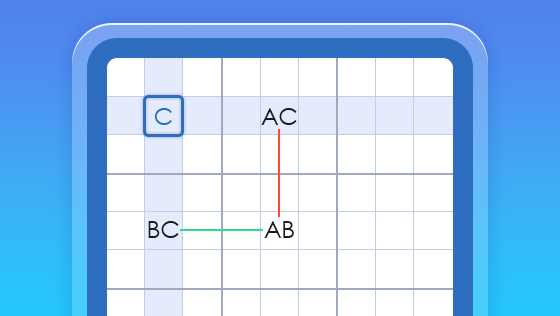
A 5×5 Sudoku is a specialized variant of the classic logic puzzle, typically featuring a 9×9 grid, but here we focus on the unique challenges and strategies presented by a smaller, 5×5 grid structure. While less common than its 9×9 counterpart, understanding the principles of a 5×5 Sudoku can significantly sharpen a solver’s general logical deduction skills, making it an excellent training ground for both rapid solvers and those who enjoy a more nuanced puzzle experience. The significance of studying a 5×5 Sudoku lies in its ability to distill the core mechanics of Sudoku into a more digestible format, thereby enhancing a player’s foundational understanding of grid topology and cell constraints. This focused approach allows for quicker mastery of essential techniques like candidate elimination and the strategic use of pencil marks, ultimately improving efficiency across all Sudoku variants. This article will serve as a comprehensive guide, breaking down the unique aspects of 5×5 Sudoku, exploring its underlying logic, and providing actionable strategies for effective solving. We will delve into how common Sudoku techniques adapt to this smaller grid, identify potential pitfalls, and answer frequently asked questions to solidify your understanding.
The Mathematical and Structural Logic of a 5×5 Sudoku
A 5×5 Sudoku operates on the fundamental principle of unique number placement within defined regions, analogous to its larger 9×9 sibling. In a 5×5 grid, the objective is to fill each cell with a distinct number from 1 to 5, ensuring that no number repeats within any single row, column, or designated 5-cell region. The core logic is one of constraint satisfaction; each placement must adhere to these three rules simultaneously. Mathematically, this is a problem of Latin squares with an added regional constraint, where the size of the grid and regions dictates the complexity and the number of possible solutions.
The structural necessity of the 5×5 grid means that fewer cells are available, leading to more immediate implications from each number placed. Unlike the 3×3 boxes in a 9×9 Sudoku, the ‘regions’ in a 5×5 grid might be irregularly shaped or simply defined as five consecutive cells in rows or columns, depending on the specific puzzle variant. However, the fundamental logic remains: every row, column, and region must contain the numbers 1 through 5 exactly once. This constraint interaction is crucial; a deduction made in one row can have immediate cascading effects on columns and regions, emphasizing the interconnectedness inherent in Sudoku puzzles.
The logical deduction process in a 5×5 Sudoku is highly focused due to the limited number of possibilities. Candidate elimination is paramount. When a number is placed in a cell, it immediately eliminates that number as a possibility for all other cells in the same row, column, and region. Pencil marks, used to denote potential candidates for empty cells, become even more critical in a smaller grid where space is at a premium and every mark carries significant weight. The rapid interplay between placed numbers and remaining candidates defines the solving experience.
Step-by-Step Guide to Solving 5×5 Sudoku Techniques
To effectively solve a 5×5 Sudoku, begin by scanning each row, column, and region for the numbers that are already present. This initial scan is critical for identifying cells where only one number is a logical possibility. For example, if a row is missing only the numbers 2 and 4, and the column containing one of the empty cells already has a 2, then the empty cell must be a 4. This is a basic application of candidate elimination, where the constraints of rows and columns combine to reveal the solution.
Next, employ pencil marks diligently. In each empty cell, note down all the numbers from 1 to 5 that could potentially occupy that cell based on the current state of its row, column, and region. As you place more numbers, update these pencil marks by crossing out impossible candidates. A key technique here is identifying cells with only one or two pencil marks. A cell with only one pencil mark is a direct solve. If a number appears as a pencil mark in only one cell within a specific row, column, or region, then that cell must contain that number, even if other candidates exist for that cell.
Advanced 5×5 Sudoku strategies, while simpler than in 9×9, still leverage pattern recognition. Look for ‘Naked Singles’ (cells with only one candidate) and ‘Hidden Singles’ (numbers that can only go in one cell within a row, column, or region). While complex techniques like X-Wings are less likely to manifest directly in a 5×5 grid due to its limited size, the underlying logic of identifying and eliminating candidates based on row, column, and region constraints is precisely what these advanced techniques exploit. Mastering these fundamental interactions in a 5×5 grid builds the mental framework for tackling larger, more intricate puzzles.
Common Pitfalls and How to Avoid Them in 5×5 Sudoku
One common pitfall is overlooking candidates due to the rapid cascade of logic in a smaller grid. Solvers may place a number and forget to update all affected cells’ pencil marks, leading to incorrect deductions later. To avoid this, always complete a full sweep of eliminations immediately after placing a number, updating every cell in the affected row, column, and region. This ensures accuracy and prevents logical inconsistencies from propagating.
Another mistake is neglecting to fully scan for hidden singles or relying too heavily on only one type of constraint (e.g., only checking rows). A 5×5 Sudoku requires the simultaneous application of row, column, and region logic. Ensure you systematically check each of these constraint types for every empty cell. For instance, a cell might seem to have multiple candidates when only considering its row, but upon examining its column and region, only one candidate might remain viable. This holistic approach is vital.
Finally, a pitfall for players accustomed to larger Sudokus is attempting to apply overly complex strategies that are not relevant to the 5×5 grid. While understanding the principles behind techniques like Naked Pairs or X-Wings is valuable, directly searching for them in a 5×5 puzzle can be a misdirection of effort. Focus instead on mastering the fundamental techniques of candidate elimination and single identification, which are amplified in their importance and effectiveness within the constrained environment of a 5×5 grid. The structural necessity of simpler logic chains makes them more potent.
Frequently Asked Questions about 5×5 Sudoku
Q: What are the basic rules of a 5×5 Sudoku? A: Fill a 5×5 grid so that each row, column, and predefined 5-cell region contains the numbers 1 through 5 exactly once.
Q: Is a 5×5 Sudoku easier than a 9×9 Sudoku? A: Generally yes, due to fewer numbers and constraints, making logical deduction quicker. It’s excellent for learning core Sudoku principles.
Q: How do ‘regions’ work in a 5×5 Sudoku? A: Regions are typically sets of five cells that must also contain numbers 1-5 uniquely. Their shape can vary, but the constraint principle remains.
Q: Can advanced Sudoku techniques like X-Wings be used in a 5×5 grid? A: While direct applications are rare due to size, the underlying logic of candidate interaction and elimination, which advanced techniques exploit, is fundamental to solving 5×5 Sudoku.
Q: What is the best strategy for beginners tackling a 5×5 Sudoku? A: Focus on scanning for rows, columns, and regions missing only one number (single candidates) and use pencil marks to track all possibilities systematically.
Comparative Analysis of Sudoku Strategies
The following table provides a comparative analysis of the 5×5 Sudoku solving approach against other common Sudoku-related strategies, highlighting key differences in complexity and application.
| Strategy/Variant | Difficulty Level | Frequency of Use | Logical Complexity | Notes |
|—|—|—|—|—|
| 5×5 Sudoku Solving | Easy to Moderate | N/A (Variant) | Low to Moderate | Excellent for learning core logic and candidate elimination. |
| Basic Candidate Elimination | Easy | High | Low | Fundamental technique applicable to all Sudoku variants. |
| Naked Pairs | Moderate | Moderate | Moderate | Requires identifying two cells in a unit with only the same two candidates. |
| X-Wing | Hard | Low | High | Advanced technique involving rows and columns with specific candidate patterns. |
For competitive solvers, understanding the core mechanics of a 5×5 Sudoku reinforces the foundational logic that underpins all Sudoku variants. The efficiency gained from mastering candidate elimination in a smaller grid directly translates to faster solving times in larger, more complex puzzles. The structural necessity of recognizing simple constraint interactions becomes a powerful mental shortcut.
Mastering the 5×5 Sudoku grid is a testament to the ‘Logic-First’ approach that defines true Sudoku mastery. By breaking down the puzzle into its essential components—rows, columns, and regions—and diligently applying techniques like candidate elimination and pencil marks, solvers can navigate even the most constrained grids with confidence. The apparent simplicity of the 5×5 variant belies its power as a training tool, sharpening the analytical skills necessary for any logic puzzle enthusiast.