

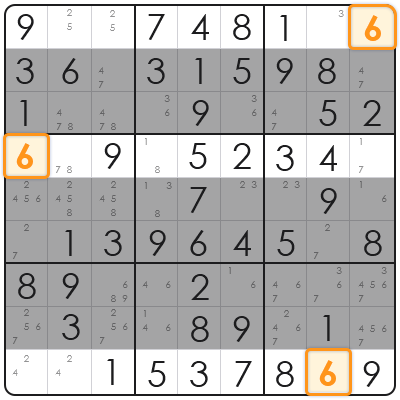
How to do difficult Sudoku involves employing advanced logical deduction techniques to resolve complex cell constraints and hidden number relationships within the 9×9 grid. This article serves as the definitive guide to navigating the intricacies of challenging Sudoku puzzles, transforming seemingly intractable boards into solvable logic sequences. For both competitive speed-solvers aiming to shave seconds off their solve times and casual players seeking to conquer the most formidable puzzles, understanding these sophisticated strategies is paramount. Difficult Sudoku demands a shift from basic candidate elimination to a more profound analysis of grid topology and number interactions, moving beyond simple single-candidate placements. The significance of mastering difficult Sudoku extends beyond mere entertainment; it hones critical thinking, pattern recognition, and systematic problem-solving skills. By systematically applying advanced techniques, players can confidently approach any ‘Evil’ or ‘Diabolical’ rated puzzle, unveiling the elegant logic embedded within each challenging layout.
Understanding the Logic Behind Difficult Sudoku
The logic behind how to do difficult Sudoku primarily revolves around identifying multi-cell relationships and patterns that lead to the elimination of candidates, even when direct placements are not evident. Difficult Sudoku puzzles are designed to resist simple scanning and single-candidate resolution, forcing solvers to look deeper into the structural necessity of numbers within rows, columns, and 3×3 blocks.
Techniques like ‘Naked Pairs’ or ‘Hidden Triples’ are fundamental, where logical deduction allows us to identify a set of numbers that must occupy a specific set of cells within a house, thus eliminating those numbers as candidates from other cells in that house. Grid topology becomes a critical factor, as understanding how cells are interconnected across different houses enables the application of more powerful strategies, often requiring extensive pencil marks to track all possibilities.
For competitive solvers, recognizing these complex patterns quickly is key. It’s about building a mental framework that sees beyond individual cells to the overarching system of constraints, utilizing candidate elimination not just for direct placements but for cascaded reductions across the entire grid. This systematic approach, based on logic-chain analysis, is what differentiates the master from the novice.
Step-by-Step Guide to Mastering Difficult Sudoku
To master how to do difficult Sudoku, begin by ensuring a thorough initial scan for obvious placements and utilizing pencil marks for every possible candidate in every empty cell. This foundational step is non-negotiable, as it provides the raw data for advanced logical deduction.
The next step involves systematically searching for ‘Naked’ and ‘Hidden’ subsets (Pairs, Triples, Quads) within rows, columns, and blocks. For example, if two cells in a row share only two identical candidates (e.g., {2, 7}), then 2 and 7 must occupy those cells, allowing their elimination from all other cells in that row. Based on logic-chain analysis, these subsets often unlock further deductions.
After exhausting simpler subset techniques, progress to ‘X-Wing’ and ‘Swordfish’ patterns. An X-Wing involves identifying two rows (or columns) where a specific candidate only appears in two common columns (or rows), allowing that candidate to be eliminated from other cells in those common columns (or rows). This requires a keen eye for grid topology and systematic candidate elimination, often demanding patience and meticulous cross-referencing to confirm.
Comparing Difficult Sudoku Techniques
When comparing how to do difficult Sudoku, various strategies offer differing levels of logical complexity, frequency of use, and overall impact on puzzle resolution. For instance, ‘Naked Pairs’ (Difficulty Level: Intermediate, Frequency: High, Complexity: Low-Medium) is a frequently used technique that involves identifying two cells in a house sharing only two specific candidates, leading to direct candidate elimination.
In contrast, ‘X-Wing’ (Difficulty Level: Advanced, Frequency: Medium, Complexity: Medium-High) is a powerful, less frequent technique that identifies a candidate appearing in exactly two cells in two different rows (or columns), leading to significant eliminations in other related columns (or rows). Its logical complexity stems from requiring a global view of the grid rather than a localized ‘house’ view.
Finally, ‘Jellyfish’ (Difficulty Level: Expert, Frequency: Low, Complexity: High) represents the pinnacle of multi-cell pattern recognition, an extension of X-Wing involving four rows/columns. The structural necessity of these complex patterns means they are encountered less frequently but, when identified, provide massive breakthroughs in the most challenging puzzles, demanding deep logical deduction and a comprehensive understanding of candidate elimination across the entire grid.
Common Pitfalls When Solving Difficult Sudoku
A common pitfall when attempting how to do difficult Sudoku is neglecting meticulous pencil marking, which often leads to missed opportunities for advanced deductions. Incomplete or inaccurate pencil marks obscure hidden relationships, making techniques like ‘Hidden Triples’ or ‘Swordfish’ virtually impossible to spot. To avoid this, dedicate time to carefully noting all possible candidates for every empty cell.
Another frequent mistake is focusing too narrowly on individual cells or single houses, failing to grasp the broader grid topology required for ‘forcing chains’ or ‘X-Wing’ patterns. This myopia prevents solvers from seeing the interconnectedness of numbers across the entire 9×9 grid. To overcome this, regularly step back and scan the entire board, looking for patterns that span multiple rows, columns, or blocks.
Finally, an over-reliance on trial and error, particularly when faced with a perceived impasse, is a significant pitfall. While some highly advanced techniques might involve ‘what if’ scenarios, difficult Sudoku can almost always be solved through pure logical deduction. The structural necessity of a number’s placement should always be sought before resorting to guessing, maintaining an objective approach to candidate elimination.
Frequently Asked Questions About Difficult Sudoku
Q: What is the most crucial step in solving difficult Sudoku? A: The most crucial step is thorough and accurate pencil marking of all possible candidates for every empty cell, as this forms the foundation for advanced logical deduction and candidate elimination.
Q: How do ‘Naked Pairs’ help in difficult Sudoku? A: Naked Pairs identify two cells in a house that can only contain two specific numbers, allowing those numbers to be eliminated as candidates from all other cells in that house, simplifying the grid.
Q: What is an ‘X-Wing’ and why is it important? A: An X-Wing is an advanced pattern where a candidate appears in only two cells in two distinct rows (or columns), enabling the elimination of that candidate from other cells in the two corresponding columns (or rows). It’s vital for breaking stalemates.
Q: Can difficult Sudoku always be solved by logic? A: Yes, almost all genuinely difficult Sudoku puzzles are solvable purely through logical deduction and systematic application of advanced techniques, without requiring any guessing.
Q: How can I improve my speed in solving difficult Sudoku? A: Improve speed by practicing regularly, mastering pencil marking, and swiftly identifying advanced patterns like X-Wings and Hidden Subsets through repeated exposure and focused logical deduction exercises.
Mastering how to do difficult Sudoku is a journey that emphasizes a ‘Logic-First’ approach, demanding patience, meticulous attention to detail, and a deep understanding of candidate elimination and grid topology. By consistently applying advanced techniques, recognizing complex patterns, and avoiding common pitfalls, solvers can unlock the intricate beauty of challenging puzzles. The ultimate mastery lies in transforming perceived complexity into a series of elegant logical deductions, proving that no Sudoku is truly unsolvable with the right strategies.