

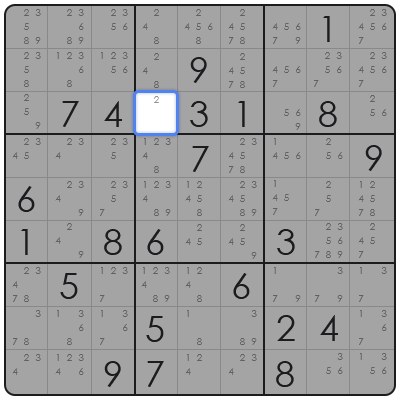
To solve a Sudoku means to correctly fill a 9×9 grid with digits from 1 to 9 such that each row, each column, and each of the nine 3×3 subgrids (also known as ‘blocks’ or ‘regions’) contains all of the digits from 1 to 9 exactly once, without any repetition. This seemingly simple premise underpins a complex world of logical deduction, making Sudoku a captivating challenge for millions globally. Understanding how do you solve a Sudoku is not merely about placing numbers; it’s about developing a systematic approach to identifying and leveraging cell constraints, making it a critical skill for both speed-solvers aiming for competitive times and casual players seeking enjoyable mental exercise. As a Senior Sudoku Editor, I emphasize that true mastery of how do you solve a Sudoku stems from a ‘Logic-First’ philosophy. This article will deconstruct the fundamental strategies and advanced techniques, guiding you through the intricate grid topology to empower you with the analytical tools needed to conquer any Sudoku puzzle.
The Foundational Logic: How Do You Solve a Sudoku by Constraint Propagation?
To solve a Sudoku using constraint propagation involves systematically applying rules of logical deduction to eliminate possibilities for digits in empty cells until only one valid digit remains for each, relying on the inherent grid topology and the unique-digit rule.
The core principle revolves around candidate elimination, where for every empty cell, we identify all possible digits (candidates) it could hold based on the existing numbers in its row, column, and 3×3 block. Based on logic-chain analysis, if a candidate exists in a cell and that same number is already present in its row, column, or block, then that candidate can be removed from that cell’s possibilities. This process, often aided by pencil marks, helps narrow down the options.
The structural necessity of Sudoku demands that each of the 27 entities (9 rows, 9 columns, 9 blocks) must contain all digits 1-9. This creates a powerful network of interdependencies. When you find a ‘single candidate’ (a cell with only one possible digit left after eliminations), or a ‘hidden single’ (a digit that can only go in one specific cell within a row, column, or block), you’ve applied constraint propagation effectively, moving closer to how do you solve a Sudoku.
Executing the Solve: A Step-by-Step Guide to How Do You Solve a Sudoku
To execute how do you solve a Sudoku, begin by systematically scanning the grid for immediate, obvious placements, then progressively apply more complex logical deduction techniques.
1. **Initial Scan for Singles:** Start by looking for ‘obvious singles’. For each empty cell, mentally or with pencil marks, list all possible candidates (digits 1-9 not already present in its row, column, or block). If a cell has only one candidate, that’s its number. Similarly, look for ‘hidden singles’ where a digit can only fit in one specific cell within a given row, column, or block, even if that cell has other candidates.
2. **Pencil Marking and Candidate Elimination:** For competitive solvers, extensively use pencil marks to denote all possible candidates for each empty cell. As you fill in numbers, meticulously erase those candidates from affected rows, columns, and blocks. This is fundamental to systematic candidate elimination.
3. **Identify Advanced Patterns:** Once simple singles are exhausted, search for patterns like ‘Naked Pairs’ (two cells in a unit with only two identical candidates, removing those candidates from other cells in that unit), ‘Hidden Pairs’, ‘Naked Triplets’, and ‘Hidden Triplets’. These entity-based writing techniques dramatically reduce candidate lists. Progressively, look for ‘Pointing Pairs/Triples’ and ‘Box/Line Reduction’ which help eliminate candidates across different units by leveraging shared candidates.
4. **Iterative Application and Backtracking (If Necessary):** Sudoku solving is an iterative process. After placing new numbers or eliminating candidates, the grid state changes, often revealing new singles or patterns. Continuously re-evaluate the entire grid. For extremely difficult puzzles, you might encounter situations where ‘guessing’ (or ‘forking’) is required, but this should be a last resort. Always prioritize logical deduction; how do you solve a Sudoku relies on provable steps.
Comparative Analysis: How Do You Solve a Sudoku vs. Other Strategies
Understanding how do you solve a Sudoku involves appreciating its systematic logical deduction in comparison to more specialized or simpler techniques.
| Strategy | Difficulty Level | Frequency of Use | Logical Complexity | Focus | When to Use |
|—————————|——————-|——————|————————–|——————————–|———————————————————————————————————|
| **How Do You Solve a Sudoku (General)** | Beginner to Expert| Always | High (all techniques) | Overall grid completion | From start to finish on any puzzle, encompassing all necessary techniques. |
| Hidden Single | Beginner | Very High | Low | Identifying unique candidate in a unit | Early stages, or when other eliminations reveal a new single possibility. |
| Naked Pair | Intermediate | Medium | Medium | Two cells in a unit sharing two candidates | When basic eliminations are exhausted and candidate lists are visible. |
| X-Wing | Advanced | Low | High | Pattern of four cells across two rows/columns | On harder puzzles when simpler techniques yield no progress. |
Avoiding Traps: Common Pitfalls When Asking How Do You Solve a Sudoku
When approaching how do you solve a Sudoku, players frequently encounter specific pitfalls that can hinder progress; recognizing and avoiding these is crucial for efficient problem-solving.
One common mistake is **inconsistent pencil marking or failure to erase candidates**. Based on logic-chain analysis, leaving outdated candidates in cells can lead to incorrect deductions later on, causing frustrating errors that are hard to trace. Always re-evaluate and update your pencil marks every time you place a new digit.
Another pitfall is **premature guessing or ‘trial and error’**. While some very advanced techniques involve hypothetical scenarios, simple guessing is counterproductive. For competitive solvers, pure logical deduction should always be the priority. If you’re resorting to guessing, it’s a sign you’ve missed a logical step or a pattern, indicating a need to re-scan the grid more thoroughly for subtle cell constraints.
Finally, many players **fail to scan the entire grid holistically** after making a placement. Often, filling one number creates a cascade of new opportunities (new singles, pairs, etc.) in entirely different parts of the grid. The structural necessity of Sudoku means changes in one area propagate across linked rows, columns, and blocks. Always perform a quick global scan to maximize your progress.
FAQ Section: How Do You Solve a Sudoku?
**Q: What is the most effective first step to solve a Sudoku?** A: The most effective first step is to scan the grid for ‘obvious singles’ and ‘hidden singles’ by checking each empty cell’s row, column, and 3×3 block for missing digits, then apply these numbers directly.
**Q: Are pencil marks essential for how do you solve a Sudoku?** A: Yes, for any puzzle beyond the easiest level, pencil marks are essential. They aid in candidate elimination, allow visualization of cell constraints, and track possibilities efficiently, preventing errors.
**Q: What is a ‘Naked Pair’ and how does it help solve a Sudoku?** A: A Naked Pair occurs when two cells in the same row, column, or block share only two identical candidates. These two candidates can then be eliminated from all other cells within that specific unit.
**Q: When should I use advanced techniques like X-Wing?** A: Advanced techniques like X-Wing are typically applied in harder Sudoku puzzles when basic singles, pairs, and triplets have been exhausted and you need more complex logical deduction to eliminate candidates.
**Q: Can all Sudoku puzzles be solved with pure logic?** A: Almost all published Sudoku puzzles are designed to be solved with pure logical deduction, without needing to guess. Extremely rare or custom-made puzzles might require ‘forking’ or trial-and-error, but this is an exception.
The Logic-First Approach to Sudoku Mastery
Ultimately, how do you solve a Sudoku is a testament to the power of logical deduction and systematic problem-solving. By embracing the ‘Logic-First’ approach, diligently applying candidate elimination, mastering grid topology, and progressively learning more advanced entity-based writing techniques, you transform what seems like a daunting numerical puzzle into a rewarding exercise in analytical thinking. Continuous practice and an objective eye will empower you to tackle any Sudoku, reinforcing that consistent logical application is the true path to mastery.
The structural necessity of understanding cell constraints and the interconnectedness of rows, columns, and blocks is paramount. For competitive solvers and casual enthusiasts alike, this comprehensive guide offers the definitive methodology to not just fill the grid, but to truly understand and conquer the intricate world of Sudoku.
Remember, every number placed and every candidate eliminated brings you closer to the elegant solution. Trust the logic, respect the grid, and enjoy the profound satisfaction of cracking the code of how do you solve a Sudoku with precision and expertise.
Ultimately, how do you solve a Sudoku is a testament to the power of logical deduction and systematic problem-solving. By embracing the ‘Logic-First’ approach, diligently applying candidate elimination, mastering grid topology, and progressively learning more advanced entity-based writing techniques, you transform what seems like a daunting numerical puzzle into a rewarding exercise in analytical thinking. Continuous practice and an objective eye will empower you to tackle any Sudoku, reinforcing that consistent logical application is the true path to mastery.