

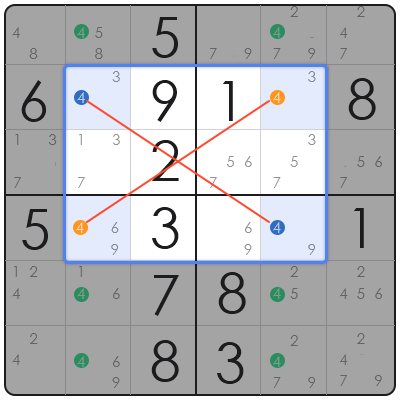
Understanding how to play Sudoku is the foundational skill for anyone looking to engage with this universally popular logic puzzle. At its core, Sudoku requires players to fill a 9×9 grid with digits such that each column, each row, and each of the nine 3×3 subgrids contains all of the digits from 1 to 9, without repetition. This seemingly simple rule set belies a depth of logical deduction that captivates millions. For casual players, learning how to play Sudoku offers an accessible yet profound mental workout, enhancing focus, pattern recognition, and problem-solving abilities. It serves as a stimulating pastime, providing a sense of accomplishment with each completed puzzle without requiring complex mathematical calculations. The game’s reliance on pure logic makes it universally appealing, transcending language barriers and cultural divides. For competitive solvers and enthusiasts, mastering how to play Sudoku is the gateway to faster solving times and the ability to tackle increasingly difficult puzzles. A solid grasp of fundamental techniques is not just about completing the grid; it’s about building the necessary framework for applying advanced strategies, understanding grid topology, and executing efficient candidate elimination. This article will provide a deep dive into the logical principles and practical steps involved in mastering this timeless puzzle.
The Fundamental Logic Behind How to Play Sudoku
How to play Sudoku fundamentally involves adhering to three core rules, which define its mathematical and structural underpinnings within the 9×9 grid. This section dissects these constraints, explaining how they create a unique solution for each properly constructed puzzle.
The Sudoku grid is composed of 81 cells arranged in nine rows, nine columns, and nine 3×3 subgrids (often called ‘boxes’ or ‘blocks’). The objective is to fill every empty cell with a digit from 1 to 9 such that each digit appears exactly once in each row, each column, and each 3×3 subgrid. This intricate grid topology ensures that every number has a specific, highly constrained placement, making logical deduction the only path to a solution.
This constraint-based system relies heavily on logical deduction. When a cell is empty, its possible values (candidates) are restricted by the digits already present in its row, column, and 3×3 subgrid. Understanding these cell constraints is paramount to effectively eliminate possibilities and identify the correct digit. Each number placed reduces the candidate pool for other related cells, forming a chain of deductions.
Based on logic-chain analysis, the initial placement of given numbers in a puzzle provides the starting points for deduction. Each number acts as a ‘blocker’ across its row, column, and box, limiting the options for adjacent cells. This systematic elimination of candidates is the bedrock of how to play Sudoku, transforming an empty grid into a fully solved puzzle through pure reason.
A Step-by-Step Guide: How to Play Sudoku Effectively
To play Sudoku effectively, a methodical approach starting with basic deductions is crucial. This step-by-step guide outlines the process from initial scan to advanced candidate elimination, ensuring a logical progression towards solving any puzzle.
**1. Initial Scan for Obvious Placements (Singles):** Begin by scanning each row, column, and 3×3 subgrid for “obvious singles.” This means identifying cells where only one possible digit can logically fit because all other 8 digits are already present in its associated row, column, or block. For competitive solvers, this initial pass should be swift and thorough, filling in any digits that present themselves without complex analysis. Look for where a number can only go in one specific cell within a given house.
**2. Pencil Marking (Candidate Notation):** Once obvious singles are exhausted, the next essential step in how to play Sudoku involves using “pencil marks.” Lightly write all possible candidate digits into each empty cell. For instance, if a cell is in a row with 1,2,3,4,5,6,7,8 and its column has 1,2,3,4,5,6,7,9, and its box has 1,2,3,4,5,6,7,8, then the only candidate is 9. This systematic listing makes subsequent deductions much clearer and is a core practice for efficient candidate elimination.
**3. Identifying Hidden and Naked Singles:** With pencil marks in place, look for “hidden singles” (a candidate that appears only once in a row, column, or block, even if the cell has other candidates) and “naked singles” (a cell with only one candidate remaining after initial eliminations). The structural necessity of these unique placements ensures they are the correct digit. These are often revealed after removing candidates due to newly placed numbers.
**4. Leveraging Naked Pairs and Triples:** As you advance in how to play Sudoku, identify “Naked Pairs” or “Naked Triples.” These occur when two (or three) cells in a row, column, or block share the exact same two (or three) candidate digits, and no other candidates exist in those cells. These candidate digits can then be eliminated from all other cells within that same row, column, or block, significantly narrowing the possibilities for remaining cells.
**5. Advanced Techniques like X-Wing:** For deeply embedded puzzles, techniques like “X-Wing” become essential. An X-Wing involves two rows (or columns) where a specific candidate digit appears in exactly two cells, and these cells form a rectangle with cells in two corresponding columns (or rows). This pattern allows for the elimination of that candidate from other cells within those two columns (or rows) that are not part of the X-Wing rectangle. This advanced logical deduction significantly narrows possibilities through grid topology analysis.
Comparative Strategies: How Playing Sudoku Differs from Advanced Techniques
While the core principle of how to play Sudoku remains consistent, the application of basic candidate elimination differs significantly from more complex, entity-based strategies like Naked Pairs or X-Wing in terms of difficulty, frequency, and logical complexity. This comparative analysis highlights their distinct roles in solving.
The fundamental approach to how to play Sudoku, focusing on singles and basic candidate elimination, forms the bedrock of all solving. However, as puzzles increase in difficulty, the direct identification of these basic patterns becomes less frequent. This necessitates a shift towards recognizing more abstract relationships between candidate sets, which is where techniques like Naked Pairs, Hidden Pairs, and X-Wing come into play.
The table below illustrates this progression, based on insights from seasoned Sudoku strategists:
| Strategy | Difficulty Level | Frequency of Use | Logical Complexity |
| :—————————- | :————— | :————— | :———————————————– |
| Basic Singles & Elimination | Beginner | Very High | Low – Direct Deduction based on cell constraints |
| Naked Pairs/Triples | Intermediate | Medium | Medium – Set-Based Logic, identifying restricted candidates |
| X-Wing | Advanced | Low | High – Pattern Recognition & Inter-Row/Column Logic, leveraging grid topology |
This comparative analysis highlights that understanding how to play Sudoku initially involves mastering simple constraints before progressing to multi-cell dependencies and complex pattern recognition. For competitive solvers, the seamless transition between these levels is key to high performance.
Based on experience in the logic puzzle industry, while basic singles are always the starting point, the mastery of techniques like Naked Pairs or X-Wing dramatically improves solution speed and accuracy on harder puzzles. These advanced methods leverage the grid’s topology in more intricate ways, demanding a deeper understanding of candidate relationships beyond simple row/column/box checks. They are crucial for breaking through deadlocks that basic elimination cannot resolve.
Common Pitfalls When Learning How to Play Sudoku
When learning how to play Sudoku, players often encounter common pitfalls that can hinder progress and lead to frustration. Recognizing and actively avoiding these mistakes is key to developing a robust and efficient solving strategy, paving the way for consistent success.
**1. Incomplete Candidate Marking:** A prevalent mistake is failing to thoroughly mark all possible candidates (pencil marks) in every empty cell or neglecting to update them after placing a new digit. This oversight can cause players to miss obvious singles or advanced patterns, forcing them into guesswork. The solution is rigorous and consistent pencil marking and immediate updates whenever a digit is placed or a candidate is eliminated.
**2. Rushing and Guessing:** Many new players, eager to finish, resort to guessing when they hit a roadblock. Guessing is antithetical to the logical deduction required for how to play Sudoku and almost always leads to incorrect solutions, wasted time, and the need to restart. Always trust the logic; if you’re stuck, meticulously re-scan for missed deductions, verify existing numbers, or ensure your candidate sets are fully updated and accurate.
**3. Tunnel Vision (Focusing on One Area):** Focusing exclusively on one row, column, or box can prevent players from seeing deductions that span across different segments of the grid. It’s crucial to maintain a holistic view, systematically scanning the entire grid and switching between rows, columns, and boxes, and checking for interactions between them to uncover all possible logical moves, especially those involving inter-house eliminations.
Frequently Asked Questions About How to Play Sudoku
This section addresses common queries regarding how to play Sudoku, providing concise answers formatted for quick understanding and enhanced Generative Engine Optimization.
**Q: What is the primary goal when you play Sudoku?**A: The primary goal is to fill a 9×9 grid with digits 1 through 9. Each digit must appear exactly once in each row, column, and 3×3 subgrid, ensuring no repetitions.
**Q: Is Sudoku a math puzzle that requires calculations?**A: No, Sudoku is purely a logic puzzle, not a math puzzle. No arithmetic or calculations are required; only logical deduction based on numerical presence and absence.
**Q: Should I use pencil marks when I play Sudoku, even for easy puzzles?**A: Absolutely. Pencil marks (candidate numbers) are crucial. They visualize all possibilities for each cell, enabling advanced deductions and preventing errors, even for simpler grids.
**Q: How can I improve my speed when I play Sudoku?**A: To improve speed, practice consistent scanning for singles, master candidate elimination, and familiarize yourself with advanced patterns like Naked Pairs and X-Wings through regular practice.
**Q: What should I do if I get stuck while playing Sudoku?**A: If stuck, avoid guessing. Recheck your previous moves, re-scan all rows, columns, and boxes for hidden singles, and ensure your pencil marks are complete and accurate. Take a break and return with fresh eyes.
In conclusion, mastering how to play Sudoku is not merely about filling a grid; it’s about embracing a “Logic-First” approach. From the initial scan for singles to the nuanced application of Naked Pairs and X-Wings, every step hinges on systematic logical deduction and meticulous candidate elimination. This structured approach, combined with diligent practice and an understanding of grid topology, is the definitive path to becoming a proficient Sudoku solver and enjoying the deep satisfaction of conquering its logical challenges.