

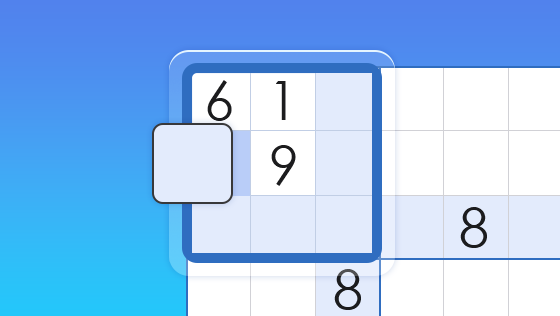
Sudoku, a number placement puzzle, presents a 9×9 grid to be filled with digits 1 through 9 such that each column, each row, and each of the nine 3×3 subgrids contain all of the digits from 1 to 9 without repetition. From a cognitive science perspective, mastering how to complete Sudoku step-by-step involves a sophisticated blend of pattern recognition, logical deduction, and systematic elimination. This popular Japanese puzzle, whose name means “single number,” has transcended cultural barriers to become a global phenomenon, engaging millions in a pursuit of mental agility. The primary problem it addresses is the inherent human desire for structured problem-solving and the development of analytical thought processes without relying on arithmetic skills. Engaging with Sudoku offers a unique form of mental exercise, sharpening focus and patience, while providing a tangible sense of accomplishment with each completed grid. This deep dive will structurally analyze the methodologies, providing a clear pathway for individuals to systematically approach and resolve Sudoku puzzles of varying difficulty.
Understanding the Core Mechanics of Sudoku Grid Resolution
The foundational principle of how to complete Sudoku step-by-step lies in its three immutable rules: each row must contain digits 1-9 exactly once, each column must contain digits 1-9 exactly once, and each of the nine 3×3 blocks must contain digits 1-9 exactly once. Based on structural analysis, these constraints create a complex interdependency across the grid, where placing a single number can have ripple effects, eliminating possibilities in multiple other cells.
From a framework perspective, every empty cell within a Sudoku grid holds a set of ‘candidate’ numbers—digits that are not yet present in its respective row, column, or 3×3 block. The game’s objective is to reduce these candidate sets through logical deduction until only one possible digit remains for each cell. This process is not random but follows a hierarchical approach of identifying certainty.
The simplest deductions involve ‘naked singles,’ where a cell has only one possible candidate remaining after considering its row, column, and block. More complex techniques involve ‘hidden singles,’ where a particular digit can only appear in one specific cell within a row, column, or block, even if that cell has other candidates. These basic mechanics form the bedrock of efficient Sudoku resolution.
Systematic Approaches to Solving Sudoku: A Step-by-Step Guide
In practical application, completing Sudoku step-by-step begins with an initial scan for ‘naked singles.’ Systematically review the grid, cell by cell or block by block, identifying any empty cells where only one digit can logically fit given the existing numbers in its row, column, and 3×3 box. Fill these in immediately, as they often unlock further deductions.
The next crucial step involves comprehensive ‘candidate marking’ or ‘pencil marking.’ For each empty cell, lightly note all possible digits that are not yet present in its corresponding row, column, or block. This meticulous record-keeping is vital for identifying more advanced patterns and avoiding errors later in the process.
Following candidate marking, focus on ‘hidden singles,’ a technique where a candidate digit appears only once within a specific row, column, or 3×3 block, even if the cell itself has other candidates. Identify this unique placement and fill in the digit. This step often requires careful scanning of candidate lists within each constraint area.
Progressing further, ‘naked pairs/triples’ involve identifying two or three cells in a row, column, or block that contain the exact same two or three candidates, and no other candidates. If two cells in a row only have candidates {1, 2}, then 1 and 2 must go into those cells, eliminating 1 and 2 as candidates from all other cells in that row. Apply similar logic for triples.
Advanced techniques like ‘locked candidates’ and ‘pointing pairs/triples’ are essential for harder puzzles. If a candidate is confined to a specific row or column within a 3×3 block, then that candidate can be eliminated from other cells in that row or column outside of that block. Conversely, if a candidate exists in a specific row/column across two different blocks, it can eliminate candidates from the common block.
For the most challenging grids, strategies such as ‘X-Wing’ and ‘Swordfish’ come into play, involving patterns of four or more cells across multiple rows and columns to eliminate candidates. These complex techniques require keen visual analysis and a deep understanding of candidate interactions to identify and apply successfully.
Finally, if all systematic deductions fail to progress, a strategic ‘backtracking’ or ‘guessing’ step might be necessary. This involves making an educated guess in a cell with the fewest candidates, then meticulously following its implications. If a contradiction arises, revert to the guess point and try the next candidate. While often discouraged for efficiency, it’s a valid last resort for truly intractable puzzles.
Comparative Analysis: Sudoku’s Deductive Prowess Against Allied Puzzles
When evaluating how to complete Sudoku step-by-step within the broader landscape of logic puzzles, it’s insightful to compare its methodology with similar grid-based challenges like Kakuro and KenKen. Sudoku’s core appeal lies in its reliance solely on placement and elimination, making it accessible while still demanding significant logical rigor. Its ‘Complexity’ is primarily driven by the number of empty cells and the subtlety of hidden patterns.
Kakuro, often described as a numerical cross-sum puzzle, requires both addition and placement skills. In terms of ‘Deduction Type,’ Kakuro integrates arithmetic with combinatorial logic, where sums must be formed from unique digits. This introduces an additional layer of constraint compared to Sudoku’s pure constraint satisfaction. While Sudoku offers a ‘pure deduction’ experience, Kakuro blends deduction with basic arithmetic fact retrieval.
KenKen, another popular grid puzzle, combines arithmetic operations (addition, subtraction, multiplication, division) within ‘cages’ along with the standard Sudoku-like row and column constraints. Its ‘Engagement’ level often feels higher due to the varied arithmetic challenges, but this also increases its ‘Complexity’ as players must consider both number placement and the outcomes of calculations. Sudoku, by contrast, maintains a consistent rule set, allowing for a focused development of pure logical inference. All three puzzles develop cognitive flexibility, but Sudoku remains the archetype for non-arithmetic logical grid resolution.
Common Obstacles in Sudoku Solving and Professional Strategies
One of the most frequent pitfalls encountered when learning how to complete Sudoku step-by-step is over-reliance on guessing without sufficient logical deduction, which often leads to errors and necessitates extensive backtracking. Based on structural analysis, haphazard guessing destabilizes the entire grid, making it difficult to pinpoint where the initial mistake occurred. The professional strategy is to exhaust all possible logical deductions, no matter how small, before resorting to a well-informed, minimal-risk guess as a last resort.
Another common mistake is inconsistent or incomplete candidate marking, or neglecting to update candidate lists after placing new numbers. From a framework perspective, an outdated candidate list is akin to working with incomplete data, inevitably leading to missed opportunities for deduction. To avoid this, meticulously update all affected cells’ candidate lists whenever a new number is placed; digital Sudoku apps often automate this, but manual solvers must develop this discipline.
Overlooking basic deductions, such as simple naked or hidden singles, in the rush to apply more advanced techniques is a third prevalent error. In practical application, many complex puzzles can be significantly simplified by ensuring all basic deductions have been thoroughly checked. Professional solvers advise a hierarchical approach: always re-scan for the simplest deductions after making any placement, as new opportunities for these “easy wins” frequently emerge.
Optimizing Your Sudoku Strategy: Frequently Asked Questions
Q: What is the best starting point for a Sudoku beginner? A: Begin by thoroughly scanning for ‘naked singles’—cells where only one number can fit based on existing row, column, and block digits. This foundational step builds confidence and often reveals immediate progress.
Q: How can I avoid making mistakes in complex Sudoku puzzles? A: Meticulous ‘pencil marking’ of all possible candidates in each empty cell is crucial. Consistently update these marks as you place numbers, ensuring your candidate lists are always accurate.
Q: Is guessing ever an acceptable strategy in Sudoku? A: While logical deduction is paramount, a well-informed ‘backtracking’ guess on a cell with limited candidates can be a last resort. Always note your guess and be prepared to revert if it leads to contradictions.
Q: What is the primary benefit of regularly solving Sudoku? A: Regular Sudoku solving enhances logical reasoning, problem-solving skills, and concentration. It provides a structured mental workout that improves cognitive flexibility and patience.
Q: How do Sudoku apps help with learning advanced techniques? A: Many apps offer hints, candidate tracking, and error checking, allowing learners to experiment with strategies and understand the logical flow of advanced solving methods without manual tedium.
Completing Sudoku step-by-step is less about innate genius and more about the systematic application of logical rules and deductive reasoning, a cornerstone principle in cognitive science. This structural analysis demonstrates that by approaching the grid with methodical precision, from identifying naked singles to deploying advanced elimination patterns, any puzzle, regardless of its perceived difficulty, can be resolved. The long-term strategic value of consistently engaging with Sudoku lies not just in grid completion, but in the profound enhancement of one’s analytical capabilities and structured problem-solving mindset, skills highly transferable to complex challenges in any field.