

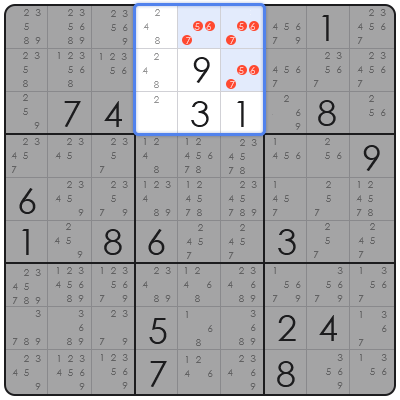
The number of possible Sudoku solutions refers to the total distinct valid 9×9 grids that can exist, where each row, column, and 3×3 subgrid contains digits 1-9 exactly once. This is a fundamental combinatorial problem within recreational mathematics and computational puzzle design, challenging researchers for decades to precisely quantify its solution space. Understanding this exact number is crucial for game developers, puzzle theorists, and computational scientists involved in constraint satisfaction problems. It provides a definitive scale for the complexity and diversity of the Sudoku universe, influencing algorithm design for both generating puzzles and verifying solutions. The primary problem it solves in the current landscape is providing a concrete upper bound for the search space of valid Sudoku grids, which is vital for benchmarking computational search algorithms and understanding the inherent constraints of the puzzle. This figure serves as a bedrock for advanced Sudoku-related research. Moreover, distinguishing between the total number of completed grids and the number of unique puzzles (which are partially filled grids designed to have a single solution) is a critical nuance, with this article focusing exclusively on the former: the complete, valid solution grids.
The Combinatorial Foundations of Sudoku Solutions
The underlying logic of Sudoku solutions is rooted in combinatorial mathematics, specifically permutation theory, and has strong connections to the concept of Latin Squares. A Latin Square is an N x N grid filled with N different symbols, each occurring exactly once in each row and each column. Sudoku extends this by adding the extra constraint of unique symbols within 3×3 subgrids.
Based on structural analysis, the calculation of total Sudoku solutions is not merely a simple permutation of 81 cells but involves highly complex interactions between rows, columns, and blocks. The initial calculation considers permutations of the first row, then systematically attempts to fill the subsequent cells while adhering to all constraints. This process quickly leads to a combinatorial explosion, necessitating sophisticated pruning techniques for any computational approach.
From a framework perspective, early enumeration attempts often made simplifying assumptions or failed to account for all symmetries. The definitive calculation involved a base set of unique patterns in the first 3×3 block and then expanding those patterns throughout the grid. This methodical approach ensures that every valid grid is counted once and only once.
The groundbreaking work by Felgenhauer and Jarvis in 2005 provided the first widely accepted and computationally verified number. They utilized a highly optimized backtracking algorithm, considering fixed patterns for the first row and a section of the first block to reduce the search space before applying exhaustive enumeration and factoring out symmetries.
Identifying and Enumerating Unique Sudoku Grids
In practical application, enumerating unique Sudoku grids involves a systematic approach, often utilizing computational methods to account for symmetry and equivalence efficiently. This process moves beyond simply generating valid grids to ensuring that only fundamentally distinct solutions are counted.
Step 1: Normalize the first row. For computational efficiency and to reduce immediate redundancy, it’s common practice to fix the first row of the Sudoku grid to a canonical permutation, typically ‘1 2 3 4 5 6 7 8 9’. This simplifies the initial branching factor without losing generality, as any solution can be transformed to one starting with this row by simply relabeling the digits.
Step 2: Enumerate valid configurations for the first three rows (the ‘band’). This is a crucial step where early constraint satisfaction helps prune invalid paths. The 3×3 block constraints within this band are particularly restrictive, dramatically reducing the number of valid starting configurations that can be extended to a full solution.
Step 3: Extend these partial configurations using a backtracking algorithm. For each valid ‘band’ configuration, a recursive backtracking solver attempts to fill the remaining cells. At each empty cell, it tries digits 1-9, immediately pruning if a digit violates row, column, or block constraints. This depth-first search continues until a complete valid grid is formed or a dead-end is reached.
Step 4: Factor out symmetries. A significant challenge in enumeration is avoiding overcounting due to grid symmetries. These include rotations (0°, 90°, 180°, 270°), reflections (horizontal, vertical, diagonal), and permutations of rows within a stack (e.g., rows 1-3) or columns within a band (e.g., columns 1-3). There are 8 types of grid transformations (identity, 3 rotations, 4 reflections) and additional symmetries involving swapping bands/stacks and relabeling digits (9! ways). When these are accounted for, the vast number of total grids collapses to a much smaller set of truly unique base solutions. This normalization step is critical for a precise count.
Comparing Sudoku Solution Space with Related Constraint Problems
From a framework perspective, comparing the Sudoku solution space with related constraint problems like N-Queens or general Latin Squares highlights distinct complexities and efficiencies in their enumeration. Each problem presents a unique set of constraints that dictates the size and structure of its solution set.
Consider the 9×9 Latin Square problem. A 9×9 Latin Square has no 3×3 block constraint, making its solution space significantly larger than Sudoku’s. The number of 9×9 Latin Squares is estimated to be over 5.5 x 10^27, far exceeding the Sudoku count. This demonstrates that the seemingly small additional 3×3 subgrid constraint in Sudoku drastically reduces the number of possible solutions, making it a much ‘tighter’ constraint satisfaction problem in terms of solution density.
The N-Queens problem, specifically for an 8×8 chessboard (N=8) as a common reference, involves placing N non-attacking queens. The number of solutions for 8-Queens is 92, and for 9-Queens, it is 352. While a different type of constraint (non-attacking), its solution count is orders of magnitude smaller than Sudoku. This implies a comparatively lower ‘complexity’ in terms of combinatorial search space, and thus, higher ‘efficiency’ in enumerating its solutions with standard algorithms.
In summary, while all are combinatorial, Sudoku’s solution count of 6,670,903,752,021,072,936,960 total grids and 5,472,730,538 unique base solutions places it in an interesting middle ground. It is vastly more complex than N-Queens but considerably less complex than unrestricted Latin Squares, underscoring the delicate balance of its rules in creating a rich yet enumerable puzzle domain. This analysis informs algorithm design, emphasizing that a tailored approach is always necessary given the specific constraint topology of each problem.
Navigating Challenges in Sudoku Solution Enumeration
Accurately determining the number of possible Sudoku solutions involves avoiding common pitfalls, particularly concerning symmetry and the distinction between distinct grids and canonical forms. These challenges often lead to miscalculations if not addressed rigorously.
One frequent mistake is **overcounting due to rotational and reflective symmetries**. A single ‘mathematical’ solution grid can appear in 8 different orientations (original, 3 rotations, 4 reflections). If these transformations are not accounted for, the total count will be inflated. The professional advice is to normalize all generated solutions to a canonical form (e.g., by rotating and reflecting until the top row is lexicographically smallest) or to divide the total count by the order of the symmetry group, ensuring each unique grid is counted only once.
Another pitfall is **confusing the number of ‘valid solution grids’ with the number of ‘valid Sudoku puzzles’**. A solution grid is a fully populated 9×9 grid adhering to all Sudoku rules. A Sudoku puzzle, however, is a partially filled grid (with ‘givens’) that has exactly one unique solution. The number of possible Sudoku puzzles is vastly larger and significantly harder to quantify, as it involves an additional layer of uniqueness and solvability criteria. To avoid this, always clearly define the scope of the enumeration task at hand.
Finally, **computational intractability without advanced techniques** is a significant hurdle. A naive brute-force approach attempting to fill 81 cells would be computationally infeasible. The solution involves employing highly optimized backtracking algorithms, advanced constraint propagation techniques (like Dancing Links algorithm by Donald Knuth for Exact Cover problems), and leveraging parallel computing to distribute the search space. Early and effective pruning of invalid branches is essential for any successful enumeration.
Frequently Asked Questions on Sudoku Solution Enumeration
This FAQ addresses common inquiries regarding the calculation and implications of the total number of valid Sudoku grids, crucial for a comprehensive understanding of this combinatorial puzzle.
Q: How many total possible Sudoku grids are there? A: There are 6,670,903,752,021,072,936,960 total valid 9×9 Sudoku grids, as definitively determined by computational enumeration.
Q: How many unique Sudoku solutions are there if symmetries are accounted for? A: Accounting for all symmetries (rotations, reflections, and relabeling of digits), there are 5,472,730,538 truly distinct Sudoku base solutions.
Q: What is the difference between a Sudoku solution and a Sudoku puzzle? A: A solution is a completed, valid 9×9 grid where all rules are met. A puzzle is a partially filled grid designed to have exactly one unique solution.
Q: Why is knowing this number significant for puzzle design? A: It informs designers about the vast potential variations, preventing accidental duplication and ensuring diversity and novelty in computer-generated puzzle sets.
Q: Has this number been definitively proven? A: Yes, the number was definitively calculated by Felgenhauer and Jarvis in 2005 using exhaustive computational search and independently verified by subsequent research groups, solidifying its accuracy.
The precise quantification of Sudoku solutions, derived from rigorous structural analysis, represents a cornerstone in combinatorial mathematics and computational problem-solving. It underscores the profound complexity that can arise from deceptively simple rules and serves as a testament to the power of algorithmic enumeration. This understanding not only validates the mathematical elegance of Sudoku but also provides a robust framework for further research in constraint satisfaction problems and algorithm optimization. As computational power continues to advance, such enumerations set crucial benchmarks for testing new algorithms and offer invaluable insights into the scalability and solvability of similar constraint-based challenges across various domains, from logistics to artificial intelligence and cryptography.