

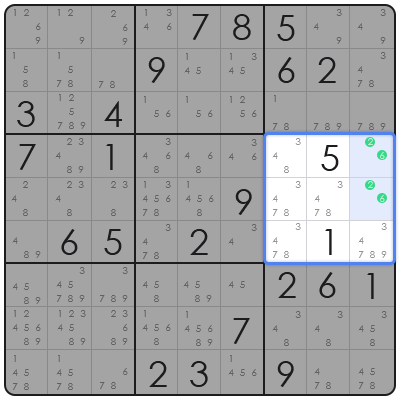
Janric Classic Sudoku, often simply referred to as Sudoku, is a ubiquitous number placement puzzle that has captivated millions globally. At its core, it presents a unique cognitive challenge, demanding a blend of logical deduction, pattern recognition, and systematic thinking. This puzzle, while seemingly straightforward in its rules, offers profound depth in its solve mechanics, making it a cornerstone in the realm of recreational mathematics and brain training. From a cognitive framework perspective, Janric Classic Sudoku addresses the fundamental human desire for problem-solving and mental stimulation. It serves as an accessible yet potent tool for enhancing concentration, improving short-term memory, and sharpening analytical skills without requiring advanced mathematical knowledge. Its structured format provides a predictable environment where consistent application of logic leads to a definitive solution. The primary problem Janric Classic Sudoku solves in the contemporary landscape is the pervasive need for engaging and accessible mental exercise. In an era dominated by passive entertainment, Sudoku offers an active, self-contained challenge that can be pursued anywhere, requiring only a grid and a writing implement. It fosters patience and meticulousness, qualities that are increasingly valuable in various professional and personal domains.
The Foundational Logic of Janric Classic Sudoku
The underlying logic of Janric Classic Sudoku is rooted in a fundamental combinatorial puzzle. It typically consists of a 9×9 grid, which is further subdivided into nine 3×3 subgrids, often called “blocks” or “regions.” The objective is to fill the empty cells with digits from 1 to 9, ensuring that each digit appears only once in each row, each column, and each of the nine 3×3 blocks. This tripartite constraint system is the bedrock of the puzzle’s complexity and solvability.
Based on structural analysis, the interplay between rows, columns, and blocks creates a highly interconnected network of dependencies. A number placed in any given cell immediately imposes restrictions on the possible numbers that can occupy other cells within its respective row, column, and 3×3 block. This interconnectedness is what allows for the deductive reasoning process that defines Sudoku solving.
From a framework perspective, successfully playing Janric Classic Sudoku involves identifying these explicit and implicit constraints to progressively narrow down the possibilities for each empty cell. Techniques range from simple scanning (identifying where a number *must* go because it’s the only available spot in a row/column/block) to more advanced methods like ‘naked singles,’ ‘hidden singles,’ ‘pairs,’ ‘triples,’ and ‘X-wing’ patterns, which leverage multiple cells’ interactions.
Step-by-Step Guide to Solving Janric Classic Sudoku
To begin playing Janric Classic Sudoku, the first step involves a comprehensive initial scan of the grid to identify any ‘easy’ numbers. This means looking for rows, columns, or 3×3 blocks where a digit 1-9 is missing only from one cell. If such a situation exists, that missing digit is the only logical choice for that cell. This process of elimination is often referred to as ‘single candidate’ identification.
Following the initial scan, the next crucial step is to employ ‘cross-hatching’ or ‘scanning and marking.’ For each number from 1 to 9, methodically scan the grid to see where it *cannot* go based on existing numbers in its rows, columns, and 3×3 blocks. When a number can only fit into one specific cell within a given row, column, or block, that cell is filled. This iterative process allows for the deduction of many initial placements and helps to reveal more complex patterns.
In practical application, after exhausting the simple direct deductions, solvers move to more sophisticated techniques. This includes ‘candidate marking,’ where all possible numbers for each empty cell are lightly noted. Then, look for ‘naked pairs’ (two cells in a unit with only two identical candidates) or ‘hidden singles’ (a candidate that is unique to a cell within its row, column, or block, even if the cell has other candidates). These methods systematically reduce the options, pushing the puzzle towards its unique solution. Patience and careful verification at each step are paramount to avoid errors that can derail the entire process.
Analytical Comparison: Janric Classic Sudoku vs. Related Puzzles
When comparing Janric Classic Sudoku with other logic puzzles, several dimensions highlight its unique position. Compared to Kakuro, which involves mathematical sums in addition to number placement, Sudoku’s rules are purely about unique digit placement, giving it a lower ‘complexity’ in terms of arithmetic but maintaining a high logical challenge. The ‘efficiency’ of solving Sudoku can often be higher for new players as the constraints are more immediately visible.
Against KenKen, another grid-based puzzle requiring mathematical operations within ‘cages,’ Janric Classic Sudoku maintains a consistent 9×9 structure with fixed block boundaries. KenKen introduces variable cage shapes and operations, increasing its initial ‘cost’ in terms of understanding new rules but potentially offering greater variety. Sudoku’s fixed rule set allows for a more focused development of deductive strategies.
From an industry standard perspective, Sudoku’s ‘frequency’ of appearance and general recognition vastly outpaces many other logic puzzles. Its simplicity in rule communication combined with endless variations in difficulty makes it a universally appealing and enduring puzzle. While other puzzles may offer different intellectual stimulation, Sudoku’s elegance in its constraint system provides a benchmark for grid-based logic puzzles.
Navigating Challenges: Common Pitfalls and Expert Solutions
A frequent mistake when playing Janric Classic Sudoku is making premature assumptions or guessing. Based on structural analysis, every placement must be a direct result of logical deduction, not intuition. An expert solution involves meticulously verifying each number before committing it to the grid, often by mentally (or physically) checking if it violates any row, column, or block constraints. If a guess is made, it can lead to dead ends and requires backtracking, wasting valuable time and effort.
Another common pitfall is the failure to systematically scan the grid. Many beginners tend to focus on a single section, neglecting the interconnectedness of the entire puzzle. This oversight prevents the identification of ‘hidden singles’ or advanced patterns. Professional advice dictates a structured approach: methodically scan for a specific number (e.g., all ‘1’s, then all ‘2’s), or systematically work through each row, then each column, then each block, ensuring no cell or number is overlooked.
Furthermore, overlooking ‘candidate lists’ or failing to update them is a significant impediment. As numbers are placed, the possibilities for surrounding empty cells change. If these changes aren’t tracked, crucial deductions can be missed. An effective solution involves using pencil marks for all possible candidates in a cell and diligently erasing them as numbers are confirmed. This visual aid acts as an external memory, preventing cognitive overload and ensuring all logical implications are considered.
Essential Janric Sudoku FAQs for the Modern Solver
**Q: What is the primary goal of how to play janric classic sudoku?** A: The primary goal is to fill a 9×9 grid with digits 1 through 9 such that each digit appears only once in each row, column, and 3×3 block. This core objective guides all solving strategies.
**Q: Can there be more than one solution to a Janric Classic Sudoku puzzle?** A: No, a properly constructed Janric Classic Sudoku puzzle always has one unique solution. If you find multiple valid solutions, the puzzle was likely flawed in its design.
**Q: Is how to play janric classic sudoku a math puzzle?** A: While it uses numbers, Janric Classic Sudoku is a logic puzzle, not a math puzzle. The digits 1-9 are symbols; their numerical value or arithmetic properties are irrelevant to solving.
**Q: What is the hardest part about how to play janric classic sudoku?** A: The hardest part for many is transitioning from simple eliminations to identifying more complex patterns like ‘naked pairs’ or ‘X-wings,’ which require recognizing relationships across multiple cells and units.
**Q: How can I improve my Janric Classic Sudoku solving speed?** A: Consistent practice, learning advanced techniques, and systematically scanning the grid are key. Avoid guessing and focus on robust logical deductions to build speed and accuracy.
In conclusion, Janric Classic Sudoku stands as a timeless paradigm of logical deduction and structured problem-solving. Its enduring appeal lies in its elegant simplicity, offering an accessible entry point to complex cognitive exercises while consistently delivering a uniquely satisfying solution. From a long-term strategic value perspective, engaging with Sudoku enhances critical thinking, patience, and attention to detail, skills transferable across diverse professional and personal endeavors. As an industry, the continued evolution and popularity of such brain-training puzzles underscore a growing appreciation for deliberate mental engagement, positioning Janric Classic Sudoku not merely as a pastime, but as a foundational tool for cognitive fitness in a rapidly advancing world.