

Sudoku, a number placement puzzle, is a globally recognized exercise in pure logical deduction, challenging players to fill a 9×9 grid with digits so that each column, each row, and each of the nine 3×3 subgrids contains all of the digits from 1 to 9. Far from being a mere pastime, it represents a structured problem-solving paradigm that demands keen observation and systematic reasoning. The primary problem Sudoku solves within the current landscape of cognitive engagement is the enhancement of logical acumen and sustained focus. In an era often characterized by fragmented attention, Sudoku provides a singular, self-contained challenge that compels the mind to concentrate, analyze, and synthesize information under a defined set of constraints, thereby honing critical analytical skills. This article delves into the fundamental mechanics of Sudoku, offering a structural breakdown of its underlying logic and a step-by-step guide to its mastery. We will conduct a comparative analysis with other logical puzzles, illuminate common pitfalls, and provide expert strategies to navigate the intricacies of the game, ultimately emphasizing its enduring value as a mental discipline.
Understanding the Core Mechanics of Sudoku
Understanding how to play Sudoku game fundamentally begins with grasping its grid mechanics and inviolable rules. The game is played on a 9×9 grid, which is further subdivided into nine 3×3 smaller grids, often referred to as ‘blocks’ or ‘regions.’ The objective is to populate the empty cells with digits from 1 to 9, adhering to three critical constraints: each row must contain all digits from 1 to 9 exactly once.
Based on structural analysis, the second foundational rule dictates that each column must also contain all digits from 1 to 9 exactly once, irrespective of the rows. This dual constraint—horizontal and vertical uniqueness—forms the bedrock of all deductive reasoning employed in Sudoku. Initially, the grid presents a certain number of pre-filled cells, which serve as the known data points from which all subsequent deductions must flow.
The third, equally important rule specifies that each of the nine 3×3 blocks must contain all digits from 1 to 9 exactly once. From a framework perspective, these overlapping constraints create a complex interdependency where the placement of a single number can ripple through multiple rows, columns, and blocks, yielding further deductions. Mastering these basic rules is the essential first step towards proficient Sudoku play.
A Foundational Approach: Step-by-Step Sudoku Play
In practical application, an effective methodology for how to play Sudoku game involves a systematic, multi-layered approach to deduction. The initial phase focuses on identifying obvious placements by scanning for ‘single candidates’ that are uniquely determined by existing numbers within a row, column, or 3×3 block.
1. Scanning for Obvious Placements: Begin by systematically checking each row, column, and 3×3 block for numbers that can only fit in one specific cell. This often involves looking for numbers already present in a unit, then identifying the remaining empty cells that can only house a particular missing digit.
2. Candidate Elimination Strategy: Once obvious placements are made, identify candidate numbers for empty cells within rows, columns, and blocks by marking potential values. This can be done mentally or by using small pencil marks in each cell, eliminating numbers already present in the corresponding row, column, or block.
3. Hidden Singles and Pairs: Look for numbers that, despite having multiple candidates in a cell, are the *only* candidate for a particular number in a given row, column, or block. Similarly, identify pairs of numbers that can only reside in two specific cells within a unit, thereby eliminating those numbers as candidates from other cells in that same unit.
4. Naked Pairs and Triplets: When two or three cells in a unit share the exact same two or three candidate numbers, these numbers can be eliminated as candidates from all other cells in that unit. This technique relies on the principle that if these specific numbers must occupy these specific cells, they cannot occupy any other cells in that unit.
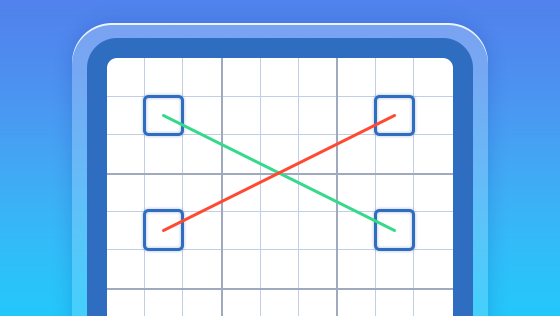
5. X-Wing and Swordfish Techniques: These advanced patterns involve identifying specific number candidates that align across multiple rows or columns, allowing for the elimination of those candidates from other cells outside the pattern. For instance, an X-Wing occurs when a candidate number appears in exactly two cells in two different rows, and these cells also align in the same two columns, allowing for elimination from those columns in other rows.
6. Error Checking and Backtracking: If a puzzle becomes impossible or a contradiction arises, systematically review recent placements to identify and correct errors, sometimes necessitating backtracking to an earlier state. This process underscores the iterative and self-correcting nature of complex logical problem-solving.
Comparative Analysis: Sudoku’s Place in Logical Problem Solving
Based on structural analysis, Sudoku stands as a unique form of logical puzzle when compared to other common brain teasers like Kakuro or Nonograms. In terms of complexity, Sudoku’s primary challenge lies in deduction and elimination from a complete set of possibilities, emphasizing constraint satisfaction. Kakuro, conversely, introduces arithmetic, demanding both logical deduction and basic math skills to fill a grid based on sums, adding an additional layer of complexity beyond pure number placement.
From a framework perspective, Sudoku’s efficiency in developing pure logical reasoning and pattern recognition is exceptionally high due to its constrained rules and clear objectives. The ‘cost’ in terms of learning curve for basic Sudoku is notably low, making it highly accessible to beginners. However, mastering advanced techniques, which often involve multi-cell candidate interactions and visual pattern recognition, presents a significantly higher cognitive ‘cost,’ demanding dedicated practice and conceptual understanding.
In practical application, while other puzzles like Nonograms focus on spatial reasoning and image reconstruction through numerical clues, Sudoku remains singular in its emphasis on sequential, deductive logic within a numerical context. Its ubiquitous nature and low barrier to entry for fundamental play, coupled with a deep well of advanced strategies, position it as a foundational exercise for anyone seeking to enhance their general problem-solving faculties and mental agility.
Navigating Common Pitfalls in Sudoku Strategy
One frequent mistake in how to play Sudoku game is premature guessing, which often leads to errors that are difficult to backtrack and unravel. Based on structural analysis, such impulsive moves disrupt the delicate balance of deduction and can quickly lead to an insoluble state. Professional advice dictates a rigorous adherence to candidate elimination and verified placements, only resorting to ‘what if’ scenarios when no other logical deduction is possible, and always marking potential paths to enable efficient backtracking if the assumption proves incorrect.
Another common pitfall is the failure to systematically scan the entire grid for new deductions after each placement. From a framework perspective, this oversight means missing ‘hidden singles’ or ‘naked pairs’ that become apparent only after previous steps, stalling progress unnecessarily. In practical application, players should adopt a cyclical scanning strategy, meticulously re-evaluating all rows, columns, and blocks for newly revealed certainties or eliminations after every confident number placement, ensuring no opportunity for deduction is missed.
A third challenge arises from not recognizing advanced patterns, such as X-Wings or Swordfish, especially in harder puzzles. This often leads to feeling ‘stuck’ or resorting to brute-force guessing. The solution involves actively studying and practicing these specific patterns. Through consistent application, players can train their eyes to spot these configurations, which are critical for unlocking complex solutions and signify a deeper understanding of the game’s underlying, interconnected logic. Dedicated study of these higher-level strategies transforms the approach to difficult puzzles.
Frequently Asked Questions About Playing Sudoku
Q: What is the fundamental rule of Sudoku? A: The core rule is to fill a 9×9 grid so each row, column, and 3×3 block contains all digits from 1 to 9 without repetition. This ensures a unique logical solution.
Q: How can beginners improve quickly? A: Beginners should focus on scanning for ‘single candidates’ in rows, columns, and blocks. Consistent practice with easier puzzles builds foundational pattern recognition and deductive skills for how to play Sudoku game.
Q: Are there different difficulty levels in Sudoku? A: Yes, difficulty levels are determined by the number of pre-filled cells and the complexity of the logical deductions required. Harder puzzles demand advanced techniques like X-Wings or Swordfish.
Q: Can every Sudoku puzzle be solved logically? A: Most well-constructed Sudoku puzzles have a unique solution achievable through pure logic, without guessing. Puzzles requiring guessing are generally considered poorly designed.
Q: What benefits does playing Sudoku offer? A: Playing Sudoku enhances logical thinking, concentration, problem-solving abilities, and patience. It’s a great cognitive exercise for mental acuity and structured thought processes.
In conclusion, how to play Sudoku game is more than a casual pastime; it is a profound exercise in applied logic and structured problem-solving. Based on structural analysis, its rigorous rules and deductive pathways cultivate a disciplined approach to challenges, emphasizing patience, systematic thinking, and pattern recognition. From a framework perspective, the skills honed through Sudoku—from basic candidate elimination to advanced pattern identification—are directly transferable to complex scenarios across various professional domains. The enduring appeal and strategic value of Sudoku lie in its capacity to continually challenge and refine our cognitive abilities, positioning it as a timeless tool for mental agility and intellectual development in an increasingly complex world.