

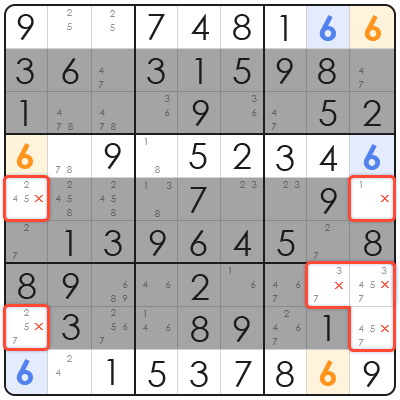
Hindu 5 Star Sudoku represents an elevated challenge in the world of logic puzzles, transcending the boundaries of the traditional 9×9 grid by introducing a complex, overlapping five-star pattern. This intricate variant demands a sophisticated blend of classic Sudoku techniques and specialized strategies to navigate its interconnected regions. Its inherent difficulty stems from the need to simultaneously manage numerical constraints across multiple overlapping 3×3 blocks, creating a richer, more interwoven puzzle experience. The significance of mastering Hindu 5 Star Sudoku extends beyond mere entertainment; it hones advanced analytical and pattern recognition skills, crucial for problem-solving in various cognitive domains. Unlike its simpler counterparts, this variant forces solvers to think multi-dimensionally, anticipating the ripple effects of each number placement across a broader, less intuitive structure. The primary problem it solves within the landscape of logic puzzles is the demand for a more profound and sustained intellectual engagement, offering a formidable test for experienced enthusiasts seeking new frontiers in numerical logic. This deep-dive article will dissect the structural complexities of Hindu 5 Star Sudoku, providing a comprehensive guide to its underlying mechanics and effective solving methodologies. From foundational principles to advanced strategic applications, we will explore how dedicated solvers can approach these formidable puzzles. Based on structural analysis, understanding the interconnectedness of the ‘stars’ is paramount for success, transforming seemingly chaotic grids into solvable challenges through systematic deduction and foresight.
The Essence of Hindu 5 Star Sudoku
Hindu 5 Star Sudoku is a variant of Sudoku characterized by its unique grid layout, which consists of five overlapping 9×9 Sudoku grids arranged in a star or cross-like formation. Each of these five grids operates under standard Sudoku rules: every row, column, and 3×3 block within that individual 9×9 grid must contain the numbers 1 through 9 exactly once. The challenge escalates significantly due to the shared 3×3 blocks at the intersection points of the grids, meaning a number placed in a common area impacts multiple larger 9×9 puzzles simultaneously.
The inherent challenge of Hindu 5 Star Sudoku lies in this very overlap, as a single cell can belong to two or even three distinct 9×9 grids, demanding meticulous attention to the global impact of local decisions. This interwoven structure requires a holistic approach, where the solver cannot isolate a single 9×9 grid without considering its immediate neighbors and their respective constraints. From a framework perspective, successful solving hinges on the ability to continuously toggle between macro (overall star) and micro (individual 9×9) perspectives, ensuring consistency across the entire puzzle.
Its advanced difficulty is why Hindu 5 Star Sudoku is a definitive test for seasoned Sudoku enthusiasts. It goes beyond simple number placement, requiring sophisticated logical chains and candidate elimination across a much larger solution space. The ability to identify and leverage the constraints imposed by the shared regions is not just an advantage, but an absolute necessity for progression, making it a truly engaging and mentally rigorous pursuit.
Deconstructing the Hindu 5 Star Sudoku Grid and Rules
Deconstructing the Hindu 5 Star Sudoku grid involves understanding its specific five-grid arrangement and the core rules that govern numerical placement across its complex structure. The puzzle typically features a central 9×9 grid, surrounded by four additional 9×9 grids extending outwards from its corners, forming the distinctive ‘star’ pattern. Each of these five large grids maintains its own set of 81 cells, divided into nine 3×3 blocks, with the critical distinction being the overlapping blocks.
The primary rule set, inherited from classic Sudoku, dictates that each row, column, and 3×3 block within *each* of the five 9×9 grids must contain the digits 1 through 9 exactly once. The complexity is introduced by the shared 3×3 blocks: the four corner 3×3 blocks of the central grid also serve as one of the 3×3 blocks for each of the four surrounding grids. This means a number placed in one of these 3×3 intersection blocks must satisfy the row, column, and 3×3 constraints for *both* or *all* involved 9×9 grids.
Based on structural analysis, recognizing these shared regions as pivotal constraint propagators is crucial. These overlapping blocks are the ‘chokepoints’ and the most powerful source of deductions. When a number is determined for a cell within such a shared block, its implications ripple outwards to two or three separate 9×9 puzzles, drastically reducing candidate options in multiple locations simultaneously. In practical application, consistently monitoring these intersections for single candidates or hidden pairs/triples offers the fastest path to significant progress.
Fundamental Techniques for Solving Hindu 5 Star Sudoku
Fundamental techniques for solving Hindu 5 Star Sudoku begin with mastering standard Sudoku strategies, then adapting them to the interconnected grid. Start by scanning all rows, columns, and 3×3 blocks (including the shared ones) within a single 9×9 grid for ‘single candidates’ — cells where only one number can logically fit. This initial pass should focus on the most constrained areas, often the shared 3×3 blocks, as these areas generate immediate deductions that impact multiple grids.
Once single candidates are placed, the next step involves identifying ‘hidden singles’ and ‘naked singles’ within each individual 9×9 grid. A naked single occurs when a cell is the only one in its row, column, or block that can contain a particular number. A hidden single is when a number can only appear in one specific cell within a row, column, or block, even if other numbers are also possible for that cell. In practical application, as numbers are filled in, continuously re-scan for new single candidate opportunities, especially around the boundaries of the overlapping grids.
From a framework perspective, always cross-reference potential placements across the interconnected grids. Before definitively placing a number in a shared cell, mentally verify its implications for all affected 9×9 grids. This proactive conflict avoidance prevents errors that can propagate widely. Systematically move through each of the five 9×9 grids, making all possible simple deductions, then circle back to the shared regions as they typically reveal more complex interactions as the puzzle progresses.
Advanced Strategies for Complex Hindu 5 Star Sudoku Puzzles
Advanced strategies for complex Hindu 5 Star Sudoku puzzles involve utilizing more sophisticated techniques like ‘hidden pairs/triples’, ‘naked pairs/triples’, and ‘X-wings’ or ‘Swordfish’ patterns, adapted for the multi-grid environment. Hidden pairs, for instance, occur when two numbers can only exist in two specific cells within a row, column, or block, eliminating those numbers as candidates for other cells in that unit. Naked pairs similarly involve two cells sharing two candidate numbers, allowing elimination elsewhere.
Based on structural analysis, X-Wing and Swordfish patterns, which identify numbers that are restricted to specific rows or columns, become even more potent when they span across the shared regions. For example, an X-Wing formed in an outer grid might provide a deduction that eliminates a candidate in a shared 3×3 block, which then cascades into the central grid. Identifying these cross-grid relationships requires careful visual scanning and candidate tracking across the entire star formation, not just isolated 9×9 squares.
In practical application, maintaining a meticulous record of candidate numbers for each cell is paramount. While some advanced solvers use mental notes, for Hindu 5 Star Sudoku, external aids or sophisticated digital interfaces are often beneficial for tracking candidates across the expansive grid. When stuck, employing ‘forcing chains’ or ‘trial and error’ (with careful backtracking) can be a last resort. This involves tentatively placing a number and following its logical consequences; if a contradiction arises, that initial placement must be incorrect, allowing for its elimination.
Comparative Analysis: Hindu 5 Star Sudoku vs. Other Sudoku Variants
Comparing Hindu 5 Star Sudoku to other popular variants highlights its unique blend of complexity and strategic depth. Classic Sudoku, the foundational 9×9 grid, serves as a baseline for all variants, characterized by its straightforward rule set and predictable solving patterns. Its complexity is relatively low, and efficiency is high for experienced solvers due to minimal rule deviations. The frequency of encountering classic Sudoku is, by far, the highest, making it the most accessible.
Samurai Sudoku, a five-grid variant similar in structure, often features five distinct 9×9 grids arranged in a cross, with only the central 3×3 blocks overlapping. While challenging, its design is typically less intricate than Hindu 5 Star Sudoku, where shared blocks can be more numerous and strategically critical. The complexity of Samurai is medium-high, and solving efficiency demands managing five separate puzzles simultaneously. Cost, in terms of mental effort, is higher than classic Sudoku, and its frequency is moderate.
Jigsaw Sudoku (or Irregular Sudoku) deviates from the standard 3×3 blocks, instead using irregular-shaped regions that must contain digits 1-9. This introduces a different kind of spatial reasoning challenge, but typically involves only a single 9×9 grid. Its complexity varies depending on the region shapes, but the interconnectedness is less severe than a multi-grid puzzle. Efficiency is moderate, as pattern recognition for irregular blocks is key, and its frequency is moderate. Hindu 5 Star Sudoku surpasses both Samurai and Jigsaw in overall complexity and the demands on multi-dimensional logical reasoning, due to its deeply interwoven constraints and potentially more extensive overlapping regions. The ‘cost’ in terms of sustained cognitive effort and strategic planning is significantly higher, positioning it at the apex of Sudoku variants for experienced puzzle solvers, with a lower frequency of puzzles due to their niche appeal and demanding construction.
Navigating Common Challenges in Hindu 5 Star Sudoku
Navigating common challenges in Hindu 5 Star Sudoku often involves overcoming initial overwhelm and meticulously tracking deductions across multiple grids. A frequent mistake is focusing too narrowly on a single 9×9 grid without considering the broader implications of shared cells. This can lead to incorrect placements that become apparent only much later, requiring extensive backtracking. Professional advice suggests making every placement in a shared cell contingent on its validity across *all* connected grids, even if it seems obvious in one.
Another common pitfall is the failure to systematically identify and utilize the constraints presented by the overlapping 3×3 blocks. Solvers might focus on external grids or less constrained areas, missing critical deductions that stem from these powerful intersections. The solution is to prioritize these shared regions. Regularly revisit these cells for new single candidates, naked pairs, or hidden triples, as they often hold the key to unlocking significant progress across the entire puzzle. From a framework perspective, these intersections are the control points of the puzzle’s logic.
A third challenge arises from mismanaging candidate lists, especially when dealing with the high volume of possibilities in early stages. Without clear candidate tracking (either mentally for experts or via notation for most), solvers risk making assumptions or missing crucial eliminations. In practical application, utilize clear and consistent candidate notation (e.g., small pencil marks) for every empty cell. When a number is placed, immediately erase that number from the candidate list of all affected cells in its row, column, and block, across all connected 9×9 grids. This disciplined approach minimizes errors and clarifies the path forward.
Frequently Asked Questions About Hindu 5 Star Sudoku
Q: What makes Hindu 5 Star Sudoku different from other Sudoku variants? A: Its distinct feature is the arrangement of five overlapping 9×9 grids in a star pattern. The shared 3×3 blocks at the intersections necessitate simultaneous consideration of multiple grids, drastically increasing complexity and requiring multi-dimensional logical deduction.
Q: Is Hindu 5 Star Sudoku suitable for beginners? A: No, Hindu 5 Star Sudoku is considered an advanced variant. Its intricate overlaps and expanded solution space make it challenging. Beginners should first master classic Sudoku before attempting this complex puzzle type to build foundational skills.
Q: What is the most important strategy for solving Hindu 5 Star Sudoku? A: The most important strategy is to consistently focus on and leverage the shared 3×3 blocks. These intersections propagate constraints across multiple 9×9 grids, offering the most powerful deductions and accelerating the solving process.
Q: Are there any online tools or apps for Hindu 5 Star Sudoku? A: Yes, several online platforms and mobile applications offer Hindu 5 Star Sudoku puzzles, often with candidate tracking features to aid in solving. Searching for ‘Hindu 5 Star Sudoku online’ will reveal many options. These tools can be invaluable.
Q: How long does it typically take to solve a Hindu 5 Star Sudoku? A: Solving time varies greatly depending on the puzzle’s difficulty and the solver’s experience. While a classic Sudoku might take minutes, a Hindu 5 Star Sudoku can range from 30 minutes to several hours, or even days, for very challenging versions.
In conclusion, mastering how to solve Hindu 5 Star Sudoku transcends mere puzzle-solving; it cultivates advanced cognitive abilities pertinent to complex problem-solving and strategic thinking. By systematically dissecting its unique grid, understanding the ripple effects of shared blocks, and applying both fundamental and advanced strategies, solvers can approach these formidable puzzles with confidence. Based on structural analysis, the continuous interplay between individual grids and their interconnected regions is the core challenge and, simultaneously, the key to unlocking solutions. From a framework perspective, successfully navigating Hindu 5 Star Sudoku represents a significant achievement in logical deduction, emphasizing the long-term strategic value of developing multi-faceted analytical skills. As the demand for complex brain training exercises grows, the forward-looking industry insight suggests that intricate puzzles like Hindu 5 Star Sudoku will continue to be a benchmark for intellectual agility and sustained mental engagement, pushing the boundaries of what dedicated puzzle enthusiasts can achieve.