

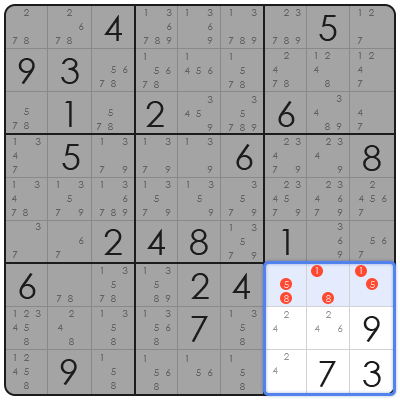
The Sudoku icebreaker is a highly effective, structured team-building exercise designed to enhance communication, collaboration, and problem-solving skills within groups. From a framework perspective, it involves teams working collectively to solve a large-scale Sudoku puzzle, with each team member possessing only a fraction of the total information. This deliberate information asymmetry compels participants to actively communicate and strategize to complete the task. Its significance in contemporary professional environments cannot be overstated, particularly as remote and hybrid work models become standard. The exercise rapidly establishes a dynamic where individuals must rely on each other’s input, thereby breaking down initial communication barriers and fostering a sense of shared purpose from the outset. Based on structural analysis, it’s a low-stakes yet high-impact method for immediate group integration. The primary problem it solves is the initial awkwardness and communication inertia often present in newly formed teams or during team restructuring. By providing a common, engaging, and cognitively stimulating task, the Sudoku icebreaker bypasses superficial introductions, moving directly into functional interaction. It effectively demonstrates the power of collective intelligence and highlights individual communication styles in a constructive setting.
Deconstructing the Sudoku Icebreaker: Core Mechanics and Principles
The Sudoku icebreaker fundamentally operates on principles of distributed cognition and forced communication. Participants are given a piece of a larger Sudoku grid, often a smaller section or individual rows/columns, and instructed not to show their piece to others. The core mechanic is that the complete solution can only be achieved by verbalizing numerical values and their positions, demanding precise articulation and active listening.
Underlying this exercise is the logical framework of constraint satisfaction inherent in Sudoku itself. However, by fragmenting the puzzle, the constraint satisfaction problem shifts from an individual endeavor to a collective one. This necessitates a shared mental model of the puzzle’s current state, which is built incrementally through effective inter-personal data exchange. The process highlights the criticality of clear, concise, and unambiguous communication.
The primary components include a pre-prepared, large Sudoku puzzle (often 9×9 or 16×16 scaled up), divided into smaller, individual segments. Each segment is then distributed to team members. Crucially, strict rules about information sharing, typically limiting it to verbal descriptions without showing physical pieces, define the communication protocol. Time limits are often imposed to add a layer of pressure, simulating real-world project constraints.
Implementing the Sudoku Icebreaker: A Practical Guide for Facilitators
Implementing the Sudoku icebreaker effectively begins with meticulous preparation. Firstly, select a Sudoku puzzle appropriate for the group size and allocated time; a 9×9 grid works well for groups of 4-6, while larger grids suit bigger teams. Print the puzzle on a large sheet and then cut it into logical, manageable segments. Ensure each participant receives a unique piece of the puzzle and that no one individual has enough information to solve it alone.
Next, the briefing phase is paramount. Clearly articulate the objective: to collaboratively solve the Sudoku puzzle. Establish unambiguous rules, such as “You cannot show your puzzle piece to anyone” and “All communication must be verbal.” Emphasize that the goal is not individual speed but collective success through teamwork and clear communication. From a pragmatic standpoint, setting a realistic time limit (e.g., 20-30 minutes) creates a sense of urgency without undue stress.
During the execution, the facilitator’s role shifts to observation and minimal intervention. Monitor group dynamics, identify potential communication breakdowns, and note instances of both effective and ineffective collaboration. If a group is struggling significantly, a subtle prompt, such as “Are you sure everyone understands what numbers are being discussed?” or “Could someone summarize the current state?” can redirect efforts without solving the puzzle for them. The debriefing is critical: guide a discussion about communication strategies, roles taken, challenges faced, and lessons learned about team collaboration.
Sudoku Icebreaker in Context: Comparative Analysis with Related Team-Building Exercises
From a comparative perspective, the Sudoku icebreaker stands out for its unique blend of cognitive challenge and communication imperative. Unlike purely physical or creative icebreakers, it directly targets analytical thinking and structured information exchange. This makes it particularly relevant for teams in data-intensive or project-management-focused industries, where precision in communication is paramount.
In practical application, the Sudoku icebreaker demonstrates a robust balance across several key dimensions when compared to other popular team-building exercises. This analysis highlights its specific strengths in developing structured communication skills and distributed problem-solving capabilities.
While other activities offer valuable benefits, the Sudoku icebreaker’s design specifically isolates and stresses the importance of verbal information transfer and collective logical deduction, making it an exceptionally focused tool for honing these critical professional skills in a low-resource setting.
Navigating Challenges: Common Pitfalls in Sudoku Icebreaker Facilitation
One frequent mistake in facilitating the Sudoku icebreaker is the emergence of dominant personalities who attempt to dictate the solution without adequately listening to or integrating input from all team members. This can stifle participation and negate the exercise’s primary communication objective. A professional solution involves the facilitator subtly reminding the group about the importance of hearing every voice and perhaps even assigning a ‘communication monitor’ role.
Another common pitfall is a lack of clear, consistent communication among participants, leading to misinterpretations of numbers or grid positions. Teams might talk over each other, or assumptions might be made about shared knowledge that isn’t actually present. To mitigate this, reiterate at the outset the need for active listening and precise language, encouraging participants to repeat back information or ask clarifying questions like “Did you mean row 3, column 5, or column 3, row 5?”
Finally, some groups may become overly focused on simply ‘winning’ or completing the puzzle quickly, overlooking the process of collaboration and communication that the exercise is designed to highlight. This win-at-all-costs mentality can lead to rushed decisions and reduced learning. The facilitator should gently reframe the objective, emphasizing that the most valuable outcome is the understanding gained about team dynamics and problem-solving approaches, rather than merely arriving at the correct Sudoku solution.
Quick Answers: Essential FAQs on the Sudoku Icebreaker
This section addresses frequently asked questions regarding the Sudoku icebreaker, providing concise answers for quick understanding and practical application in various professional settings.
Q: What is the ideal group size for a Sudoku icebreaker? A: Typically, 4-6 participants per puzzle is ideal to ensure everyone has a significant piece of information and ample opportunity to contribute to the discussion and solution.
Q: How long does a typical Sudoku icebreaker session last? A: Including instructions, the activity itself, and a crucial debriefing, a session usually takes between 30 to 45 minutes, depending on the puzzle’s complexity and group size.
Q: Can the Sudoku icebreaker be adapted for virtual teams? A: Yes, it can be adapted by using shared digital whiteboards where segments can be revealed as participants verbally communicate their numbers, or by giving each person a segment of a digital puzzle.
Q: What key skills does this icebreaker primarily develop? A: It primarily develops verbal communication, active listening, collaborative problem-solving, strategic thinking, and the ability to work effectively with incomplete information.
In conclusion, the Sudoku icebreaker transcends a simple game, evolving into a sophisticated tool for enhancing team performance. Its structural design inherently fosters essential workplace skills like precise communication, distributed problem-solving, and collective decision-making, which are invaluable for agile and integrated teams. Based on its proven efficacy, it represents a forward-looking strategy for cultivating robust team dynamics and promoting a culture of collaborative excellence in any professional environment, marking it as a critical component in modern team development.