

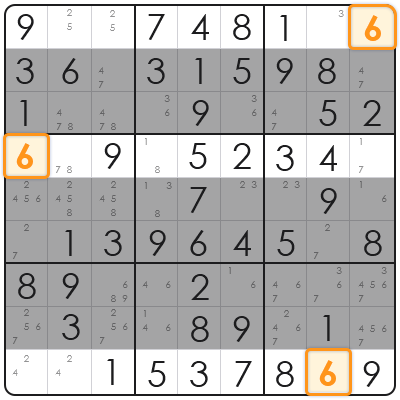
Learning how do you play Sudoku for beginners is a journey into logical deduction, offering a rewarding mental exercise that transcends mere number placement. At its core, Sudoku requires you to fill a 9×9 grid, which is further divided into nine 3×3 subgrids, with digits 1 through 9. The fundamental rule is deceptively simple: each number must appear exactly once in every row, every column, and every 3×3 subgrid. This foundational understanding of how do you play Sudoku for beginners is crucial, establishing the bedrock upon which all advanced strategies are built. It’s a game of absolute certainty, where every move is dictated by the inherent constraints of the grid, demanding patience and systematic thinking rather than guesswork. For those new to the puzzle, mastering these initial steps unlocks a world of engaging challenges. The significance of a solid beginner’s approach extends beyond casual enjoyment. For aspiring speed-solvers, a deep comprehension of fundamental logical deduction techniques is paramount, forming the essential mental frameworks required for rapid pattern recognition and candidate elimination. Even for casual players, a clear methodology ensures a more enjoyable, less frustrating experience, fostering a genuine appreciation for the puzzle’s elegant design. This guide will meticulously break down the process of how do you play Sudoku for beginners, from understanding the grid’s topology to applying the most effective initial strategies, ensuring a clear path to becoming a proficient solver.
Understanding the Sudoku Grid: The Logic Behind How Do You Play Sudoku for Beginners
Playing Sudoku for beginners fundamentally involves understanding the tripartite constraint system of rows, columns, and 3×3 blocks within the 9×9 grid, where each segment must contain unique digits from 1 to 9. This structural necessity dictates every possible move, forming the basis of all logical deduction. The grid is a highly interconnected system where the placement of a single digit impacts 20 other cells (the row, column, and 3×3 block it resides in).
The underlying principle is one of cell constraints: each empty cell has a finite set of ‘candidate’ numbers that could potentially occupy it, derived from the numbers already present in its associated row, column, and 3×3 block. This unique grid topology ensures that, for a properly constructed Sudoku puzzle, there is always one and only one logical solution. Your task is to systematically reduce these candidate sets through logical deduction until only one option remains for each cell.
Based on logic-chain analysis, the absence of a number in a given row, column, or block provides valuable information. If a number is missing from a row, for example, it *must* appear in one of the empty cells within that row. By cross-referencing this with the numbers present in the corresponding columns and 3×3 blocks, you can often narrow down the possibilities significantly. This iterative process of elimination is the very heart of how do you play Sudoku for beginners, transforming seemingly complex grids into solvable puzzles through methodical reasoning.
A Step-by-Step Guide: How Do You Play Sudoku for Beginners Effectively
To play Sudoku for beginners effectively, one must systematically apply scanning techniques, identify single candidates, and utilize pencil marks for robust candidate elimination. The process begins with a comprehensive initial scan to identify the most straightforward placements, often referred to as ‘cross-hatching’ or ‘scanning and locking’.
Step 1: The Initial Scan for ‘Naked Singles’. Begin by scanning rows, columns, and 3×3 blocks for numbers that appear frequently. For any empty cell, check its row, column, and 3×3 block. If only one number from 1 to 9 has *not* yet appeared in any of these three regions for that specific cell, then that number *must* go in that cell. This is the simplest form of logical deduction and provides immediate placements. For competitive solvers, this initial sweep is performed rapidly and is often the most productive phase of a beginner-level puzzle.
Step 2: Employing Pencil Marks for Candidate Elimination. Once the obvious ‘Naked Singles’ are exhausted, it’s time to introduce pencil marks. Pencil marks are small numbers (candidates) written lightly in the corner of a cell to denote all possible digits that could logically occupy that cell. Based on logic-chain analysis, you mark every number from 1-9 that doesn’t conflict with existing numbers in its row, column, or block. This systematic recording allows for visual tracking of cell constraints and is indispensable for further deductions. As you place new numbers, meticulously update (erase) pencil marks in affected cells. For example, if you place a ‘7’ in a cell, you must remove ‘7’ as a candidate from all other cells in that cell’s row, column, and 3×3 block. This ongoing process of candidate elimination is central to how do you play Sudoku for beginners and progressively reveals the solution.
Comparing Beginner Sudoku with Advanced Strategies
While the foundational principles of how do you play Sudoku for beginners are universal, they differ from advanced strategies primarily in complexity, frequency of application, and the reliance on pattern recognition. The beginner’s approach emphasizes direct logical deduction and single-cell candidate elimination, whereas advanced techniques involve recognizing more intricate patterns across multiple cells or regions. The table below illustrates these distinctions.
| Strategy | Difficulty Level | Frequency of Use (Beginner Puzzles) | Logical Complexity | Target |
|:——————————|:—————-:|:————————————|:——————-|:——————————-|
| **How Do You Play Sudoku for Beginners (Singles, Candidate Elimination)** | Easy to Medium | Very High | Low to Moderate | Individual Cell Values |
| **Naked/Hidden Pairs/Triples** | Medium to Hard | Moderate | Moderate to High | Sets of Candidates within Cells |
| **X-Wing (and other Fish Techniques)** | Hard to Expert | Low | High | Intersecting Rows/Columns |
The structural necessity of understanding basic cell constraints before moving to advanced patterns cannot be overstated. Beginners focus on one cell at a time, or simple interactions between a cell and its directly constrained regions. Advanced strategies, such as Naked Pairs, involve identifying two cells in a row, column, or block that contain the exact same two candidates and no others. If such a pair exists, those two candidates *must* occupy those two cells, allowing you to eliminate them from other cells in that region. While these techniques are powerful, they are extensions of the fundamental logical deduction skills learned when understanding how do you play Sudoku for beginners.
Common Pitfalls When Learning How Do You Play Sudoku for Beginners
Common pitfalls when learning how do you play Sudoku for beginners often include premature guessing, neglecting consistent pencil marking, and failing to re-scan the grid after placing a number. These mistakes can lead to frustrating errors and prolonged solving times, hindering the enjoyable progression through a puzzle.
A primary mistake is ‘guessing’ a number when true logical deduction is not immediately apparent. Sudoku is a game of pure logic; every number placement should be justifiable. Guessing introduces uncertainty and often necessitates restarting the puzzle once an error is discovered. For competitive solvers, this is anathema, as it violates the deterministic nature of the puzzle. Instead, if a number isn’t obvious, the solution lies in further candidate elimination or seeking ‘hidden singles’ in other areas of the grid.
Another frequent error is inconsistent or incomplete use of pencil marks. Many beginners neglect to write down all possible candidates for each empty cell, or they fail to meticulously update these marks as new numbers are placed. This oversight obscures potential logical deductions, making it harder to spot ‘single candidates’ or simple ‘pairs’. To avoid this, commit to thoroughly marking candidates and immediately erasing them in affected cells whenever a new digit is confidently placed. This systematic approach reinforces the principles of how do you play Sudoku for beginners.
Frequently Asked Questions: Mastering How Do You Play Sudoku for Beginners
Mastering how do you play Sudoku for beginners involves understanding core rules, systematic scanning, and consistent application of logical elimination, leading to a satisfying and progressive learning curve.
**Q1: What are the absolute basic rules of Sudoku?** The basic rules require filling a 9×9 grid so that each row, each column, and each of the nine 3×3 subgrids contain all digits from 1 to 9, with no repeats.
**Q2: Should I guess numbers if I get stuck?** No, Sudoku is pure logic; guessing leads to errors and frustration. If stuck, revisit your pencil marks, re-scan for new singles, or check for missed candidate eliminations. Persistence and logical deduction are key.
**Q3: What are ‘pencil marks’ and why are they important?** Pencil marks are small numbers written lightly in a cell to track all possible candidates before a definite number is placed. They are crucial for systematic candidate elimination and uncovering hidden singles or pairs.
**Q4: How can I improve my speed when playing Sudoku?** Consistent practice, mastering systematic scanning techniques, and efficient, meticulous pencil marking will significantly reduce your solving time. Focus on accuracy before speed.
**Q5: Is there a special trick to spotting numbers faster?** No singular trick; it’s about developing an eye for patterns through systematic scanning. Consistently checking rows, columns, and 3×3 blocks for ‘hidden singles’ or cells with only one remaining candidate will reveal numbers efficiently.
Understanding how do you play Sudoku for beginners is the gateway to a deeply satisfying and intellectually stimulating pastime. By embracing a ‘Logic-First’ approach, diligently applying scanning techniques, and mastering the use of pencil marks for candidate elimination, players can systematically conquer even seemingly complex puzzles. This foundation not only builds confidence but also prepares the mind for the subtle intricacies of advanced strategies. Consistent practice, coupled with an objective, analytical mindset, will inevitably lead to Sudoku mastery.