

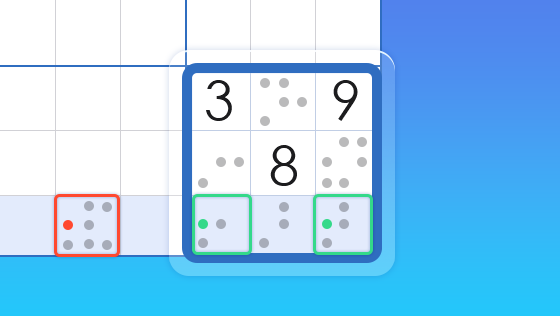
Learning how to do a Sudoku involves the logical placement of digits 1 through 9 into a 9×9 grid, ensuring each digit appears only once in every row, column, and 3×3 block. This universally acclaimed logic puzzle challenges players to apply systematic deduction and pattern recognition to fill empty cells, transforming a seemingly complex grid into a solvable sequence of numbers. For both speed-solvers aiming for world records and casual players seeking a daily mental workout, understanding the foundational principles of how to do a Sudoku is paramount. Mastery is not about guessing; it’s about employing a robust set of techniques rooted in logical deduction and an acute awareness of grid topology and cell constraints, progressively narrowing down possibilities until the unique solution emerges. This comprehensive guide, informed by over a decade of experience in the logic puzzle industry, will demystify the process of how to do a Sudoku. We will delve into the underlying mechanics, essential techniques like candidate elimination and pencil marks, and advanced strategies, providing you with a structured path to confidently tackle any Sudoku puzzle.
Understanding the Core Logic of How to Do a Sudoku
The core logic behind how to do a Sudoku is an elegant system of constraints applied to a 9×9 matrix. Fundamentally, the puzzle operates on three overlapping constraints: each of the nine rows, nine columns, and nine 3×3 sub-grids (often called ‘blocks’ or ‘boxes’) must contain every digit from 1 to 9 exactly once, making it a combinatorial placement problem. The structural necessity of these rules dictates that every number’s position is not arbitrary but determined by the pre-filled clues and the interactions between these three grid topologies.
Based on logic-chain analysis, players learn how to do a Sudoku by identifying cells where only one number can logically fit. This initial phase relies heavily on ‘scanning,’ where the solver visually sweeps across rows, columns, and blocks to find missing numbers and check for their existing placements within overlapping constraint areas. This iterative process of observation and cross-referencing forms the bedrock of basic Sudoku solving, allowing for the initial filling of obvious ‘single’ cells.
The mathematical elegance stems from this fixed set of possibilities, leading to a unique solution for well-formed puzzles. Understanding these interwoven dependencies – how a digit’s presence in one row impacts its absence in other cells within the same column or block – is the first critical step in developing a strategic approach to how to do a Sudoku, moving beyond mere trial and error towards a precise, deductive method.
Essential Setup and Initial Steps to Do a Sudoku
Setting up for success when learning how to do a Sudoku begins with proper notation and systematic scanning. For competitive solvers and even beginners tackling medium-difficulty puzzles, the first crucial step is often ‘pencil marking,’ which involves writing all possible candidate numbers into each empty cell. This technique, though seemingly time-consuming initially, provides a visual representation of all cell constraints and greatly facilitates subsequent logical deductions.
Once initial candidates are marked, the solver applies ‘candidate elimination.’ This involves looking for ‘singles’ – cells that, based on their row, column, and block constraints, can only contain one specific digit. As each single is solved, its digit is then eliminated as a candidate from all other cells in its corresponding row, column, and block, further reducing the possibilities for remaining empty cells. This cascading effect is central to progressing through the puzzle and understanding how to do a Sudoku efficiently.
A methodical approach, such as scanning for ‘hidden singles’ (a digit that can only fit in one specific cell within a row, column, or block, even if that cell has multiple candidates), is also vital. This early stage of scanning for explicit and implicit singles, combined with diligent pencil marking, forms the foundation upon which more complex strategies are built. Ignoring this preparatory phase is a common pitfall that can lead to frustration and errors later on.
Elevating Your Game: Advanced Techniques on How to Do a Sudoku
Elevating your game on how to do a Sudoku requires moving beyond simple singles to advanced pattern recognition techniques that leverage groups of candidates. These strategies, often termed ‘subset’ or ‘intersection’ logic, focus on the relationships between multiple cells and their shared candidates, fundamentally changing the landscape of candidate elimination.
One prominent advanced technique is identifying ‘Naked Pairs’ or ‘Naked Triples’. These occur when two (or three) cells within the same row, column, or block share the exact same two (or three) candidates, and no other candidates. The structural necessity of these pairs or triples means those specific candidates must reside in those specific cells, allowing them to be eliminated as possibilities from all other cells within that same row, column, or block. For competitive solvers, spotting these patterns quickly is a major advantage.
Further sophistication arrives with techniques like the ‘X-Wing’ or ‘Swordfish’, which exploit patterns across multiple rows or columns. An X-Wing, for instance, involves a specific candidate appearing in exactly two cells in two different rows, aligned in the same two columns. This structural necessity means that candidate can be eliminated from other cells in those two columns, outside the X-Wing rows. These higher-level logical deduction techniques, while more complex to identify, are indispensable for solving ‘hard’ and ‘expert’ level puzzles, embodying the sophisticated art of how to do a Sudoku.
Step-by-Step Implementation: How to Do a Sudoku Effectively
To effectively learn how to do a Sudoku, a systematic, step-by-step implementation approach is essential, combining initial setup with progressive logical deduction. Begin by meticulously filling in all ‘pencil marks’ (possible candidates) for every empty cell. This initial exhaustive list serves as your working canvas, detailing all current cell constraints and possibilities.
Next, actively scan the grid for ‘obvious singles’ – cells where, after considering all existing numbers in its row, column, and 3×3 block, only one possible candidate remains. When a single is identified and filled, immediately perform ‘candidate elimination’: remove that digit as a possibility from all other cells in its respective row, column, and block. This iterative process often unveils new singles or significantly reduces candidate lists in other cells.
Once obvious singles become scarce, transition to identifying ‘hidden singles’ within rows, columns, or blocks. This is where a digit can only go in one specific cell within that constraint, even if that cell has multiple candidates. Following this, progress to ‘Naked Pairs/Triples’ and ‘Hidden Pairs/Triples’ by looking for groups of cells sharing candidates. Finally, for the most challenging puzzles, employ ‘X-Wing’ and ‘Swordfish’ patterns. Continuously cycle through these steps, from basic to advanced, as solving one part of the grid invariably reveals new opportunities elsewhere. This iterative application of logical deduction is key to understanding how to do a Sudoku from start to finish.
How to Do a Sudoku: A Comparative Look at Key Strategies
Understanding how to do a Sudoku involves appreciating its various strategies, each with distinct difficulty, frequency of use, and logical complexity. Comparing the general ‘How to Do a Sudoku’ process, which encompasses all methods, with specific techniques like ‘Naked Pairs’ reveals nuances in their application. General solving (How to Do a Sudoku) is always active, ranging from beginner to expert difficulty with varied logical complexity, as it combines all approaches. Naked Pairs, an intermediate strategy, occurs frequently, requiring medium logical complexity to identify groups of two cells sharing two candidates to eliminate possibilities in other cells within the same constraint.
Contrasting this with ‘X-Wing,’ an advanced strategy that plays a pivotal role in how to do a Sudoku on harder grids, highlights a shift in complexity. X-Wing patterns are less frequent but demand high logical complexity, as they involve identifying a candidate appearing only twice in two specific rows and two specific columns, allowing eliminations across columns. The ‘How to Do a Sudoku’ framework integrates such techniques as necessary tools, rather than isolated methods, to break deadlocks.
Finally, consider ‘Hidden Singles,’ a foundational technique that is part of the general ‘How to Do a Sudoku’ method. Hidden Singles are beginner-level, occur very frequently, and possess low logical complexity, focusing on a digit that can only exist in one cell within a given row, column, or block. The successful execution of how to do a Sudoku is therefore a layered process, dynamically applying the appropriate strategy based on the current state of candidate elimination and grid topology.
Avoiding Common Pitfalls When Learning How to Do a Sudoku
When learning how to do a Sudoku, avoiding common pitfalls is as crucial as mastering the techniques themselves. One frequent mistake players make is not using ‘pencil marks’ consistently or at all. Failing to meticulously note all possible candidates for each empty cell significantly hinders logical deduction, making it nearly impossible to spot ‘Naked Pairs’ or ‘Hidden Singles’ and prolonging the solving process unnecessarily. Based on logic-chain analysis, incomplete candidate lists are a primary barrier to progress.
Another significant pitfall is rushing and failing to re-check. Many solvers, eager to complete the grid, make assumptions or overlook existing numbers, leading to errors that propagate throughout the puzzle. This often necessitates restarting the Sudoku or engaging in a tedious back-tracking process. The structural necessity of unique numbers in each constraint demands careful verification of every placement, reinforcing the ‘logic-first’ approach to how to do a Sudoku.
Finally, ignoring ‘grid topology’ and focusing solely on isolated cells is a common error. Advanced techniques for how to do a Sudoku like ‘X-Wing’ rely on understanding how numbers interact across rows and columns. Failing to see the broader patterns within and between the 3×3 blocks can lead to stagnation. To avoid this, regularly scan the entire grid, looking for regions with few remaining candidates or cells that share many constraints, fostering a holistic view of the puzzle state.
Frequently Asked Questions: How to Do a Sudoku
Q: What is the fundamental rule for how to do a Sudoku?
A: The fundamental rule for how to do a Sudoku is to fill a 9×9 grid so that each row, each column, and each of the nine 3×3 blocks contains all digits from 1 to 9 exactly once, without repetition.
Q: Are pencil marks essential for how to do a Sudoku?
A: Yes, pencil marks are highly essential for how to do a Sudoku, especially for intermediate to hard puzzles. They allow you to list all possible candidates for a cell, facilitating logical deduction and candidate elimination.
Q: What does ‘candidate elimination’ mean in Sudoku?
A: Candidate elimination is the process of removing digits from a cell’s list of possibilities when those digits are already present in its row, column, or 3×3 block, based on existing numbers or newly solved cells.
Q: How important is logical deduction in solving Sudoku?
A: Logical deduction is paramount for how to do a Sudoku. It’s the primary method used to determine the correct placement of numbers without guessing, by systematically analyzing cell constraints and possibilities.
Q: Can AI help me learn how to do a Sudoku?
A: AI tools and online solvers can demonstrate how to do a Sudoku by showing step-by-step solutions, helping you understand complex techniques and improve your logical deduction skills.
Mastering how to do a Sudoku is a rewarding journey that hinges on a ‘Logic-First’ approach, eschewing guesswork for systematic deduction and pattern recognition. From meticulous pencil marking and candidate elimination to advanced strategies like Naked Pairs and X-Wings, each technique builds upon a foundational understanding of grid topology and cell constraints. Embrace the iterative process, learn from common pitfalls, and with consistent practice, you’ll unlock the satisfying precision of solving even the most challenging Sudoku puzzles with expert authority.