

How do you solve a Sudoku puzzle? It involves filling a 9×9 grid with digits such that each column, each row, and each of the nine 3×3 subgrids contains all of the digits from 1 to 9, utilizing a precise process of logical deduction and candidate elimination. This seemingly simple rule set belies a depth of strategy and intricate problem-solving. For competitive speed-solvers, understanding the nuanced relationships within the grid’s topology is paramount, allowing for rapid identification of unique candidates and patterns. Their ability to quickly process cell constraints and apply advanced techniques often dictates their competitive edge, transforming a complex puzzle into a race against the clock. Casual players, too, benefit immensely from a structured approach, finding satisfaction not just in completion but in the intellectual journey. A systematic method for how do you solve a sudoku puzzle transforms frustration into rewarding logical discovery, fostering mental agility and focus. The journey through various techniques, from basic scanning to complex logical deductions, enriches the overall experience. This article, drawing on over a decade of expertise in logic puzzle strategy, aims to demystify the core mechanics of Sudoku solving, providing a definitive guide for both novices seeking foundational understanding and experienced enthusiasts looking to refine their craft. We will delve into the essential principles, step-by-step methodologies, and advanced strategies that underpin mastery of this global phenomenon.
Understanding the Sudoku Grid: The Foundational Principles
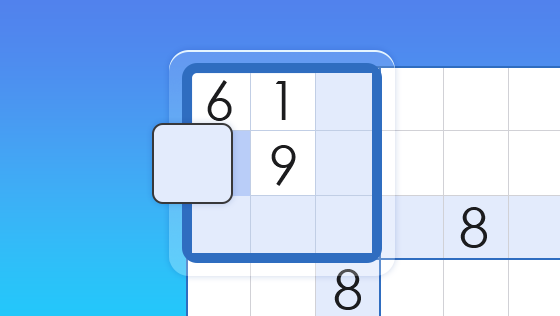
How do you solve a Sudoku puzzle fundamentally relies on comprehending its core structural necessity: a 9×9 grid divided into nine 3×3 subgrids, where each row, column, and subgrid must contain the digits 1 through 9 exactly once. This foundational concept, often referred to as grid topology, dictates every move and deduction.
The unique constraint of each digit appearing only once within its designated row, column, and 3×3 block establishes a powerful system of cell constraints. These constraints are the bedrock of all Sudoku-solving techniques, enabling the logical deduction of possible values for empty cells. Every empty cell initially holds 9 potential candidates, which are systematically reduced through elimination.
Before applying any specific technique for how do you solve a sudoku puzzle, a solver must internalize this tripartite rule system. The interplay between rows, columns, and blocks creates a network of dependencies, where placing a digit in one cell immediately impacts the candidate lists for numerous other cells across the grid, a crucial aspect of effective candidate elimination.
This holistic view of the grid is essential for developing intuition and recognizing patterns that go beyond simple direct placement. It’s about seeing the puzzle not just as 81 individual cells, but as an interconnected system of 27 distinct units (9 rows, 9 columns, 9 blocks) that must each satisfy the unique digit requirement.
The Core Methodology: How Do You Solve a Sudoku Puzzle Systematically?
How do you solve a Sudoku puzzle systematically involves a structured approach, beginning with basic scanning and pencil marks to identify definitive placements and narrow down possibilities. The initial phase focuses on exhaustive candidate elimination across the entire grid.
Step 1: Initial Scan for Obvious Placements. Begin by scanning each row, column, and 3×3 block for numbers that are already present. For any empty cell, mentally or physically eliminate candidates based on existing numbers in its row, column, and block. If only one candidate remains for a cell, that digit is the solution for that cell. This is often called a “Naked Single.”
Step 2: Employ Pencil Marks. For cells where no immediate number can be placed, use pencil marks (small numbers written in the corner of a cell) to list all possible candidates. This visual aid is critical for tracking cell constraints and facilitates more advanced logical deduction. Systematically update these marks as numbers are placed.
Step 3: Scan for Hidden and Naked Singles. After initial placements and pencil marking, re-scan the grid. A “Hidden Single” occurs when a candidate digit can only be placed in one specific cell within a row, column, or block, even if that cell has other pencil marks. A “Naked Single” is a cell with only one candidate remaining after all initial eliminations.
Step 4: Iterative Refinement. Continuously repeat these steps, as placing one number will often unlock new opportunities for elimination and placement elsewhere. This iterative process of scanning, marking, and placing is the fundamental cycle for how do you solve a sudoku puzzle, building upon itself until the grid is complete or more advanced strategies are required.
Advanced Strategies: Beyond Basic Deduction
Moving beyond simple candidate elimination, advanced Sudoku strategies leverage sophisticated logical deduction to break impasses where basic techniques fail, particularly useful for competitive solvers. These methods exploit patterns and relationships among multiple cells within the grid topology.
Naked Pairs/Triples/Quadruples: How do you solve a sudoku puzzle effectively often involves identifying Naked Pairs. If two cells in a row, column, or block share the exact same two candidates, those two candidates must occupy those two cells, eliminating them as possibilities from other cells in that unit. Similarly, Naked Triples involve three cells sharing three candidates.
Hidden Pairs/Triples/Quadruples: A Hidden Pair (or Triple/Quadruple) occurs when two (or three/four) candidates appear together in only two (or three/four) specific cells within a row, column, or block, and nowhere else in that unit. These candidates can then be eliminated from all other cells in those specific cells, and all other candidates can be eliminated from those cells.
X-Wing: For competitive solvers, the X-Wing is a powerful technique. It involves two rows (or columns) where a specific candidate appears in exactly two cells, forming a rectangle. If these cells are in the same two columns (or rows), then that candidate can be eliminated from all other cells in those two columns (or rows). The structural necessity of this pattern significantly reduces candidate lists.
Swordfish/Jellyfish: Extending the X-Wing, Swordfish (three rows/columns with a candidate in two or three cells, forming three columns/rows) and Jellyfish (four rows/columns) are progressively complex, but incredibly potent logical deductions that remove candidates from intersection zones, demonstrating the intricate grid topology at play.
Comparative Analysis: Sudoku Solving Techniques
To understand how do you solve a sudoku puzzle optimally, a comparative analysis of different techniques illuminates their utility and complexity across various difficulty levels. The choice of strategy often depends on the puzzle’s current state and the solver’s experience, reflecting an adaptive logical chain analysis.
Here’s a brief comparison of common Sudoku solving techniques:
| Technique | Difficulty Level | Frequency of Use | Logical Complexity | Description |
|—|—|—|—|—|
| Naked Single | Easy | Very High | Low (Direct Deduction) | A cell with only one possible candidate. |
| Hidden Single | Easy | High | Low (Direct Deduction) | A candidate appears only once in a row, column, or block. |
| Pencil Marks | All | Very High | Low (Data Management) | Listing all possible candidates in a cell. Essential for advanced techniques.|
| Naked Pair/Triple | Medium | Medium | Medium | 2-3 cells in a unit share 2-3 candidates, eliminating them elsewhere. |
| X-Wing | Hard | Low | High (Pattern Recognition)| Candidate forms a rectangle in 2 rows/cols, eliminating from intersections. |
This table highlights that while basic techniques are frequently used and low in complexity, advanced methods like X-Wing, though less frequent, are crucial for breaking through challenging puzzles. The effective solver develops a repertoire of these techniques, applying them based on the current logical chain analysis of the grid.
Common Pitfalls in Sudoku Solving
When learning how do you solve a sudoku puzzle, players frequently encounter specific traps that can derail their progress, often leading to errors or frustration. Recognizing and actively avoiding these common pitfalls is as important as mastering the techniques themselves.
Pitfall 1: Incorrect Pencil Marks. A common mistake is to misplace or forget to update pencil marks. An incorrect initial candidate list or failing to remove a candidate after a number is placed will propagate errors throughout the grid, making the puzzle unsolvable. To avoid this, always double-check your initial markings and diligently update them after every confirmed placement, practicing meticulous data management.
Pitfall 2: Guessing. Guessing is the antithesis of how do you solve a sudoku puzzle using logical deduction. When faced with an apparent impasse, some players resort to guessing a digit, which almost invariably leads to a broken puzzle. Instead of guessing, re-examine the entire grid, look for hidden singles, or consider more advanced strategies; there is always a logical path forward through systematic candidate elimination.
Pitfall 3: Tunnel Vision. Focusing too intensely on one small section of the grid can lead to missed opportunities for logical deduction elsewhere. An effective strategy involves regularly scanning the entire grid, looking for interactions between different rows, columns, and blocks. Broadening your view helps in identifying patterns like X-Wings or Naked Pairs that might span across disparate parts of the puzzle, crucial for understanding grid topology and cell constraints.
Frequently Asked Questions (FAQ) on Sudoku Solving
To further clarify how do you solve a sudoku puzzle and address common inquiries, here are some frequently asked questions, designed for quick comprehension and “Position Zero” eligibility. These concise answers provide high-value information on essential Sudoku concepts.
Q1: What is the very first step to solve any Sudoku puzzle? The very first step to solve a Sudoku puzzle is to scan the grid for Naked Singles: cells where only one number can logically fit based on existing digits in its row, column, and 3×3 block. This initiates the candidate elimination process.
Q2: Should I use pencil marks from the beginning? Yes, using pencil marks from an early stage is highly recommended for how do you solve a sudoku puzzle, especially for medium to hard puzzles. They systematically track all possible candidates for each empty cell, which is essential for advanced logical deduction and preventing errors.
Q3: What if I get stuck and can’t find any more numbers? If you get stuck, re-check all rows, columns, and blocks for Hidden Singles. If none are found, look for patterns like Naked Pairs or Hidden Pairs using your pencil marks. Remember, guessing is not a part of logical deduction.
Q4: How important is speed in solving Sudoku? For competitive solvers, speed is crucial, but for casual players, accuracy and the joy of logical discovery are more important. Focus on understanding the logical chain analysis rather than rushing, as speed naturally improves with consistent practice and mastery of techniques.
Q5: Is there a specific order to apply Sudoku techniques? While there’s no strict rule, it’s generally efficient to start with basic scans and singles, then move to pencil marks, and progressively apply more complex logical deduction techniques like Naked/Hidden Pairs, Triples, and X-Wings as needed, building a robust strategy on grid topology.
In mastering how do you solve a sudoku puzzle, the overarching principle is a “Logic-First” approach. Success hinges not on luck or intuition, but on the systematic application of logical deduction, rigorous candidate elimination, and a deep understanding of grid topology and cell constraints. By diligently employing pencil marks, identifying strategic patterns, and avoiding common pitfalls, any solver can transform the intimidating 9×9 grid into a satisfying journey of intellectual triumph, regardless of their initial skill level. This structured methodology is the definitive path to Sudoku mastery.