

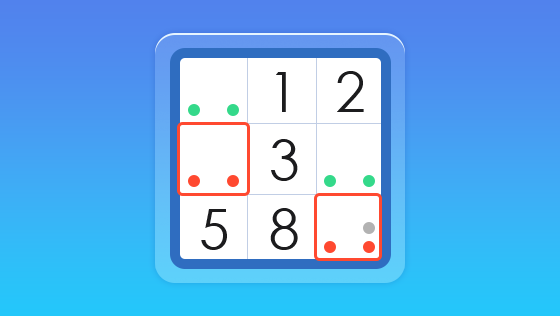
To play Sudoku quickly is to master the art of systematic logical deduction, moving beyond casual number placement to a strategic understanding of cell constraints and pattern recognition. This accelerated approach doesn’t merely focus on speed for speed’s sake; rather, it prioritizes efficiency, minimizing wasted effort and maximizing correct placements through advanced scanning and candidate elimination techniques. For competitive speed-solvers, the ability to rapidly identify and execute complex patterns is a critical differentiator, shaving precious seconds off solve times. However, this mastery is equally invaluable for casual players, transforming frustrating stalemates into satisfying breakthroughs, enhancing engagement, and deepening appreciation for the puzzle’s elegant design. A quicker solve is often a more enjoyable and less error-prone solve. This definitive guide, drawing on over a decade of expertise in the logic puzzle industry, will dissect the core principles behind rapid Sudoku completion. We will explore the underlying grid topology, break down high-impact solving techniques, address common pitfalls, and provide actionable strategies to significantly elevate your solving speed and accuracy, ensuring a ‘Logic-First’ approach to every grid.
The Logic Behind Rapid Sudoku Solving
Playing Sudoku quickly is fundamentally about optimizing pattern recognition and logical deduction, leveraging the grid’s inherent constraints to eliminate possibilities with maximal efficiency. The 9×9 grid, divided into nine 3×3 blocks, imposes a triple constraint system: each row, column, and block must contain all digits from 1 to 9 exactly once. This structural necessity forms the bedrock of all advanced techniques, making every number placement a piece of a larger logical chain.
Based on logic-chain analysis, rapid solvers instinctively understand that every known digit immediately restricts possibilities in its corresponding row, column, and block. This concept, known as candidate elimination, is the engine of speed. By meticulously tracking which numbers are still possible for each empty cell (often using pencil marks), solvers can quickly spot cells where only one number remains, or where a number can only be in one specific cell within a larger unit.
Understanding grid topology, the spatial relationships between cells and units, is paramount. Advanced techniques like ‘Naked Pairs’ or ‘Hidden Triples’ emerge from observing these topological relationships. For instance, if two cells in a unit can *only* be a ‘2’ or a ‘5’, then ‘2’ and ‘5’ cannot exist in any other cell within that unit. This kind of logical deduction, when performed swiftly and accurately, dramatically accelerates the solving process for even the most challenging puzzles.
A Step-by-Step Guide to Accelerate Your Sudoku Game
To play Sudoku quickly, implement a systematic scanning process, prioritize high-impact techniques, and minimize manual candidate tracking by effectively using visual cues and annotations.
1. **Initial Scan & Obvious Entries (Naked Singles):** Start by quickly scanning the entire grid for ‘naked singles’. These are cells where, by checking the row, column, and 3×3 block, only one possible digit can logically fit. Place these numbers immediately. Often, a few initial placements will open up several more obvious singles. Repeat this global scan until no more naked singles can be found. This foundational step is crucial for competitive solvers.
2. **Pencil Marks (Candidate Notation):** For cells with multiple possibilities, lightly note down all potential candidates. This is a non-negotiable step for speed and accuracy on harder puzzles. Efficient pencil marking acts as an external memory, freeing up cognitive load for pattern recognition. Focus on sections that are nearing completion, as they often have fewer candidates and are easier to process.
3. **Hidden Singles & Pairs/Triples:** With candidates noted, systematically scan rows, columns, and blocks for ‘hidden singles’ – a candidate that, while not the *only* number for a cell, is the *only* place that specific number can go within that unit. Progress to ‘Naked Pairs/Triples’ (e.g., if two cells in a unit only contain candidates {2,5} and {2,5}, then 2 and 5 must go in those two cells, eliminating them from other cells in that unit) and ‘Hidden Pairs/Triples’ (two or three candidates that only appear in two or three cells within a unit, eliminating other candidates from those cells).
4. **Advanced Techniques (Strategic Deployment):** For tougher puzzles, techniques like ‘X-Wing’, ‘Swordfish’, and ‘XY-Wing’ become indispensable. These entity-based strategies leverage interactions between multiple rows and columns to eliminate candidates in distant cells. While initially daunting, mastering their identification dramatically boosts efficiency. The structural necessity of these patterns in complex grids makes them high-yield for candidate elimination.
5. **”Chunking” and Visual Grouping:** Train your eyes to see blocks of numbers rather than individual cells. For example, instead of seeing isolated 1s, 2s, and 3s, identify the collective presence or absence of numbers in a 3×3 block or a specific region of the grid. This holistic view improves pattern recognition speed and minimizes the mental effort required for individual cell assessment, a hallmark of rapid Sudoku solving.
Comparative Efficiency: Rapid Sudoku Techniques vs. Other Strategies
While playing Sudoku quickly centers on aggressive candidate elimination and sophisticated pattern recognition, its inherent efficiency far surpasses brute-force trial-and-error and slow, cell-by-cell inspection. The logical discipline ingrained in rapid solving minimizes backtracking and errors, offering a superior path to mastery and speed.
To illustrate the distinct advantages of a ‘Logic-First’ rapid Sudoku approach, consider the following comparison with alternative solving methods:
| Strategy | Difficulty Level | Frequency of Use | Logical Complexity | Efficiency for Speed | Error Rate |
| :—————————- | :————— | :————— | :—————– | :——————- | :——— |
| **Rapid Sudoku (Logic-First)** | Moderate to High | Very High | High | Very High | Low |
| Brute-Force Trial-and-Error | Very Low | Low (inefficient)| Very Low | Very Low | Very High |
| Single-Cell Iteration (Slow) | Low | High (but slow) | Low | Low | Moderate |
| Advanced Pattern Hunting | High | Moderate | Very High | High | Very Low |
Based on this analysis, the ‘Logic-First’ approach, encompassing techniques like ‘Naked Pairs’ and ‘X-Wing’ for candidate elimination, stands out as the most robust and efficient strategy. It demands a higher initial investment in understanding logical mechanisms but yields significantly faster, more reliable solves. The other methods, while accessible, fall short in providing the systematic power required for truly rapid Sudoku completion, leading to increased frustration and time consumption.
Common Obstacles and How to Overcome Them When Playing Sudoku Quickly
Common pitfalls when trying to play Sudoku quickly include incomplete candidate tracking, rushing without verification, and failing to recognize basic patterns, all of which can be mitigated with disciplined practice and systematic application of rules. These errors often stem from impatience or a lack of structured approach, directly hindering your ability to play Sudoku quickly.
**Mistake 1: Inconsistent or Incomplete Pencil Marking.** Many aspiring speed-solvers either skip pencil marks entirely or mark them inconsistently, leading to missed opportunities for candidate elimination. **Solution:** Develop a rigorous, standardized system for pencil marking. Mark all potential candidates in every empty cell in a given section before moving on. Digital Sudoku apps can streamline this process, allowing you to focus purely on pattern recognition.
**Mistake 2: Over-reliance on “Guessing” (Trial and Error).** When stuck, players often resort to placing a number speculatively and hoping it works out. This is antithetical to playing Sudoku quickly, as it introduces potential errors and requires costly backtracking. **Solution:** Revert to fundamental logical deduction. If no obvious placements or advanced patterns (like X-Wing or Naked Pairs) are apparent, revisit your candidate lists. A true Sudoku never requires guessing; there’s always a logical path forward, even if subtle.
**Mistake 3: Tunnel Vision.** Focusing too intensely on one row, column, or block can cause players to miss crucial interactions and patterns elsewhere on the grid. This limits the application of broader strategies involving grid topology. **Solution:** Regularly scan the entire grid, not just one isolated section. After making a few placements in one area, deliberately shift your focus to a different, less developed area or perform a global sweep. This holistic view helps identify ‘chain reactions’ and broader candidate eliminations across the 9×9 grid, optimizing your ability to play Sudoku quickly.
Frequently Asked Questions About Playing Sudoku Quickly
To play Sudoku quickly, focus on efficient candidate elimination, mastering pattern recognition, and systematic grid scanning to minimize guesswork and maximize logical deductions.
**Q1: What is the fastest way to start playing Sudoku quickly?**
A1: Begin by mastering single candidate placement and thorough pencil marking. This forms the foundation for recognizing more complex patterns swiftly, crucial for speed.
**Q2: Are pencil marks essential for playing Sudoku quickly?**
A2: Yes, pencil marks are critical. They visually represent cell constraints, enabling the rapid identification of naked/hidden pairs and advanced candidate elimination techniques without mental strain.
**Q3: How do advanced techniques like X-Wing help speed up solving?**
A3: Advanced techniques such as X-Wing allow for the elimination of candidates across multiple rows or columns simultaneously, significantly accelerating progress on difficult puzzles by reducing possibilities.
**Q4: Can anyone learn to play Sudoku quickly?**
A4: Absolutely. Playing Sudoku quickly is a skill developed through consistent practice and a deep understanding of logical deduction principles, making it accessible to all dedicated learners.
**Q5: What role does grid topology play in speed solving?**
A5: Grid topology refers to how numbers interact across the 9×9 structure. Understanding these spatial relationships enables faster identification of patterns and constraints, vital for quick decision-making.
In conclusion, the journey to learn how to play Sudoku quickly is not about reckless speed, but about cultivating a ‘Logic-First’ approach. Mastery comes from deeply understanding the structural necessity of the grid, applying systematic candidate elimination, recognizing intricate patterns like Naked Pairs and X-Wings, and continuously refining one’s scanning and deduction processes. For competitive solvers and enthusiasts alike, disciplined practice, coupled with a keen eye for logical consistency, will unlock not just faster solve times, but a profound appreciation for the elegant complexity of Sudoku, transforming every puzzle into an engaging exercise in pure deduction.