

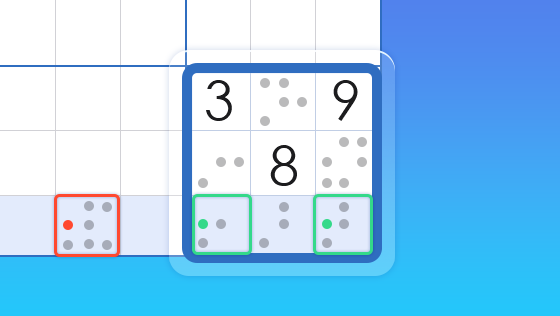
Solving a difficult Sudoku requires a methodical approach that goes beyond basic single-cell elimination, leveraging advanced logical techniques to navigate complex interdependencies within the 9×9 grid. From a structural analysis perspective, these puzzles are constraint satisfaction problems where the goal is to fill a 9×9 grid with digits such that each column, each row, and each of the nine 3×3 subgrids contains all of the digits from 1 to 9. The significance of mastering how to do a difficult sudoku extends beyond mere recreation; it hones critical thinking, pattern recognition, and systematic problem-solving skills applicable across various analytical domains. The primary problem it solves in the current landscape of casual puzzling is the frustration associated with intractable grids that seem to offer no obvious next move, thereby transforming apparent dead ends into solvable pathways through refined logical deduction. Based on structural analysis, difficult Sudoku puzzles are characterized by a sparsity of initial clues, forcing solvers to employ sophisticated inference techniques rather than simple scanning. Understanding these underlying logical frameworks is crucial for anyone looking to elevate their Sudoku proficiency from beginner to expert, providing a clear path to conquering even the most formidable grids.
Technical Breakdown: Advanced Sudoku Deduction Patterns
Advanced Sudoku deduction patterns are sophisticated logical constructs that enable the identification of numbers in cells where direct elimination is impossible. These patterns, such as Naked/Hidden Pairs, Triples, and Quads, as well as X-Wing, Swordfish, and Jellyfish, rely on the principle of uniqueness and the systematic tracking of candidate numbers within rows, columns, and blocks.
Naked Pairs, for instance, occur when two cells within a single house (row, column, or block) are the only two cells that can contain two specific candidate numbers. Once identified, these two candidate numbers can be eliminated from all other cells within that same house, significantly reducing the possibilities. Conversely, Hidden Pairs exist when two candidate numbers are restricted to only two cells within a house, implying those two numbers *must* reside in those specific cells, thus allowing elimination of other candidates from those two cells.
From a framework perspective, more complex patterns like the X-Wing leverage two rows (or columns) where a specific candidate number appears only in two cells in each row, and these four cells form a rectangle. This implies that the candidate number must reside in either one diagonal pair or the other, allowing elimination of that candidate from other cells in the columns (or rows) spanned by the X-Wing. Similarly, Swordfish and Jellyfish extend this logic to three and four dimensions, respectively, identifying intricate relationships that pinpoint definite eliminations.
Step-by-Step Implementation: A Structured Algorithm for Difficult Sudoku
To systematically do a difficult sudoku, a structured algorithmic approach is essential, moving beyond intuitive leaps to a verifiable chain of logic. This involves an iterative process of candidate notation, pattern identification, and careful deduction.
First, begin with a comprehensive candidate notation phase. For every empty cell, meticulously list all possible numbers (1-9) that could occupy it without violating basic Sudoku rules. This systematic enumeration is foundational, providing the data needed for advanced deductions. This step, while time-consuming, prevents oversight and establishes a clear battlefield of possibilities.
Second, apply basic elimination techniques: ‘Single Candidates’ (where a cell has only one possible number) and ‘Hidden Singles’ (where a number can only go in one cell within a house). Repeat these steps until no more basic eliminations are possible. This foundational pass often simplifies the grid sufficiently to reveal advanced patterns.
Third, actively search for advanced deduction patterns. This involves scanning for Naked/Hidden Pairs, Triples, and Quads across all rows, columns, and 3×3 blocks. Progress to X-Wings, Swordfish, and Jellyfish when the grid becomes particularly dense with possibilities. In practical application, maintaining meticulous candidate notes is crucial for spotting these intricate arrangements.
Fourth, if the puzzle remains stalled, consider a ‘forking’ or ‘guess and check’ strategy, but with extreme caution. Choose a cell with only two candidate numbers, make a tentative assumption for one, and proceed with solving. If this path leads to a contradiction (e.g., a number appearing twice in a row), backtrack and confidently assign the other candidate. This technique, while less elegant, is a powerful last resort for truly intractable puzzles, provided precise bookkeeping of assumptions is maintained.
Comparative Analysis: Advanced Logic vs. Brute-Force Approaches
When considering how to do a difficult sudoku, contrasting advanced logical deduction with brute-force approaches highlights significant differences in efficiency, robustness, and cognitive load. Advanced logic focuses on inferential reasoning, deriving certainties from possibilities, whereas brute-force relies on exhaustive trial and error.
From an efficiency perspective, advanced logical methods are vastly superior. They systematically prune the search space by eliminating impossible candidates, leading directly to the solution without needing to explore dead-end branches. This contrasts sharply with brute-force, which might involve numerous incorrect assumptions and subsequent backtracking, consuming considerable time and mental effort, especially as complexity increases. The ‘cost’ in terms of time and effort is significantly lower with a logical approach.
In practical application, the robustness of advanced logic ensures that every step taken is a guaranteed progression towards the solution, building an irrefutable chain of deduction. Brute-force, while sometimes effective for simpler cases or as a last resort, lacks this inherent certainty and can easily lead to errors if not meticulously managed. The frequency of requiring brute force drastically decreases with proficiency in logical patterns, cementing logic as the industry standard for effective Sudoku solving.
Common Pitfalls and Strategic Solutions in Difficult Sudoku
Successfully navigating how to do a difficult sudoku requires awareness of common pitfalls that can derail progress, alongside professional advice for mitigation. These pitfalls often stem from a lack of systematic rigor or an overreliance on intuition.
A frequent mistake is incomplete or incorrect candidate notation. Failing to list all possible numbers for a cell, or mistakenly eliminating a valid candidate, contaminates the entire logical framework, leading to unsolvable paths. The solution is rigorous, double-checked notation for every empty cell, and consistent updating as numbers are placed. Based on structural analysis, accurate data is paramount for any deductive system.
Another pitfall is becoming ‘stuck’ by not re-scanning the grid for basic techniques after an advanced placement. Even one number placement can unlock multiple new ‘Hidden Singles’ or ‘Naked Pairs.’ Professional advice dictates an iterative review process: after any placement, perform a quick scan for basic eliminations before searching for more complex patterns. This ensures maximum leverage from every step, maintaining momentum.
Finally, getting overwhelmed by the sheer number of possibilities or making hasty assumptions is common. The strategic solution here is to develop a disciplined approach to pattern recognition, focusing on one type of pattern at a time, and never guessing. If no logical move is apparent, step back, review your candidate notes, and ensure no pattern has been overlooked. Patience and methodical scanning are critical tools in avoiding these traps.
Frequently Asked Questions about Difficult Sudoku Strategies
What is the most effective first step for how to do a difficult sudoku?
The most effective first step is comprehensive candidate notation for all empty cells, meticulously listing every possible digit (1-9) that can fit, based on existing numbers in its row, column, and 3×3 block.
How do X-Wings help in solving a difficult Sudoku?
X-Wings identify a number that must be in one of two specific cells in two different rows (or columns) that align, allowing that number to be eliminated from other cells in the common columns (or rows).
Is ‘guessing’ ever a valid strategy in difficult Sudoku?
True guessing is generally discouraged as it can lead to contradictions. However, ‘forking’ (tentatively assuming a number from a two-candidate cell) is a controlled method of trial and error for extremely tough puzzles.
What is a ‘Hidden Pair’ in Sudoku and why is it important?
A Hidden Pair occurs when two specific candidate numbers can *only* fit into two specific cells within a single house (row, column, or block). It’s crucial because it allows elimination of all *other* candidates from those two cells.
In conclusion, mastering how to do a difficult sudoku transcends simple puzzle-solving; it embodies a sophisticated application of logical deduction, pattern recognition, and systematic thinking. By adopting a structured algorithm, meticulously managing candidates, and understanding advanced deduction patterns, solvers can transform seemingly intractable grids into satisfying accomplishments. This strategic value of refined problem-solving skills holds significant implications for any domain requiring analytical rigor, positioning structured Sudoku solving as a powerful cognitive exercise with broad forward-looking benefits in logical reasoning and decision-making.