

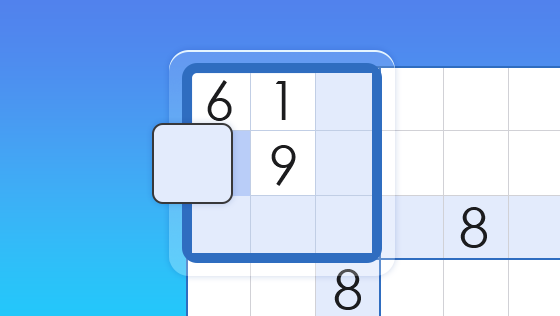
How to do a Sudoku puzzle 1-9 refers to the systematic process of filling a 9×9 grid with digits 1 through 9 such that each column, each row, and each of the nine 3×3 subgrids (often called ‘blocks’ or ‘regions’) contains all the digits from 1 to 9 exactly once. This seemingly simple game is a robust exercise in constraint satisfaction and combinatorial logic, fundamental principles in advanced computational and analytical domains. From a cognitive problem-solving perspective, the significance of mastering Sudoku 1-9 extends beyond mere entertainment. It serves as a foundational training ground for developing critical thinking, pattern recognition, and deductive reasoning skills under predefined constraints. These capabilities are directly transferable and indispensable in various professional landscapes, including software development, data analytics, and strategic planning, where optimal solutions must be derived from complex, interconnected variables. The primary problem Sudoku solves in the current landscape of cognitive development is the cultivation of structured, methodical analytical approaches. In an era inundated with unstructured data and ambiguous problems, the disciplined framework of Sudoku provides an accessible, yet challenging, environment to hone the mental agility required to parse information, identify dependencies, and formulate precise, verifiable solutions. This mirrors real-world challenges in system diagnostics or algorithm optimization. Engaging consistently with Sudoku 1-9 cultivates a deeper understanding of logical flow and error detection. It encourages the iterative refinement of hypotheses and the meticulous verification of each step, reinforcing the rigor necessary for high-stakes problem-solving across any industry demanding precision and logical coherence. This makes it a valuable tool for enhancing intellectual discipline and cognitive resilience.
Technical/Structural Breakdown of Sudoku 1-9 Principles
The underlying logic for how to do a Sudoku puzzle 1-9 is rooted in combinatorial mathematics and constraint satisfaction, requiring the unique placement of integers within defined subsets. The fundamental architecture comprises an 81-cell grid, divided into 9 rows, 9 columns, and 9 distinct 3×3 subgrids. Each of these three types of subsets represents a critical constraint domain, where the digits 1 through 9 must appear without duplication.
Based on structural analysis, the initial given numbers, often referred to as ‘clues,’ establish the fixed points within this constraint system. These clues significantly reduce the solution space, thereby guiding the deductive process. The scarcity or abundance of these initial clues directly correlates with the puzzle’s perceived difficulty, influencing the number of logical inferences required to reach a unique solution.
From a framework perspective, understanding these interlocking constraints is paramount. A digit placed in any cell simultaneously impacts its respective row, column, and 3×3 block, eliminating that digit as a possibility for other empty cells within those domains. This interconnectedness forms the basis for all subsequent deductive strategies, enabling solvers to systematically narrow down potential candidates for each empty cell.
Core Solving Strategies: A Methodical Approach
Successfully learning how to do a Sudoku puzzle 1-9 involves a hierarchical application of deductive strategies, starting with simple eliminations and progressing to more complex pattern recognition. The foundational approach begins with ‘scanning’ or ‘cross-hatching,’ where the solver systematically checks each empty cell’s row, column, and 3×3 block to identify if only one possible digit can logically fit, known as a ‘naked single’.
In practical application, after identifying and placing naked singles, the next critical step is ‘candidate elimination,’ often implemented through ‘pencil marks.’ This involves meticulously listing all possible candidate digits for each empty cell based on the existing numbers in its corresponding row, column, and block. This comprehensive candidate mapping provides a visual representation of the remaining solution space, facilitating further deductions.
Progressing from individual cells, solvers then employ techniques like ‘hidden singles,’ ‘naked pairs,’ and ‘hidden pairs.’ A hidden single occurs when a digit is a candidate for multiple cells within a row, column, or block, but can only fit in one specific cell due to other candidates being present elsewhere. Similarly, naked or hidden pairs and triples involve identifying two or three cells that share the exact same two or three candidate numbers, allowing for the elimination of those candidates from other cells within their shared constraint domains.
Advanced Pattern Recognition for Complex Grids
Beyond fundamental deductions, mastering how to do a Sudoku puzzle 1-9 on higher difficulty levels necessitates the application of advanced pattern recognition techniques, analogous to identifying anomalies in large datasets. These strategies move beyond individual cells to analyze interdependencies across multiple rows, columns, or blocks, uncovering more subtle eliminations.
One such advanced technique is the ‘X-Wing,’ which identifies patterns where a specific candidate digit appears in only two cells within two different rows, and these cells also align perfectly within two common columns. When this pattern is found, that candidate can be eliminated from all other cells in those two common columns. This method leverages the implicit constraint that the candidate must occupy one of the two positions in each row, thereby fixing its column presence.
Further complexity is introduced with ‘Swordfish’ and ‘Jellyfish’ patterns, which extend the X-Wing logic to three or four rows/columns, respectively. These techniques demand a higher degree of spatial reasoning and candidate tracking. Moreover, ‘forcing chains’ or ‘Nishio’ are powerful speculative logic strategies: assuming a candidate is true in a specific cell and following its logical implications. If this assumption leads to a contradiction, the initial assumption is proven false, thereby eliminating that candidate and revealing the correct digit. These advanced methods are critical for expert-level problem-solving in any domain requiring deep analytical inference.
Comparative Analysis: Sudoku 1-9 vs. Related Logic Puzzles
Comparing how to do a Sudoku puzzle 1-9 with related logic puzzles reveals distinct complexities and efficiencies in their respective constraint satisfaction models, offering insights into varied analytical approaches. Sudoku’s purely numerical placement logic stands in contrast to KenKen, for instance, which overlays arithmetic operations onto its grid structure. While both demand logical deduction, KenKen introduces an additional layer of mathematical computation, increasing its ‘Complexity’ dimension due to the need for multiple potential number combinations that satisfy cage sums, whereas Sudoku is simpler in its core ruleset.
In terms of ‘Efficiency’ for problem-solving, Sudoku often allows for faster initial deductions through direct candidate elimination. Kakuro, another number-placement puzzle, operates on a sum-based mechanism where clues indicate the sum of digits in a given row or column segment. This requires generating combinations that add up to the clue, making it more computationally intensive than Sudoku’s direct digit-to-cell assignment. Sudoku’s ‘Frequency’ in general cognitive training is higher due to its straightforward rules and immediate feedback loop, making it a more accessible entry point for logic puzzle enthusiasts.
From a ‘Cost’ perspective, meaning the cognitive load and time investment to master, Sudoku 1-9 is arguably lower than that of puzzles like Nonograms (Picross), which involve reconstructing an image based on numerical clues indicating contiguous blocks of filled cells. Nonograms require visual-spatial reasoning and a different kind of pattern recognition (binary pixel logic) that is distinct from Sudoku’s numerical constraint propagation. This comparative analysis highlights Sudoku’s unique position as a foundational logic puzzle, balancing elegant simplicity with profound depth for cognitive development.
Common Pitfalls and Expert Solutions in Sudoku Resolution
Successfully navigating how to do a Sudoku puzzle 1-9 requires awareness of common errors, which often stem from incomplete data assessment or premature assumptions, similar to debugging complex algorithms. One frequent mistake is ‘Overlooking Obvious Singles,’ where solvers, in their haste or distraction, fail to spot a cell where only one number can fit. This oversight can halt progress, forcing unnecessary backtracking.
The expert solution to overlooking obvious singles involves implementing a systematic and repeatable scanning routine. Before attempting any complex strategies, meticulously scan each row, column, and 3×3 block multiple times. This methodical approach ensures that all direct eliminations are exploited, providing the most robust foundation for subsequent deductions. For complex puzzles, consider starting from the most constrained areas (e.g., blocks with many given numbers).
Another critical pitfall is ‘Incorrect Pencil Marks or Candidate Errors.’ Misplacing or failing to update candidate numbers for empty cells is a common source of frustration, leading to unsolvable grids. The professional advice for avoiding this error is to maintain meticulous candidate lists, double-checking each entry and consistently updating them after every digit is placed or eliminated. For very challenging puzzles, utilizing digital Sudoku tools that automatically manage candidates can mitigate this risk, allowing focus on pattern recognition. Furthermore, ‘Premature Guessing’ (brute force) is a detrimental habit; if no immediate deduction is apparent, re-scan and apply advanced techniques rather than resorting to arbitrary choices that often lead to errors. Emphasize structured deduction over trial-and-error.
Sudoku 1-9 FAQs for Enhanced Cognitive Acuity
Q: What is the primary rule of Sudoku 1-9? A: The primary rule is to fill a 9×9 grid so that each row, column, and 3×3 block contains all digits from 1 to 9 exactly once, without repetition.
Q: Can Sudoku puzzles have multiple solutions? A: No, a well-formed Sudoku puzzle, by definition, has only one unique solution. Puzzles with multiple solutions are considered flawed designs.
Q: Is Sudoku purely logical or does it involve math? A: Sudoku is purely a logic puzzle. While it uses numbers 1-9, no arithmetic calculations are required; the numbers simply act as distinct symbols.
Q: What is the best starting strategy for beginners? A: Beginners should start with ‘cross-hatching’ or ‘scanning for singles,’ identifying cells where only one digit can logically fit by checking existing numbers in its row, column, and block.
Q: How does Sudoku improve cognitive function? A: Engaging with Sudoku regularly enhances logical reasoning, pattern recognition, spatial awareness, and memory, contributing to overall cognitive agility crucial in analytical roles.
Based on structural analysis, the systematic engagement with how to do a Sudoku puzzle 1-9 extends far beyond simple recreation; it serves as a robust training ground for critical cognitive functions essential in today’s data-driven environments. From a framework perspective, its principles of constraint satisfaction and deductive reasoning are directly transferable to complex problem-solving scenarios in fields ranging from software development to strategic management. In practical application, cultivating proficiency in Sudoku fosters the disciplined analytical mindset necessary for navigating intricate challenges, underscoring its enduring strategic value as a fundamental exercise in logical acuity and systemic pattern recognition, poised to remain a relevant tool for cognitive development.