

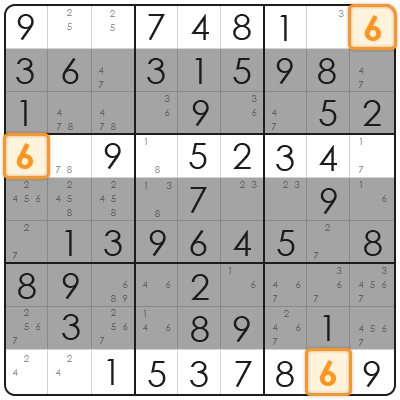
An XY-Wing, a powerful advanced Sudoku technique, is fundamentally a pattern of three bivalue cells that allows for the elimination of a candidate from other cells. This strategic maneuver is pivotal for solvers confronting complex grids where basic techniques like Naked or Hidden Singles/Pairs are no longer sufficient to progress. It represents a significant leap in understanding the intricate dependencies within a Sudoku puzzle. The primary problem an XY-Wing solves is breaking difficult stalemates that arise in challenging Sudoku puzzles. When a grid appears to offer no obvious next move, identifying an XY-Wing can unlock crucial eliminations, paving the way for further deductions and ultimately, the solution. This technique often exposes hidden relationships between cells, making the seemingly unsolvable solvable. This article will delve into the precise methodology for how to find XY-Wing Sudoku patterns, providing a structural breakdown of its components, a step-by-step implementation guide, and a comparative analysis with other advanced strategies. Based on structural analysis, mastering this technique is essential for any solver aiming for true Sudoku expertise.
Deconstructing the XY-Wing: Underlying Mechanics
An XY-Wing is characterized by three bivalue cells—cells with exactly two possible candidates—that form a specific logical chain. These cells are known as the Pivot and two ‘Wing’ cells. The Pivot cell contains candidates XY, while its two Wing cells contain XZ and YZ respectively. The crucial aspect is that both Wing cells must ‘see’ the Pivot cell, meaning they share a row, column, or 3×3 block with it.
Based on structural analysis, the strength of the XY-Wing lies in the logical deduction that follows from this configuration. If the Pivot cell is X, then one Wing (XZ) cannot be X, thus it must be Z. Conversely, if the Pivot cell is Y, then the other Wing (YZ) cannot be Y, and it must be Z. In either scenario, one of the Wing cells must contain the candidate Z.
The ‘Z’ candidate is the key to elimination. Any cell outside of these three that ‘sees’ both Wing cells cannot contain candidate Z. This is because if it did, and one of the Wings must be Z, it would lead to a contradiction. From a framework perspective, this common ‘Z’ candidate is projected to a third area where it can be definitively removed from other potential cells, simplifying the puzzle significantly.
Systematic Approach to Pinpointing XY-Wing Patterns
In practical application, identifying an XY-Wing requires a systematic scan of the Sudoku grid, beginning with the identification of bivalue cells. These are cells where only two candidates remain as possibilities. Marking or highlighting these cells can significantly expedite the search process, providing a visual filter for potential components of an XY-Wing.
The next step is to locate a potential ‘pivot’ cell. This pivot must contain two candidates, let’s call them X and Y. Once a potential pivot (XY) is found, the solver must then search for two ‘wing’ cells. One wing must contain candidates XZ, and the other YZ, where Z is the common candidate for potential elimination. Critically, both wing cells must ‘see’ the pivot cell (share a row, column, or block).
Furthermore, the two wing cells must also ‘see’ each other through a shared row, column, or block. This interconnectedness is fundamental to the logic of the XY-Wing. If both wings can ‘see’ the pivot, and the wings can ‘see’ each other, then the configuration is ripe for identifying eliminations.
The final, decisive step involves identifying all cells that can ‘see’ both of the wing cells. In these common ‘sight’ lines (rows, columns, or blocks shared by both wings), any cell containing the candidate ‘Z’ can have ‘Z’ safely eliminated. This is because if the pivot is X, the XZ wing must be Z. If the pivot is Y, the YZ wing must be Z. Therefore, one of the wings must be Z, making Z impossible in any cell that ‘sees’ both wings.
This methodical process ensures that no valid XY-Wing opportunity is missed, allowing for robust and verifiable eliminations.
Comparative Landscape of Advanced Sudoku Techniques
While the XY-Wing is a powerful technique for how to find XY-Wing Sudoku solutions, it exists within a broader ecosystem of advanced strategies. Understanding its relative strengths and frequency compared to other methods provides a clearer strategic perspective for complex puzzles. From a framework perspective, different techniques offer varying degrees of complexity and candidate reduction power.
Here’s a comparative analysis highlighting the XY-Wing alongside other common advanced Sudoku techniques: | Technique | Complexity | Efficiency (Candidate Reduction) | Frequency (Appearance) | |———————|————–|———————————-|————————| | XY-Wing | Moderate-High| Moderate | Moderate | | Naked/Hidden Pairs | Low-Moderate | Low-Moderate | High | | X-Wing | Moderate | Moderate-High | Moderate |
As the table illustrates, Naked and Hidden Pairs are generally less complex and appear more frequently, making them foundational advanced techniques. The X-Wing, while similar in complexity to an XY-Wing, often allows for more significant candidate reductions across a row or column. However, the XY-Wing excels in breaking specific types of bivalue chains that other techniques might miss, demonstrating its unique value in a solver’s arsenal.
Navigating Common Pitfalls in XY-Wing Identification
Despite its power, how to find XY-Wing Sudoku patterns can be deceptively tricky, leading to common errors that can derail a solver’s progress. One frequent mistake is misidentifying a cell as a bivalue ‘pivot’ when it actually has more than two candidates. Professional advice dictates a meticulous check of all candidates for any potential pivot and wing cells, ensuring they are truly bivalue.
Another critical pitfall is overlooking or misinterpreting the ‘sees’ relationship. For a valid XY-Wing, the pivot must ‘see’ both wings, and crucially, both wings must ‘see’ each other. Solvers often neglect the inter-wing visibility. To avoid this, visualize the intersecting rows, columns, and 3×3 blocks to confirm that all three components (pivot and two wings) are interconnected in the correct manner before proceeding with any eliminations.
A third common error involves prematurely eliminating candidates. Solvers might correctly identify the ‘Z’ candidate but then incorrectly eliminate it from cells that do not ‘see’ both wings, or from cells that are part of the pivot or wing configuration itself. The solution involves rigorously verifying that the target elimination cell is indeed within the shared ‘sight’ lines of both wing cells and is not one of the XY-Wing cells. Only the common candidate ‘Z’ can be eliminated from these external cells.
Frequently Asked Questions on XY-Wing Sudoku
What makes an XY-Wing critical for advanced Sudoku? An XY-Wing is crucial for breaking deadlocks when simpler techniques fail, often revealing single candidates or further eliminations, allowing the solver to progress in highly challenging puzzles.
How does an XY-Wing differ from an X-Wing? An XY-Wing relies on three bivalue cells forming a chain with a common candidate, whereas an X-Wing identifies a pattern of two candidates restricted to two rows and two columns.
Can an XY-Wing have more than three cells involved? No, an XY-Wing strictly involves three specific bivalue cells: a pivot cell (XY) and two wing cells (XZ and YZ), all interconnected logically.
Is the XY-Wing considered a beginner’s technique? Typically, no. It’s an intermediate to advanced technique employed after exhausting simpler methods, requiring a deeper understanding of candidate logic and inter-cell relationships.
What is the ‘Z’ candidate in an XY-Wing? The ‘Z’ candidate is the value common to both wing cells (XZ and YZ) that is absent from the pivot (XY). It is the candidate that can be eliminated from cells seeing both wings.
Mastering how to find XY-Wing Sudoku patterns marks a significant milestone in any solver’s journey, elevating their ability to tackle even the most formidable grids. This technique, based on rigorous logical deduction and structural analysis of bivalue cells, offers a powerful mechanism for overcoming stalemates and revealing hidden pathways to completion. Its strategic value lies in its capacity to unlock complex puzzles where simpler methods fall short, providing not just a solution, but a deeper understanding of Sudoku’s intricate architecture. Looking forward, the continued exploration of such advanced techniques remains paramount for pushing the boundaries of Sudoku strategy and problem-solving excellence.