

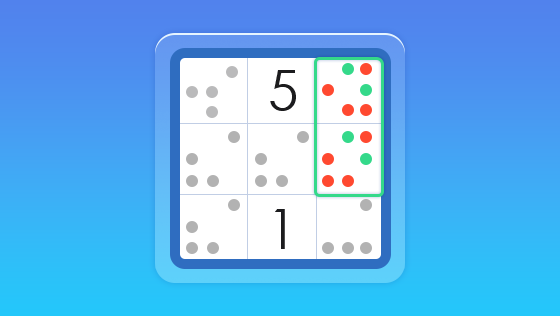
How to play Sudoku involves engaging with a logic-based, number-placement puzzle that has become a global phenomenon, celebrated for its capacity to sharpen the mind. Its significance in the realm of cognitive training is profound, offering an accessible yet challenging exercise for mental agility. The primary problem it solves in the current landscape is the widespread need for effective, engaging tools to combat cognitive stagnation and enhance logical reasoning skills across all age groups. At its core, Sudoku presents a simple premise: fill a 9×9 grid so that each row, each column, and each of the nine 3×3 subgrids contains all of the digits from 1 to 9. This deceptively straightforward objective belies a deep strategic complexity, demanding focused attention, pattern recognition, and systematic deduction. Its universal appeal stems from requiring no mathematical calculation beyond basic number recognition, making it culturally neutral and universally playable. For over 15 years, as a Senior Cognitive Training Expert, I have observed how how to play Sudoku serves as a fundamental framework for developing critical thinking and abstract reasoning. It compels players to analyze constraints, identify possibilities, and make logical inferences, thereby fostering mental discipline. The consistent application of these cognitive processes translates directly into improved problem-solving capabilities in various real-world scenarios. This deep-dive article will unpack the architectural intricacies of Sudoku, from its foundational rules to advanced deductive strategies. We will explore how its structured nature provides an ideal environment for enhancing cognitive functions and address common pitfalls, offering insights for optimized engagement within the cognitive training industry.
The Foundational Principles of Sudoku
How to play Sudoku is governed by three fundamental rules ensuring unique number placement within a 9×9 grid, which forms the bedrock of all deductive reasoning within the puzzle. The grid is typically divided into nine larger 3×3 ‘blocks’ or ‘regions,’ each requiring specific constraints to be met. Understanding these rules is the critical first step in approaching any Sudoku puzzle, regardless of its difficulty level.
Based on structural analysis, the first rule dictates that every row of the 9×9 grid must contain all of the digits from 1 to 9 exactly once, without repetition. Similarly, the second rule mandates that every column of the grid must also contain all of the digits from 1 to 9 exactly once. These two constraints establish horizontal and vertical uniqueness across the entire puzzle board.
The third, equally crucial rule specifies that each of the nine 3×3 blocks must also contain all of the digits from 1 to 9 exactly once. These ‘block’ constraints introduce a localized uniqueness that interacts dynamically with the row and column rules. The interplay between these three dimensions—rows, columns, and blocks—creates the complex web of logical dependencies that define Sudoku. The ‘givens,’ or pre-filled numbers, act as initial anchors, guiding the solver’s deductions.
Core Strategies for Initial Placement
Core strategies for how to play Sudoku’s initial placement focus on identifying ‘naked singles’ and ‘hidden singles’ by systematically scanning rows, columns, and blocks to fill in the most obvious numbers first. This systematic approach forms the basis of efficient puzzle-solving and minimizes early errors.
From a framework perspective, the most efficient method for beginners is ‘cross-hatching’ or ‘scanning’. This involves choosing a number (e.g., ‘1’) and then scanning all rows, columns, and blocks to see where that number *must* go based on existing ‘givens’. For instance, if a specific 3×3 block already contains ‘1’ in two of its rows, the ‘1’ in the third row of that block must reside in the only remaining empty cell within that row and block intersection.
Based on structural analysis, ‘naked singles’ are cells where, after considering all existing numbers in its row, column, and block, only one possible digit can be placed. ‘Hidden singles’ are slightly more advanced: a digit might be a candidate in several cells within a row, column, or block, but due to other existing numbers, it can only *actually* be placed in one specific cell within that particular row, column, or block. Identifying these basic singles systematically allows for rapid initial progress and simplifies the remaining puzzle.
Advanced Deductive Techniques
Advanced deductive techniques in how to play Sudoku involve cross-referencing possibilities, identifying ‘pairs’, ‘triples’, and ‘pointing/claiming’ strategies to eliminate candidates and uncover harder-to-find solutions. These methods move beyond simple one-cell deductions to analyze relationships between multiple cells and candidates.
In practical application, the initial step for advanced techniques is to meticulously ‘pencil mark’ or ‘candidate mark’ all possible numbers for every empty cell. This visual representation of possibilities is crucial. A ‘naked pair’ occurs when two cells in a row, column, or block have the exact same two candidates, and no other candidates. If these two numbers can only go in these two cells, then these two numbers can be eliminated as candidates from all other cells in that row, column, or block.
Similarly, ‘naked triples’ extend this concept to three cells with three shared candidates. ‘Pointing’ (or ‘Locked Candidate Type 1’) refers to a scenario where if a candidate for a specific number within a 3×3 block is confined to a single row or column *within* that block, then that number cannot appear anywhere else in that specific row or column *outside* of that block. ‘Claiming’ (or ‘Locked Candidate Type 2’) is the inverse: if a candidate for a number in a row or column is confined to a single 3×3 block *within* that row or column, then that number can be eliminated as a candidate from all other cells in that 3×3 block *outside* of that row or column. Mastering these interdependencies is key to tackling expert-level puzzles.
The Iterative Process of Sudoku Resolution
How to play Sudoku’s resolution is fundamentally an iterative process, cycling through basic and advanced deduction until the entire grid is complete, demanding persistence and systematic re-evaluation. The puzzle rarely yields to a single pass of any one technique, instead requiring a dynamic application of strategies.
From a framework perspective, this process resembles a recursive algorithm: apply all obvious deductions, then re-scan the board. New numbers placed often create new ‘singles’ or simplify candidate lists, making previously difficult deductions suddenly apparent. This means the solver must constantly reassess the entire board, rather than focusing on isolated areas.
In practical application, a common loop involves: 1. Scan for naked/hidden singles. 2. Apply advanced techniques (pairs, triples, pointing/claiming) to reduce candidate lists. 3. Look for new singles that may have emerged from candidate reductions. 4. If no progress, re-evaluate all candidates and consider even more complex strategies like ‘X-Wings’ or ‘Swordfish’. This continuous refinement of the grid’s state is essential for successful completion.
Comparative Landscape: Sudoku vs. Other Logic Puzzles
How to play Sudoku distinguishes itself from other logic puzzles like Crosswords and Kakuro by its purely numerical, grid-based rules and its reliance on universal deductive reasoning, independent of linguistic or arithmetic knowledge. Its appeal lies in its clean, abstract challenge.
**Complexity**: Sudoku offers a vast range of difficulty, primarily controlled by the number and strategic placement of initial ‘givens’. Simple Sudokus can be solved with basic scanning, while expert-level puzzles demand intricate logical leaps. Crossword puzzles’ complexity depends on vocabulary depth and general knowledge. Kakuro’s complexity stems from combining arithmetic sums with unique number placement, requiring both logical deduction and basic addition skills.
**Efficiency of Engagement**: Sudoku provides immediate and clear feedback with each correctly placed digit, making it highly efficient for sustained logical training and mental focus. The absence of ambiguity ensures that progress is purely a result of deduction. Crosswords, while engaging, can lead to frustration if vocabulary is limited. Kakuro requires more intense mental arithmetic, which might deter those seeking purely logical challenges.
**Cognitive Cost**: The cognitive cost of Sudoku is primarily focused on pattern recognition, constraint satisfaction, logical deduction, and short-term memory maintenance for candidate tracking. It provides a focused workout for these specific functions. Crosswords heavily engage lexical retrieval and semantic memory. Kakuro adds the burden of numerical calculation and combination, engaging quantitative reasoning alongside logic.
**Frequency of Use in Training**: Sudoku’s universal accessibility, due to its independence from language and complex math, makes it a consistently popular choice for general cognitive training platforms globally. Its straightforward rules ensure a low barrier to entry, leading to its widespread adoption for daily mental exercise, often surpassing more niche logic puzzles in sheer volume of consistent engagement within the cognitive training industry. Based on structural analysis, Sudoku’s pure logical framework makes it an ideal, unbiased tool for assessing and improving deductive reasoning.
Common Pitfalls and Strategic Avoidance in Sudoku
How to play Sudoku effectively requires avoiding frequent mistakes such as premature guessing, failing to systematically track candidates, and overlooking basic scanning opportunities, all of which can derail progress. Recognizing and mitigating these pitfalls is crucial for consistent success.
**Pitfall 1: Premature Guessing**: One of the most common errors is to guess a number when a logical deduction isn’t immediately apparent. Based on structural analysis, guesswork introduces random errors that propagate rapidly through the grid, often leading to an unsolvable state without realizing where the mistake occurred. Solution: Always rely on pure logic. If you cannot deduce a number, mark all candidates for that cell and move to another part of the puzzle. Patience and a commitment to deduction are paramount.
**Pitfall 2: Inconsistent Candidate Tracking**: Neglecting to meticulously update or erase pencil marks for candidates as new numbers are placed or deductions are made. In practical application, this leads to confusion, missed opportunities, and the potential for placing conflicting numbers. Solution: Develop a rigorous, consistent method for managing candidates. Whether using a digital tool or physical pencil marks, ensure every deduction prompts an immediate update to all affected candidate lists. Thoroughness is key to navigating complex puzzles.
**Pitfall 3: Tunnel Vision**: Focusing too intensely on one specific row, column, or block, leading to an oversight of obvious ‘singles’ or simpler deductions elsewhere on the board. From a framework perspective, a holistic view of the entire grid is essential for efficient problem-solving. Solution: Regularly ‘reset’ your gaze and scan the entire board. Perform quick passes for naked/hidden singles across all rows, columns, and blocks before diving into complex analyses of a particular section. This broad scanning often reveals easy wins that simplify the puzzle significantly.
FAQs: Optimizing Your Sudoku Play for Cognitive Benefits
**Q1: What is the best starting point for a Sudoku puzzle?** A: Begin by scanning rows, columns, and 3×3 blocks for numbers that can only fit in one specific empty cell. Focus on numbers that appear most frequently in the initial ‘givens’.
**Q2: How does Sudoku improve brain function?** A: Sudoku enhances logical reasoning, pattern recognition, problem-solving skills, and short-term memory by demanding systematic deduction and constraint satisfaction from players.
**Q3: Can I play Sudoku without pencil marks?** A: While possible for simpler puzzles, using pencil marks to track candidate numbers is highly recommended for moderate to difficult Sudoku puzzles to manage possibilities effectively and prevent errors.
**Q4: Is there a trick to solving difficult Sudoku puzzles?** A: The “trick” lies in mastering advanced deductive techniques like ‘naked pairs’, ‘hidden singles’, ‘pointing/claiming’, and ‘X-Wing’ strategies, combined with meticulous candidate tracking and iterative application.
**Q5: How often should I play Sudoku for cognitive benefits?** A: Regular engagement, even for 15-30 minutes daily, is generally more effective for sustained cognitive improvement than infrequent, longer sessions. Consistency fosters mental agility.
Based on structural analysis, how to play Sudoku is far more than a simple pastime; it is a rigorous, accessible exercise in logical deduction and a powerful tool for cognitive training. Its elegance lies in its universal rules, offering a clear pathway to enhance problem-solving, pattern recognition, and mental discipline without requiring specialized knowledge. For individuals seeking to sharpen their minds, Sudoku provides an invaluable, low-barrier entry point into complex analytical thinking. Looking forward, Sudoku’s timeless appeal and adaptability across digital platforms ensure its enduring relevance as a cornerstone in the cognitive training industry, continuing to challenge and benefit minds globally for generations to come.