

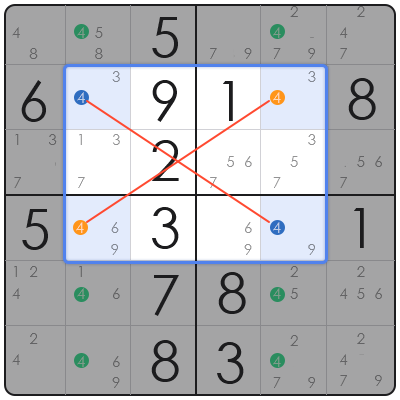
While often referred to as a ‘board game’ due to its grid-based format and widespread popularity, Sudoku is fundamentally a logic-based number-placement puzzle. This article deconstructs how to play Sudoku, offering a comprehensive structural analysis that moves beyond mere rules to unveil the strategic principles underpinning successful gameplay. At its core, Sudoku challenges players to fill a 9×9 grid with digits such that each column, each row, and each of the nine 3×3 subgrids contains all of the digits from 1 to 9. The significance of engaging with how to play Sudoku board game extends far beyond casual entertainment. It serves as a potent exercise in deductive reasoning, pattern recognition, and systematic problem-solving, making it a valuable tool for cognitive enhancement. Based on structural analysis, the puzzle’s elegant simplicity belies its profound capacity to sharpen analytical skills, requiring players to process multiple constraints simultaneously to arrive at a unique solution. The primary problem that how to play Sudoku addresses in the realm of intellectual pursuits is the need for an accessible yet challenging framework for logical thought. In a world saturated with information, Sudoku offers a focused, self-contained environment where abstract reasoning can be honed without external variables. From a framework perspective, mastering its mechanics provides a transferable skill set applicable to various complex analytical scenarios, offering a structured approach to breaking down intricate problems into manageable components.
The Foundational Mechanics of Sudoku
The foundational mechanics of how to play Sudoku board game involve understanding its core grid structure and elemental rules. A standard Sudoku puzzle presents a 9×9 grid, which is further subdivided into nine 3×3 subgrids, often called ‘boxes’ or ‘regions’. Initially, several cells within this grid are pre-filled with numbers, known as ‘givens’, which serve as the starting points for deduction. The objective is to populate all empty cells with a single digit from 1 to 9.
The governing principles are remarkably straightforward yet create immense complexity: each row, each column, and each of the nine 3×3 subgrids must contain all digits from 1 through 9. Crucially, no digit can be repeated within any single row, column, or 3×3 box. This triple constraint system is the bedrock of every Sudoku puzzle, compelling players to use logical inference rather than arithmetic or guesswork to determine the correct placement of numbers.
Based on structural analysis, these rules establish an intricate web of interdependencies across the entire grid. A number placed in one cell immediately impacts the possibilities for all other cells within its associated row, column, and 3×3 box. This interconnectedness is what makes how to play Sudoku board game a deeply analytical exercise, demanding careful consideration of every potential move and its ripple effect.
Core Principles of Deductive Reasoning in Sudoku
Core principles of deductive reasoning in how to play Sudoku board game are essential for progressively uncovering the solution through systematic elimination. The most basic and crucial technique is ‘direct placement’ or ‘single candidate’ identification. This involves locating an empty cell where, by examining its row, column, and 3×3 box, only one possible digit can logically be placed without violating any rules.
A slightly more advanced technique is ‘elimination by candidates’. For any given empty cell, one can systematically rule out numbers that already exist in its corresponding row, column, or 3×3 box. The remaining numbers represent the ‘candidates’ for that cell. “From a framework perspective,” identifying cells with the fewest candidates often provides the quickest path to a breakthrough, as it minimizes the options to consider.
Another fundamental principle is the ‘hidden single’. This occurs when a specific digit (say, ‘7’) can only be placed in one particular empty cell within an entire row, column, or 3×3 box, even if that cell itself has other possible candidates. By systematically scanning each unit (row, column, box) for each digit from 1 to 9, these hidden singles can be revealed, offering powerful deductions that significantly advance the puzzle’s completion.
A Step-by-Step Guide to Solving a Sudoku Puzzle
Solving how to play Sudoku board game efficiently requires a methodical approach, starting with initial scans and progressing to more intricate deductions. Begin by scanning the entire grid for ‘direct singles’ or ‘obvious placements’. Focus on rows, columns, and 3×3 boxes that have many pre-filled numbers. For each empty cell in these high-density areas, try to determine if only one number (1-9) can fit based on the digits already present in its row, column, and box. Place these numbers confidently.
Once the obvious singles are exhausted, the next step involves ‘candidate marking’. For empty cells where multiple numbers are possible, lightly pencil in all potential candidates within the cell. “In practical application,” this visual aid is invaluable for tracking possibilities and identifying patterns. After marking candidates, actively search for ‘hidden singles’ within each row, column, and box. This means looking for a digit (e.g., ‘5’) that appears as a candidate in only one cell within that specific unit.
Iteratively apply these techniques: after placing a new number, immediately re-scan its associated row, column, and 3×3 box to see if any new direct singles or candidate eliminations have become apparent. If the puzzle becomes particularly challenging, look for ‘naked pairs’ or ‘naked triples’ – two or three cells in a unit that share the exact same two or three candidates, respectively, allowing those candidates to be eliminated from other cells in that unit. Persistence and systematic checking are key to overcoming obstacles in how to play Sudoku board game.
Advanced Sudoku Strategies and Techniques
Beyond fundamental deductions, how to play Sudoku board game can involve advanced strategies that unlock solutions in more complex puzzles. ‘Naked Pairs’ or ‘Naked Triples’ occur when two or three cells within a single row, column, or 3×3 box contain only the same two or three candidates, respectively. For instance, if two cells in a row both only have candidates {2, 5}, then 2 and 5 must occupy those two cells, meaning 2 and 5 can be eliminated as candidates from all other cells in that same row.
‘Hidden Pairs’ and ‘Hidden Triples’ operate on a similar principle but are more subtle. Here, two or three candidates for a specific digit appear *only* in two or three cells within a particular unit, even if those cells have other candidates. “Based on structural analysis,” these candidates are ‘hidden’ among others, but their unique confinement allows other candidates in those specific cells to be eliminated, thereby simplifying the puzzle.
More sophisticated techniques include ‘X-Wing’ and ‘Swordfish’ patterns. An X-Wing involves a digit that can only appear in two positions across two different rows (or columns), forming a rectangle. This pattern allows for the elimination of that digit from other cells in the involved columns (or rows). “From a framework perspective,” mastering these advanced strategies transforms the Sudoku experience from simple deduction to sophisticated pattern recognition, allowing players to tackle even the most formidable puzzles.
Comparative Analysis: Sudoku vs. Related Logic Puzzles
Understanding how to play Sudoku board game can be further enriched by comparing its structural attributes to other popular logic puzzles. Sudoku is renowned for its specific constraints on digit placement without requiring arithmetic. This contrasts with puzzles that integrate mathematical operations or different grid structures, highlighting Sudoku’s unique position in the landscape of cognitive challenges. The table below provides a concise comparative analysis.
| Feature | Sudoku | Kakuro | KenKen |
| :——————– | :——————- | :——————- | :——————— |
| Logic Complexity | High (Deductive) | High (Arithmetic & Deductive) | Medium (Arithmetic & Logic) |
| Initial Setup Variability | Low (Fixed Givens) | High (Sum Clues) | High (Operation Clues) |
| Solution Uniqueness | Usually Unique | Multiple Sometimes | Unique |
| Cognitive Focus | Pattern Recognition, Constraint Satisfaction | Addition, Factor Finding | Arithmetic, Grid Logic |
This comparative analysis underscores that while how to play Sudoku board game shares common ground with other logic puzzles in demanding critical thought, its specific focus on digit non-repetition within defined units sets it apart. It emphasizes pure deductive reasoning and pattern recognition over mathematical computation, offering a distinct and focused mental workout.
Common Pitfalls and Strategic Solutions in Sudoku
When learning how to play Sudoku board game, players frequently encounter common pitfalls that can hinder progress, but these can be effectively mitigated with strategic solutions. One prevalent mistake is ‘rushing and making assumptions’. Beginners often try to guess numbers or fill cells without thoroughly checking all three constraints (row, column, 3×3 box), leading to errors that propagate throughout the puzzle. The professional advice here is to always double-check every placement, and when in doubt, use pencil marks for candidates rather than firm placements.
Another common pitfall is ‘overlooking simple deductions in pursuit of complex ones’. Players might get fixated on finding advanced patterns when simpler ‘direct singles’ or ‘hidden singles’ are still available. “From a framework perspective,” a systematic scanning approach is crucial: always sweep the grid for obvious placements first, then mark candidates, and only then delve into more advanced strategies. This hierarchical approach ensures efficiency and prevents unnecessary complications.
Finally, ‘getting stuck without a clear strategy’ is a significant roadblock. This often happens when a player has exhausted all immediate deductions and doesn’t know how to proceed. The solution involves re-evaluating the grid. Focus on cells with the fewest remaining candidates, or ‘choke points’. “In practical application,” revisiting existing pencil marks for ‘naked pairs/triples’ or ‘hidden pairs/triples’ can often reveal new eliminations. If absolutely no progress can be made, it’s wise to take a short break and return with fresh eyes, or even review previous steps for an unnoticed error.
FAQ: Navigating Sudoku Challenges
What defines a classic Sudoku ‘board game’? A classic Sudoku involves filling a 9×9 grid, divided into nine 3×3 subgrids, ensuring each row, column, and subgrid contains digits 1-9 exactly once, based on initial ‘givens’.
How do you start a Sudoku puzzle effectively? Begin by systematically scanning rows, columns, and 3×3 boxes for numbers that can only fit in one specific empty cell. These ‘direct singles’ are your initial, confident placements.
Are there multiple solutions to a Sudoku puzzle? Well-constructed Sudoku puzzles typically possess a single, unique solution. If you arrive at multiple solutions, it usually indicates an error in your initial deductions or the puzzle’s design.
What’s the best strategy for beginners learning how to play Sudoku board game? Focus intensely on identifying ‘direct singles’ and using ‘elimination by candidates’ within rows, columns, and boxes. Systematically mark candidates to aid visual processing.
Can I guess numbers if I’m completely stuck? While tempting, random guessing is generally discouraged as it often leads to cascading errors. Instead, review your grid for overlooked deductions, check existing pencil marks, or identify ‘naked’ or ‘hidden’ pairs/triples.
In conclusion, how to play Sudoku board game, far from being a mere pastime, represents a sophisticated exercise in structured logic and analytical deduction. Its elegance lies in simple rules that give rise to profound strategic depth, challenging players to master systematic problem-solving, pattern recognition, and iterative refinement. From a framework perspective, the enduring appeal of Sudoku underscores its value as a powerful cognitive tool, offering a unique opportunity to hone critical thinking skills that transcend the puzzle itself and provide long-term strategic benefits in any field requiring meticulous analysis and logical inference.