

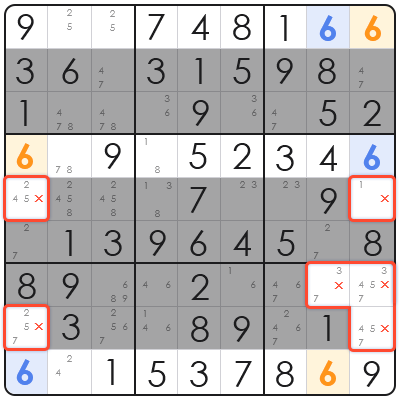
Easy Sudoku puzzles, at their core, represent a foundational exercise in grid-based logic, challenging individuals to fill a 9×9 grid with digits from 1 to 9 such that each number appears precisely once in every row, every column, and every one of the nine 3×3 subgrids. Distinguished by a relatively high density of pre-filled cells, these puzzles offer clear starting points and typically demand only straightforward deductive steps, making them an accessible entry point into the broader field of cognitive problem-solving. Beyond mere recreational pastime, engaging with easy Sudoku puzzles serves as a potent tool for enhancing critical cognitive skills, including systematic logical reasoning, intricate pattern recognition, and the cultivation of sustained concentration. Within the specialized domain of cognitive problem-solving and logic puzzles, these accessible grids function as fundamental training grounds, establishing a robust mental framework for more complex analytical challenges. The primary problem that easy Sudoku efficiently addresses for beginners and those seeking to refine their analytical prowess is the demystification of structured logical deduction. By presenting a manageable problem space, it allows individuals to practice constraint satisfaction and recursive elimination in a non-intimidating environment, thereby preventing the overwhelm often associated with combinatorial complexity in more advanced logical tasks. From a framework perspective within the cognitive sciences, easy Sudoku provides an ideal, controlled environment to operationalize and practice foundational principles of constraint satisfaction and systematic exclusion. These principles are not only vital for subsequent mastery of harder puzzles but are also directly transferable to a myriad of analytical and decision-making processes across various professional disciplines, reinforcing the enduring value of methodical problem-solving.
Decoding the Fundamentals of Easy Sudoku Logic
Easy Sudoku puzzles, at their foundational level, are precise exercises in constraint satisfaction, a key concept in artificial intelligence and operational research. The overarching objective is to populate a 9×9 grid with unique digits from 1 through 9, ensuring each digit’s singularity across all 9 rows, 9 columns, and 9 distinct 3×3 subgrids. Based on structural analysis, the ‘easy’ classification primarily stems from the generous provision of pre-filled numbers, which dramatically reduces the solution search space and streamlines the initial phases of logical deduction.
From a framework perspective, the Sudoku grid is architecturally comprised of 81 individual cells, intricately interconnected by 27 distinct ‘units’—specifically, 9 horizontal rows, 9 vertical columns, and 9 localized 3×3 blocks. Each individual cell’s ultimate digit placement must simultaneously satisfy the unique digit constraint across all three units to which it belongs. This sophisticated, interlocking system forms the indispensable bedrock for all subsequent logical deductions, irrespective of the puzzle’s designated difficulty level.
In practical application, an easy Sudoku is designed to readily reveal a substantial number of ‘naked singles’ or ‘hidden singles’ right from the initial grid presentation. These immediate and unambiguous deductions empower the solver to rapidly populate a significant portion of the grid, thereby inherently decreasing the complexity of subsequent steps and consistently reinforcing the core principles of basic logical reasoning and systematic elimination.
Essential Techniques for Initial Digit Placement
The most fundamental and universally applied technique for commencing an easy Sudoku puzzle involves systematic scanning for ‘singles,’ which represent cells where only one specific digit can logically and uniquely reside. This scenario predominantly emerges when eight of the nine possible digits (1-9) are already present within the intersecting row, column, or 3×3 block associated with that empty cell, leaving only a single, undeniable candidate digit.
**Row and Column Elimination (Naked Singles)** is a primary strategy for identifying these crucial starting points. To execute this, the solver must methodically inspect each empty cell, meticulously examining its corresponding row, column, and 3×3 block to compile a comprehensive list of all digits already present. The unique digit from the 1-9 set that is conspicuously absent from this compilation for that cell’s respective units is definitively the ‘naked single’ to be placed. This process is inherently iterative; each successfully placed digit often unlocks new opportunities for identifying further naked singles across the grid.
**Block Elimination (Hidden Singles)** extends beyond the directness of naked singles and is equally crucial, particularly within the confines of each 3×3 block. This technique necessitates focusing on a specific 3×3 block and determining if a particular digit (e.g., the digit ‘7’) can *only* be positioned in one specific cell within that block. This determination is made because all other cells within that block have already had the digit ‘7’ eliminated due to its presence in their respective rows or columns. Based on structural analysis, this strategy systematically reduces ambiguity and clarifies placement within localized grid units.
Iterative Deduction and Cross-Referencing Strategies
Once the initial, readily apparent singles have been successfully placed, the puzzle often transitions into a phase requiring iterative deduction, where newly confirmed digits invariably create opportunities for subsequent placements. From a framework perspective, each successful digit placement fundamentally updates the constraint landscape for all neighboring and interconnected cells, initiating a cascading effect of potential new singles. This inherent cyclical process is absolutely central to the resolution of any Sudoku puzzle, especially those designated as ‘easy’.
**Candidate Marking**, while generally optional for truly easy puzzles, can be a beneficial aid for those that are marginally more challenging or for solvers who prefer a visual record of possibilities. This technique involves lightly noting all potential candidate digits within each empty cell. However, for genuinely easy puzzles, extensive candidate marking is frequently superfluous, as direct singles typically surface with sufficient regularity. In practical application, this methodical approach becomes progressively more critical as puzzle difficulty escalates, yet understanding its underlying principle remains invaluable for foundational problem-solving development.
**Cross-Referencing** stands as a cornerstone of effective Sudoku strategy, demanding the simultaneous consideration of intersecting rows, columns, and 3×3 blocks. For instance, if the objective is to place a specific digit, such as ‘7’, within a particular 3×3 block, the solver must consult which rows and columns already contain a ‘7’, thereby systematically eliminating those cells as viable possibilities for placement within that target block. This systematic exclusion, predicated on the convergence of multiple constraints, is a hallmark of sophisticated Sudoku logic.
Comparative Analysis of Sudoku Solving Approaches
Solving easy Sudoku puzzles fundamentally relies on direct logical deduction, yet it offers valuable insights when juxtaposed with methodologies employed for more complex variants. From a framework perspective, the core techniques of systematic scanning and elimination are universally applicable, but the depth, subtlety, and iterative nature of their application vary significantly across difficulty levels.
To illustrate the strategic differences, consider the following comparative analysis of primary Sudoku solving techniques:
| Technique | Complexity | Efficiency (for Easy Puzzles) | Applicability (Difficulty) |
| :———————— | :——— | :—————————- | :————————- |
| **Naked/Hidden Singles** | Low | High | Easy to Medium |
| **Candidate Marking** | Medium | Moderate | Medium to Hard |
| **Advanced (e.g., X-Wing)** | High | Low (Overkill) | Hard |
This comparative overview distinctly highlights that while sophisticated techniques like X-Wing, Swordfish, or Nishio are undeniably powerful for intricate puzzles, they are generally superfluous and inefficient for easy Sudoku grids. The inherent efficiency in solving easy puzzles is derived directly from the prompt applicability of fundamental rules and the high probability of immediate, unambiguous deductions, making them an optimal training ground for developing foundational logical reasoning capabilities without introducing unnecessary algorithmic complexity or cognitive load.
Common Pitfalls and Professional Solutions in Easy Sudoku
Even when engaging with easy Sudoku puzzles, certain ingrained habits can inadvertently impede progress and lead to frustration. A pervasively common pitfall is **premature guessing**, wherein a solver impulsively places a digit into a cell without absolute logical certainty, which almost invariably leads to errors that propagate throughout the entire grid and frequently necessitate a complete restart. Based on structural analysis, this action fundamentally undermines the core principle of methodical logical deduction and constraint satisfaction.
The professional and highly recommended solution to circumventing the temptation of guessing is to practice **rigorous verification** for every potential digit placement. Always undertake a meticulous double-check to ensure that a candidate digit unequivocally satisfies all three unit constraints—its designated row, column, and 3×3 block—before committing to its placement. If any degree of doubt persists, it is strategically more advantageous to temporarily bypass that cell, pivot to another section of the grid, or seek a different, more certain digit. In practical application, cultivating patience and adhering to systematic scanning protocols are the most effective prophylactic measures against such detrimental errors.
Another frequently encountered mistake, even among seasoned casual solvers, is a **lack of systematic scanning**. Simply glancing cursorily at the grid will often result in overlooking readily available singles or direct deductions. From a framework perspective, operating without a structured and methodical approach means the solver fails to exhaust all immediate and obvious possibilities, leaving potential solutions untapped. The professional solution to this oversight is to adopt a consistent, routine scanning methodology: for example, methodically checking all rows for the digit ‘1’, then all columns, then all 3×3 blocks, before systematically proceeding to the digit ‘2’, and so forth. Alternatively, an equally effective strategy involves prioritizing the examination of cells that exhibit the fewest surrounding empty neighbors, as these often yield quicker deductions.
Frequently Asked Questions about Easy Sudoku
**Q: What fundamentally distinguishes an “easy” Sudoku puzzle from a harder one?**A: Easy Sudoku puzzles are characterized by a high number of pre-filled cells, which facilitates numerous direct deductions and ‘singles’ without requiring complex strategies or extensive candidate tracking.
**Q: Is there a universal first step recommended for solving an easy Sudoku?**A: Based on structural analysis, the most effective initial step involves systematically scanning the entire grid for ‘naked singles’—cells where only one digit logically fits given the constraints of its row, column, and 3×3 block.
**Q: Is it necessary to utilize pencil marks (candidate digits) for easy Sudoku puzzles?**A: For genuinely easy puzzles, the use of pencil marks is often unnecessary. Direct observation and systematic elimination usually suffice, streamlining the process and maintaining a less cluttered visual grid.
**Q: What is the most effective way to enhance my speed in solving easy Sudoku puzzles?**A: In practical application, consistent and deliberate practice, coupled with refining systematic scanning techniques to rapidly identify singles and rigorously avoiding errors, will significantly improve your solving speed and overall efficiency.
**Q: What is the primary cognitive benefit derived from solving easy Sudoku puzzles?**A: From a framework perspective, easy Sudoku serves as an excellent entry point, strengthening foundational logical reasoning, improving pattern recognition capabilities, and cultivating sustained focus, which are crucial for more complex problem-solving scenarios.
Solving easy Sudoku puzzles transcends a mere leisurely activity; it stands as a foundational exercise in developing structured logical thinking and systematic problem-solving. Based on structural analysis, the consistent application of basic elimination and rigorous cross-referencing techniques actively cultivates a mental discipline that is absolutely essential for navigating a diverse array of analytical challenges. From a strategic perspective in the cognitive problem-solving domain, mastering these accessible puzzles not only builds crucial confidence but also establishes a robust analytical framework applicable to tackling more intricate logical problems, whether in advanced Sudoku variants or real-world decision-making scenarios. The profound insights gained from methodically and successfully filling a simple 9×9 grid profoundly underscore the enduring value of a systematic, logical approach to problem-solving in any intellectual or professional domain.