

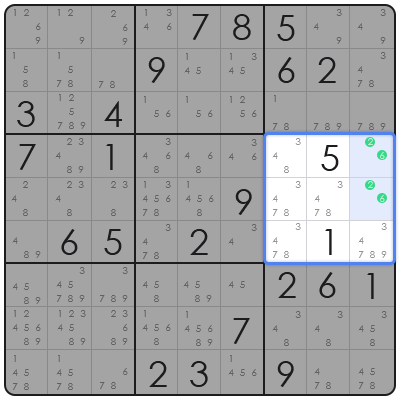
Hard Sudoku presents a logic-based number-placement challenge distinguished by a significantly reduced number of initial clues, demanding advanced deductive reasoning rather than simple pattern matching. This complexity elevates the puzzle from a casual pastime to a rigorous mental exercise, pushing the boundaries of conventional problem-solving strategies. From a framework perspective, the significance of mastering hard Sudoku extends beyond recreational enjoyment; it acts as a robust training ground for developing structured analytical skills, enhancing pattern recognition capabilities, and refining systematic elimination processes. These cognitive benefits are directly transferable to complex decision-making scenarios across various professional domains, where meticulous logical inference is paramount. The primary problem that solving hard Sudoku addresses in the current landscape is the cultivation of sustained critical thinking and intellectual resilience. In an era often characterized by quick fixes, the methodical approach required to unravel a challenging Sudoku grid reinforces the value of patience, persistence, and a deep understanding of interconnected constraints, offering a tangible pathway to sharpen one’s analytical acumen.
Unraveling the Underlying Logic of Hard Sudoku
Based on structural analysis, hard Sudoku grids adhere to the fundamental 9×9 layout, subdivided into nine 3×3 blocks, with rows and columns. However, their formidable difficulty stems from the minimal number of pre-filled digits, which compels solvers to move beyond superficial observations and engage in much deeper, multi-layered logical inferences rather than relying on basic direct placements.
From a framework perspective, the core mechanics still revolve around the constraint that each digit from 1 to 9 must appear exactly once in every row, column, and 3×3 block. The process of how do i solve hard sudoku therefore necessitates identifying ‘hidden’ relationships and employing techniques that exploit these interconnected constraints, as simple ‘naked singles’ or ‘hidden singles’ are rarely sufficient for substantial progress.
Crucially, understanding the underlying principle of constraint propagation is paramount. Every confirmed digit placement or candidate elimination profoundly impacts the possibilities in its associated row, column, and 3×3 block, creating a dynamic, complex web of interdependencies. Advanced solvers systematically exploit this interconnectedness to systematically reduce candidates and unveil hidden solutions, rather than attempting direct numerical placements.
Core Advanced Techniques for Solving Hard Sudoku
To effectively answer the question of how do i solve hard sudoku, one must develop proficiency in advanced techniques that transcend elementary candidate elimination. Methods such as ‘Naked Pairs/Triples/Quadruples’ and ‘Hidden Pairs/Triples/Quadruples’ are vital, as they identify sets of candidates that are uniquely confined to a specific number of cells within a unit, enabling the definitive removal of those candidates from other cells in that same unit.
From a strategic viewpoint, ‘X-Wing’ and ‘Swordfish’ patterns represent powerful grid-wide techniques. An X-Wing, for instance, occurs when a specific candidate appears exclusively in two cells within two different rows, with these cells aligning in the same two columns. This structural pattern allows for the elimination of that candidate from all other cells within those two columns, signifying a major breakthrough in many hard puzzles.
In practical application, even more intricate techniques like ‘Jellyfish’ extend the X-Wing concept to four rows or columns, while ‘Skyscraper’ and ‘Two-String Kite’ leverage interconnected candidate chains to resolve particularly intractable situations. These methods demand exceptional visual acuity, meticulous candidate tracking, and the ability to project multi-cell interactions across the entire grid, moving beyond singular cell focus.
Strategic Approaches: A Step-by-Step Guide to Solving Hard Sudoku
**Step 1: Meticulous Candidate Marking.** When confronting a hard Sudoku, the absolute first and non-negotiable step is to meticulously mark every possible candidate digit for each empty cell. This comprehensive initial inventory is the foundational bedrock; advanced techniques cannot be applied effectively without a complete and accurate understanding of all potential options.
**Step 2: Exhaust Basic Elimination Techniques.** Even within hard puzzles, some initial deductions might emerge after thorough candidate marking. Systematically scan all rows, columns, and 3×3 blocks for ‘Naked Singles’ (cells with only one remaining candidate) and ‘Hidden Singles’ (candidates appearing only once within a unit). Repeat this process until no further basic singles can be found.
**Step 3: Implement Paired and Grouped Candidate Strategies.** After exhausting all singles, focus on identifying ‘Naked Pairs/Triples/Quadruples’ and ‘Hidden Pairs/Triples/Quadruples’. These patterns involve a specific number of candidates being exclusively confined to the same number of cells within a unit, allowing those candidates to be removed from other cells within that unit.
**Step 4: Employ Advanced Grid-Wide Pattern Recognition.** To truly master how do i solve hard sudoku, one must actively search for patterns that span across multiple units, such as ‘X-Wing’, ‘Swordfish’, ‘Jellyfish’, ‘Skyscraper’, and ‘Two-String Kite’. These techniques leverage specific alignments of candidates across rows and columns to eliminate possibilities that are not apparent from a single-unit perspective.
**Step 5: Utilize Forcing Chains and Nishio Logic.** When standard advanced techniques yield no further progress, consider structured ‘what if’ scenarios, known as Forcing Chains or Nishio. This involves making a temporary assumption for a cell’s digit, meticulously tracing the logical consequences, and if a contradiction arises, negating the initial assumption. This is a powerful, yet carefully controlled, form of logical deduction.
Comparative Analysis: Hard Sudoku Techniques Versus Related Problem-Solving Paradigms
From a framework perspective, solving hard Sudoku shares conceptual parallels with other analytical problem-solving tasks, yet its purely deterministic and constraint-based nature establishes its distinct identity. The methodical application of rules and the systematic search for a singular, correct solution within a closed system distinguish it from more open-ended or probabilistic challenges found in other fields.
In practical application, the meticulous logical deduction demanded by hard Sudoku stands in contrast to heuristic-based problem-solving, often employed in fields such as artificial intelligence planning, where optimal paths are not always guaranteed and approximation might be necessary. Sudoku, by design, necessitates absolute certainty and verifiable steps at every stage, positioning it as a quintessential exercise in deterministic constraint satisfaction.
Based on structural analysis, consider the following comparison of how how do i solve hard sudoku strategies stack against other logical challenges, highlighting their unique contributions to cognitive development:
| Feature | Hard Sudoku Solving | Chess Strategy | Cryptography |
|—|—|—|—|
| **Complexity** | High (combinatorial, deterministic logic) | Very High (game theory, foresight) | Extremely High (mathematical, computational) |
| **Efficiency** | Highly dependent on systematic candidate elimination | Real-time decision making under pressure | Algorithmic, often brute-force resistant |
| **Application Scope** | Pure logical deduction, pattern recognition | Strategic planning, adversarial thinking | Security, data integrity, secure communication |
This comparison clearly underscores that while all listed activities involve profound logical engagement, hard Sudoku’s unique and potent contribution lies in refining purely deductive reasoning without the confounding variables of external agents, probabilistic elements, or incomplete information, offering an unadulterated mental workout in logical rigor.
Navigating Common Pitfalls and Implementing Robust Solutions in Sudoku
**Pitfall 1: Incomplete Candidate Marking.** A prevalent mistake when learning how do i solve hard sudoku is failing to thoroughly mark all possible candidate digits for every single empty cell. This oversight invariably leads to overlooking crucial advanced patterns, as the necessary information for techniques like X-Wing or Naked Pairs simply remains undiscovered and inaccessible.
**Solution:** Professional advice dictates making candidate marking the absolute first, most exhaustive, and continually updated step in your process. Use a pencil to note all possibilities within each cell, and meticulously update these as digits are confirmed. This foundational precision is the bedrock upon which all advanced solving techniques are built.
**Pitfall 2: Premature Guessing or Unstructured Trial-and-Error.** Faced with a puzzle that seems to offer no immediate logical path forward, many solvers prematurely resort to guessing. While controlled ‘what if’ scenarios (forcing chains) are valid, random guessing without a rigorous logical foundation is highly inefficient and almost guarantees errors in hard Sudoku, as the ripple effect of one wrong assumption is catastrophic.
**Solution:** From a framework perspective, cultivate a systematic approach to identifying where advanced techniques apply. If standard methods stall, diligently review candidate lists for complex patterns (e.g., pointing pairs, box-line reduction) before considering structured trial-and-error like Nishio, which involves meticulous tracking of assumptions and their consequences.
**Pitfall 3: Overlooking Inter-Unit Relationships.** Solvers frequently focus too narrowly on individual rows, columns, or blocks, thereby missing critical deductions that emerge from relationships spanning multiple units. For example, a candidate might be restricted in two rows in a way that allows an X-Wing elimination, but this requires a broader, grid-wide perspective.
**Solution:** In practical application, consciously train yourself to scan the grid for patterns that bridge units. After exhausting intra-unit deductions, intentionally shift your focus to looking for alignments across rows and columns (e.g., X-Wings, Swordfish) or interactions between blocks and rows/columns (e.g., pointing pairs/triples, box-line reduction). This holistic perspective is indispensable for hard puzzles.
Frequently Asked Questions: Mastering Hard Sudoku Challenges
**Q: What differentiates a hard Sudoku from an easy one?** A: Hard Sudoku puzzles are characterized by significantly fewer initial clues, compelling solvers to employ advanced logical techniques such as X-Wing or Naked Triples, rather than relying on simpler candidate elimination. The solution path is substantially less obvious and requires deeper deduction.
**Q: Is guessing ever an acceptable strategy in hard Sudoku?** A: Random guessing is strongly discouraged due to its high error potential. However, structured ‘what if’ techniques, like forcing chains, involve making a temporary, traceable assumption, following its logical consequences, and backtracking if a contradiction arises, which is a controlled logical process.
**Q: How can I improve my speed and efficiency in solving hard Sudoku?** A: Consistent practice and a meticulous approach to candidate marking are paramount. Focus on systematically applying advanced patterns and techniques rather than aimless searching. Regular engagement with increasingly difficult puzzles builds intuition and accelerates pattern recognition.
**Q: Are there any specific tools or software that can assist in solving hard Sudoku?** A: Many online solvers and mobile applications offer candidate tracking and hint features, which can be beneficial for learning and verifying steps. However, for true mastery, developing the ability to track candidates and recognize patterns mentally or with a pencil and paper is essential.
**Q: What is the most crucial skill for consistently solving hard Sudoku?** A: The ability to meticulously track all possible candidates for every empty cell, combined with the systematic and patient application of advanced logical deduction rules and pattern recognition, is the most crucial skill. Persistence and disciplined thinking are equally vital components.
Mastering how do i solve hard sudoku is far more than just conquering a challenging puzzle; it represents a profound exercise in systematic logical deduction, sophisticated pattern recognition, and sustained analytical focus. Based on structural analysis, the formidable skills honed through engaging with these complex grids—ranging from meticulous candidate management to advanced inter-unit reasoning—are highly transferable to diverse problem-solving domains requiring structured, constraint-based thinking. From a framework perspective, consistently tackling hard Sudoku cultivates a rigorous approach to complex challenges, offering not just an engaging leisure activity but a potent and effective mental training ground for critical, insightful analysis.