

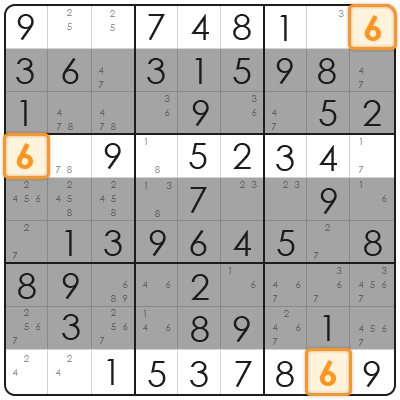
Getting better at Sudoku is a structured journey that involves developing a keen eye for patterns, mastering logical deduction, and applying systematic elimination techniques. This article serves as a comprehensive guide for anyone, from casual players to aspiring speed-solvers, aiming to elevate their Sudoku prowess and consistently conquer more challenging grids. For both competitive solvers and enthusiasts, understanding the underlying grid topology and the intricate relationships between numbers is paramount. True mastery isn’t about luck or brute-force guessing; it’s a testament to rigorous logical reasoning and the strategic application of advanced problem-solving methodologies that transform complex puzzles into solvable challenges. This deep dive will explore the core mechanisms of Sudoku improvement, provide a step-by-step roadmap for skill development, highlight common pitfalls, and answer frequently asked questions, all designed to arm you with the knowledge needed to genuinely enhance your game. Our goal is to empower you with an expert-level understanding of how to get better at Sudoku through a logic-first approach.
The Logic-First Approach: Unpacking the Mechanism of Sudoku Mastery
Getting better at Sudoku fundamentally involves enhancing one’s logical deduction capabilities and pattern recognition skills within the 9×9 grid. The game is a perfect exercise in constraint satisfaction, where each cell’s value is determined not by choice, but by the absence of alternatives dictated by its row, column, and 3×3 block.
The core mechanism of improvement lies in refining your ability to perform candidate elimination with increasing efficiency and depth. This means systematically identifying all possible numbers for each empty cell, often referred to as ‘pencil marks,’ and then narrowing down those possibilities using the established numbers in connected cells. Based on logic-chain analysis, the more efficiently you can eliminate candidates, the faster and more accurately you can pinpoint the correct digits.
Furthermore, understanding grid topology is crucial. Recognizing how numbers propagate constraints across intersecting rows, columns, and blocks allows for the identification of advanced patterns like Naked Pairs, Hidden Singles, and even more complex structures such as X-Wing or Swordfish. The structural necessity of placing a number in a specific cell becomes evident only when all other logical possibilities have been exhausted or proven false.
A Practical Guide: Step-by-Step Strategies to Elevate Your Sudoku Game
To consistently improve at Sudoku, players must adopt a structured approach, beginning with fundamental techniques and progressively integrating more advanced strategies. This step-by-step guide outlines a practical pathway to enhancing your solving abilities and truly understanding how to get better at Sudoku.
Step 1: Master Pencil Marks and Candidate Elimination. Begin every puzzle by meticulously filling in all possible candidate numbers (pencil marks) for each empty cell. This visual representation of cell constraints is the bedrock of all advanced techniques. As you place numbers, immediately eliminate them from the candidates in affected rows, columns, and blocks. This systematic initial scan often reveals Hidden Singles and Naked Singles.
Step 2: Progress to Paired Candidates and Block Interaction. Once single candidates are exhausted, focus on identifying Naked Pairs, Triples, or Quads within a single row, column, or block. These occur when a set of N candidates is confined to N cells within that unit, allowing those candidates to be eliminated from other cells in that unit. Concurrently, look for Hidden Pairs or Triples, where a set of N candidates can only appear in N specific cells within a unit, even if those cells have other candidates.
Step 3: Integrate Advanced Logic Puzzles and Pattern Recognition. For competitive solvers and those seeking significant gains, delve into complex techniques such as X-Wing, Swordfish, and Chains. These strategies involve identifying patterns of candidate numbers across multiple rows or columns, enabling powerful eliminations. This phase requires a deeper understanding of logical flow and predictive analysis, pushing your capacity for logical deduction to its limits.
Comparative Analysis: Different Facets of Sudoku Mastery
Comparing strategies for how to get better at Sudoku reveals that consistent practice combined with analytical learning outperforms mere brute-force attempts or reliance on a single trick. Understanding different improvement pathways is crucial for sustained progress.
One pathway focuses solely on increasing the difficulty level of puzzles, which while challenging, doesn’t inherently teach new techniques. It can lead to frustration without a foundational understanding of logical deductions. Another pathway emphasizes speed, often encouraging shortcuts that skip thorough candidate elimination, which can be detrimental for accuracy on harder puzzles. The most effective pathway, however, is a ‘Logic-First’ approach, where each new technique (like Naked Pairs or X-Wing) is learned, understood, and deliberately practiced until it becomes intuitive.
The ‘Logic-First’ approach prioritizes understanding the ‘why’ behind each move, fostering a deeper comprehension of Sudoku’s mechanics. This directly impacts the frequency of use of advanced techniques, making them readily accessible in diverse puzzle scenarios. In terms of logical complexity, this method builds from simple to complex, ensuring a solid foundation. This iterative learning process ensures that each solved puzzle contributes meaningfully to your overall skill, moving you closer to true Sudoku mastery.
Avoiding Stagnation: Common Pitfalls When Learning How to Get Better at Sudoku
Many players striving to get better at Sudoku encounter recurring obstacles that impede their progress, often stemming from overlooking fundamental principles or rushing the process. Recognizing and actively avoiding these common pitfalls is as crucial as learning new techniques.
A primary mistake is neglecting thorough pencil marks or abandoning them prematurely. Without a complete set of candidate numbers for each cell, identifying advanced patterns like Naked Pairs or X-Wing becomes nearly impossible. This leads to reliance on less efficient scanning or, worse, guessing. Always ensure your grid is fully annotated with candidates before moving to more complex deductions; it’s the visual blueprint for logical deduction.
Another pitfall is making guesses when stuck. Guessing breaks the fundamental principle of Sudoku: every number must be logically derivable. A guess, even if it feels like an educated one, can lead to a cascade of errors and ultimately frustrate the solver. When you hit a wall, it’s an indication that a more advanced technique or a missed deduction is required, not a cue to gamble. Re-examine the grid for hidden singles, pairs, or other patterns you might have overlooked, or consider backtracking if you suspect an earlier error.
Frequently Asked Questions About How to Get Better at Sudoku
Addressing common queries is crucial for anyone seeking comprehensive guidance on how to get better at Sudoku, clarifying misconceptions and reinforcing core principles.
Q: What is the most crucial skill for improving at Sudoku? A: The most crucial skill is systematic logical deduction, particularly through meticulous candidate elimination and the recognition of constraint propagation.
Q: How do pencil marks help improve my game? A: Pencil marks visually represent all possible numbers for each cell, making it easier to identify single candidates, Naked Pairs, Hidden Triples, and other complex patterns essential for improvement.
Q: How often should I practice to see improvement? A: Consistent daily practice, even just 15-30 minutes, combined with analyzing your mistakes, is more effective than infrequent long sessions for sustained improvement.
Q: Are there specific techniques for advanced improvement? A: Yes, advanced techniques like X-Wing, Swordfish, and various chaining methods (e.g., Simple Coloring, Forcing Chains) are vital for conquering expert-level puzzles.
Q: Is speed important when learning to get better? A: Focus on accuracy and understanding the logic first. Speed will naturally increase as your logical deduction becomes more intuitive and efficient.
Mastering Sudoku is an intellectual pursuit rooted in a ‘Logic-First’ approach, emphasizing systematic deduction, comprehensive candidate elimination, and continuous learning of advanced grid topologies. By embracing meticulous pencil marks, understanding cell constraints, and diligently practicing complex patterns, you can profoundly enhance your ability to solve even the most challenging puzzles. The journey to truly get better at Sudoku is one of analytical patience and consistent application of these expert strategies, ultimately transforming you from a casual player into a formidable Sudoku solver.