

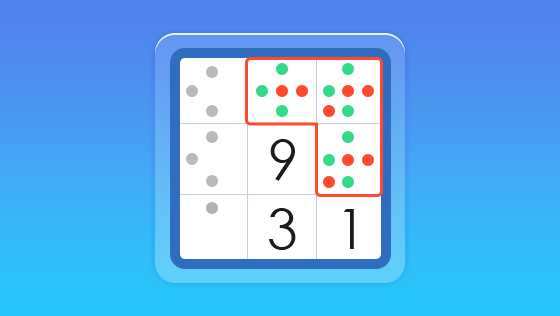
How do you do Sudoku refers to the systematic application of logical deduction techniques to fill a 9×9 grid with digits 1 through 9, ensuring each digit appears exactly once in each row, column, and 3×3 subgrid. This foundational understanding is crucial, defining the solver’s approach. For casual players, grasping how to do Sudoku provides a structured method to tackle puzzles, enhancing enjoyment and reducing frustration. It moves the experience beyond trial-and-error to a satisfying intellectual pursuit based on clear reasoning. Competitive speed-solvers, conversely, leverage these techniques to identify complex patterns with blinding speed, using a highly optimized internal framework based on grid topology and candidate elimination to achieve record times and consistent success.
Technical Breakdown: The Logic Behind How Do You Do Sudoku
The logic behind how you do Sudoku hinges on the principle of unique placement within a constrained 9×9 grid, governed by three fundamental rules: unique digits per row, column, and 3×3 block. This structural necessity establishes the puzzle’s solvable nature entirely through deduction.
Central to solving is candidate elimination, where the presence of a digit in one cell automatically precludes it from other cells in its respective row, column, and 3×3 block. Understanding this interconnected grid topology is paramount for accurate deductions, forming the backbone of how do you do Sudoku.
Based on logic-chain analysis, every number placement is a direct consequence of these constraints. The process of “how do you do Sudoku” is essentially mapping these relationships to reveal the singular valid digit for each empty cell, often using “pencil marks” as a crucial tracking mechanism.
Step-by-Step Implementation: Executing How Do You Do Sudoku in Play
Executing how you do Sudoku in play involves a methodical progression through basic and advanced logical deduction techniques, starting with simple candidate identification and advancing to complex pattern recognition. A structured approach ensures efficiency and accuracy.
**Step 1: Initial Scan & Naked Singles.** Begin by scanning rows, columns, and 3×3 blocks for cells where only one digit can logically fit, known as “Naked Singles.” Fill these immediately, as they are direct answers derived from basic cell constraints.
**Step 2: Pencil Marking.** For all remaining empty cells, write down all possible candidate digits. This systematic application of “pencil marks” is a cornerstone of how do you do Sudoku, visualizing all potential values within each cell’s constraints.
**Step 3: Candidate Elimination & Hidden Singles.** Use your pencil marks to identify “Hidden Singles” (a digit that can only appear in one specific cell within a row, column, or block, despite other candidates in that cell). Also look for “Naked Pairs” or “Hidden Pairs” within blocks or lines, where two digits are confined to two specific cells.
**Step 4: Advanced Pattern Recognition.** For tougher puzzles, how do you do Sudoku extends to techniques like “Pointing Pairs” (where candidates in a block align to a single row/column, eliminating them elsewhere), “Box-Line Reduction,” and eventually complex “X-Wing” or “Swordfish” patterns based on intricate grid topology interactions.
Comparative Analysis: How Do You Do Sudoku Against Other Strategies
Comparing how you do Sudoku as a comprehensive methodology against isolated techniques reveals its holistic nature, encompassing various strategies from fundamental logical deduction to complex pattern recognition. This holistic view enhances mastery and versatility.
| Strategy | Difficulty Level | Frequency of Use | Logical Complexity | | :————————– | :—————– | :————— | :———————– | | How Do You Do Sudoku (Overall Method) | Beginner to Expert | Always | Foundational to Advanced | | Basic Scanning/Naked Singles | Beginner | Very High | Low | | Naked/Hidden Pairs | Intermediate | High | Medium | | X-Wing/Swordfish | Advanced | Medium | High |
The “How Do You Do Sudoku” overarching strategy integrates all these specific techniques, emphasizing a “Logic-First” approach. While basic scanning is frequent and low complexity, advanced strategies like X-Wing, though less frequent, demand significant logical complexity and a deep understanding of grid topology and cell constraints.
Common Pitfalls When Applying How Do You Do Sudoku
Common pitfalls when applying how you do Sudoku often stem from inconsistent pencil marking, premature guessing, and overlooking fundamental candidate elimination opportunities, hindering efficient puzzle resolution. Avoiding these enhances solving speed and accuracy.
**Pitfall 1: Incomplete Pencil Marks.** Many solvers fail to meticulously record all candidates, leading to missed deductions for Naked Pairs, Hidden Singles, or more advanced patterns. Consistent and thorough pencil marking is fundamental for how do you do Sudoku and visualizing cell constraints.
**Pitfall 2: Premature Guessing.** Introducing assumptions (“guessing”) is antithetical to the logical deduction principle of Sudoku. It breaks the logic chain, often leading to unresolvable contradictions and necessitates extensive backtracking, wasting valuable time and effort.
**Pitfall 3: Tunnel Vision.** Focusing exclusively on a single row, column, or block can prevent solvers from seeing cross-referencing opportunities or patterns spanning multiple sections of the grid. Regularly scanning the entire grid for new opportunities is a key part of how do you do Sudoku.
FAQ: Mastering How Do You Do Sudoku
This FAQ section provides concise, high-value answers to frequently asked questions about how you do Sudoku, addressing common challenges and offering quick insights for improvement. These are designed for “Position Zero” eligibility.
**Q: What is the very first step in how do you do Sudoku?** A: The first step is “scanning” or “cross-hatching” to find immediate “Naked Singles,” where only one digit can logically fit into a cell, row, column, or block based on existing numbers. This is foundational.
**Q: Why are pencil marks essential for how do you do Sudoku?** A: Pencil marks are crucial because they systematically track all possible candidate digits for each empty cell, preventing mental overload and enabling the identification of advanced patterns like Naked Pairs or Hidden Singles through cell constraints.
**Q: How do competitive solvers do Sudoku quickly?** A: Competitive solvers excel by rapidly identifying patterns through extensive practice, minimizing explicit pencil marks to only complex scenarios, and often employing advanced logical deduction techniques like X-Wings and chains without written notation.
**Q: Is guessing ever a valid part of how do you do Sudoku?** A: No, true Sudoku is solved purely by logical deduction. Guessing introduces uncertainty and is considered an incorrect solving method, often leading to unresolvable errors requiring extensive backtracking.
**Q: What does “grid topology” mean in Sudoku?** A: Grid topology refers to the structural arrangement of cells, rows, columns, and 3×3 blocks, and how these interconnected constraints define the valid placement of numbers within the 9×9 puzzle. It’s key to how you do Sudoku.
Mastery of “how do you do Sudoku” is fundamentally rooted in a “Logic-First” approach, where every digit placement is a product of rigorous deduction, understanding of grid topology, and systematic candidate elimination. This structured methodology, applied consistently, transforms the challenging Sudoku grid into a solvable testament to human logic.