

For many, the intricate grid of a Sudoku puzzle appears daunting, a complex numerical maze impenetrable without advanced mathematical skills. However, the premise of “how do you play sudoku step by step for beginners” demystifies this perception entirely, revealing a logic-based game accessible to anyone willing to embrace systematic deduction. At its core, Sudoku is not about calculation but about pattern recognition and logical inference, making it an exceptional entry point into structured problem-solving. The significance of engaging with Sudoku, particularly from a beginner’s perspective, extends beyond mere recreation. In the realm of cognitive development and problem-solving, this puzzle serves as a powerful tool for enhancing critical thinking, improving concentration, and fostering patience. It trains the brain to process information methodically, identify constraints, and deduce solutions based on limited data, skills that are highly transferable to real-world analytical challenges. The primary problem Sudoku solves for newcomers is the initial intimidation associated with complex logical tasks. By providing a clear, step-by-step methodology, beginners can transition from confusion to confident puzzle-solving, building a foundational understanding of constraint satisfaction. This structured approach helps in overcoming the common hurdle of feeling overwhelmed by a grid full of empty cells, transforming a seemingly insurmountable challenge into a series of manageable, logical steps that incrementally lead to a complete solution.
The Core Mechanics: Understanding the Sudoku Grid
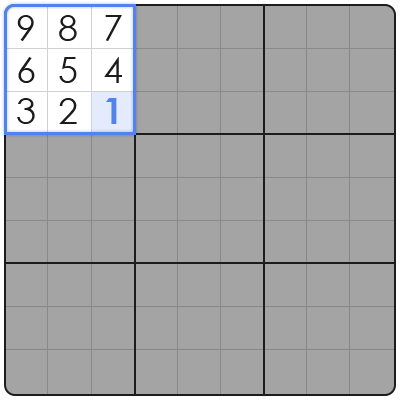
What is Sudoku’s fundamental structure? The Sudoku grid is a 9×9 square, fundamentally organized into three distinct types of regions: nine rows, nine columns, and nine 3×3 smaller boxes. This tripartite structural division is crucial, as all rules and deductions revolve around these boundaries, ensuring a balanced distribution of numbers across the puzzle.
Each of these regions—rows, columns, and 3×3 boxes—must be populated with the digits 1 through 9. A key mechanical constraint is that no digit can be repeated within any single row, any single column, or any single 3×3 box. This non-repetition rule forms the bedrock of all Sudoku logic, guiding every number placement and deduction a player makes.
The objective of playing Sudoku is to fill every empty cell in the 9×9 grid with a digit from 1 to 9, while strictly adhering to the aforementioned non-repetition rule across all rows, columns, and 3×3 boxes. This entails a constant process of identifying what numbers are already present in a given region and subsequently determining which numbers are missing and where they can logically be placed.
Initial Sudoku puzzles come with a pre-determined set of numbers already placed within some cells. These ‘givens’ serve as fixed points of reference, providing the necessary starting clues. From a framework perspective, these initial numbers are the foundational data points from which all subsequent logical deductions must emanate, setting the difficulty level and guiding the initial phases of problem-solving.
Initiating Your First Puzzle: Basic Strategy Deployment
How do you start a Sudoku puzzle? Starting a Sudoku puzzle involves systematically identifying numbers that can only fit in one specific cell within a given row, column, or 3×3 box, based on the existing digits provided in the initial setup. This initial scan is a crucial step for beginners, allowing them to make early, confident placements.
A highly effective beginner strategy is to focus first on rows, columns, or 3×3 boxes that already contain the most numbers. Regions with more ‘givens’ offer more immediate constraints, making it easier to deduce the missing digits. For instance, if a 3×3 box only has one or two empty cells, it becomes simpler to determine the unique numbers that must occupy those spots.
Another fundamental technique is ‘cross-hatching’ or ‘scanning.’ This involves systematically looking for a specific number (e.g., all the ‘1’s, then all the ‘2’s, and so on) across the grid. By scanning horizontally (rows) and vertically (columns), you can identify which cells within a 3×3 box are already blocked by that number, thus narrowing down the possible locations for that number within the box. Conversely, you can scan a 3×3 box to see where a specific number *must* go in a row or column.
Ultimately, the goal of these basic strategies is to find ‘single candidate’ cells—cells where, through deduction, only one possible number from 1 to 9 can logically be placed. In practical application, consistently identifying these single candidates is the engine that drives progress in the early stages of solving any Sudoku puzzle.
Advanced Beginner Techniques: Elevating Your Play
What are key advanced beginner techniques in Sudoku? Key advanced beginner techniques in Sudoku involve pattern recognition, such as identifying “naked singles,” “hidden singles,” and “pairs,” which streamline the deduction process beyond simple scanning, enabling more efficient and insightful number placement. These methods move players from basic observation to more complex analytical inference.
A ‘Naked Single’ occurs when a cell has only one possible candidate number left after eliminating all other digits based on the existing numbers in its row, column, and 3×3 box. For instance, if a cell is in a row containing 1,2,3,4,5,6,7,8 and its column/box don’t block 9, then 9 is the naked single. Identifying these requires meticulous elimination and often benefits from using ‘pencil marks,’ where you lightly write down all possible candidates for each empty cell.
A ‘Hidden Single’ is a bit more subtle: it’s when a specific number can only exist in one particular cell within a given row, column, or 3×3 box, even if that cell has other potential candidates. For example, in a specific 3×3 box, if the number ‘7’ can only be placed in one particular cell within that box (because all other cells in that box are already blocked from containing ‘7’ by other ‘7’s in their respective rows or columns), then that cell contains a ‘Hidden Single’ ‘7’. This requires a focused scan for one number across a region.
Introduction to candidate marking, or ‘pencil marking,’ is paramount for elevating play. By noting down all possible numbers (candidates) in each empty cell, players create a visual ledger of constraints. This systematic approach facilitates the discovery of naked and hidden singles, and later, more complex patterns like ‘naked pairs’ or ‘hidden pairs,’ where two numbers are confined to two specific cells within a region, effectively eliminating those numbers as candidates from other cells in that region. Based on structural analysis, this meticulous tracking significantly reduces cognitive load and improves accuracy.
Comparative Analysis: Sudoku’s Place Among Logic Puzzles
How does Sudoku compare to other logic puzzles? Sudoku differentiates itself from other logic puzzles primarily through its numerical, non-mathematical constraints and its emphasis on pattern recognition rather than complex arithmetic or spatial reasoning, offering a unique blend of accessibility and intellectual challenge. Its universal appeal lies in its straightforward rules and the universal language of numbers.
Based on structural analysis, understanding Sudoku’s position relative to similar cognitive exercises provides a clearer perspective on its unique challenges and benefits within the broader landscape of cognitive development and problem-solving. This comparison highlights why Sudoku remains a global phenomenon for mental agility.
| Feature | Sudoku | Kakuro | Nonograms |
|—————|——————————————|———————————————–|———————————————|
| **Complexity**| Moderate – High (pure deductive logic) | High (arithmetic + deductive logic) | Moderate – High (visual + deductive logic) |
| **Efficiency**| Rapid deduction once rules are internalized | Slower due to cumulative sum calculations | Requires careful visual scanning & pattern matching |
| **Accessibility**| High (numbers 1-9, no arithmetic required)| Moderate (basic addition skills required) | Moderate (visual interpretation of patterns)|
| **Core Skill**| Pattern Recognition, Logical Deduction, Constraint Satisfaction | Arithmetic, Logical Deduction, Sum Management | Spatial Reasoning, Pattern Recognition, Binary Logic |
From a framework perspective, while Kakuro demands both numerical logic and arithmetic proficiency, and Nonograms rely on spatial reasoning and pixel-based pattern detection, Sudoku’s elegance lies in its reliance solely on the placement of unique digits within defined constraints. This makes it a pure test of logical deduction and visual scanning, minimizing external knowledge requirements and maximizing focus on internal grid interactions.
Common Hurdles and Strategic Overcoming for Novice Players
What are the common pitfalls for beginners in Sudoku? Common pitfalls for beginners in Sudoku often include hasty entry of numbers without thorough verification, neglecting to scan all three constraint types (row, column, and 3×3 box) simultaneously, and becoming overwhelmed by the perceived complexity of a grid with many empty cells, leading to frustration and incorrect placements.
A frequent mistake is making premature entries or incorrect assumptions based on incomplete scanning. This often leads to errors that propagate through the puzzle, making it impossible to solve later on. The professional advice here is to adopt a ‘no guess’ policy. Every number placed must be logically justified by the rules. Employing pencil marks (candidates) for every empty cell initially helps prevent this, as it forces a complete consideration of all possibilities before committing to a single digit. Double-checking each placement against its row, column, and box is paramount.
Another common pitfall is ‘tunnel vision,’ where beginners focus too intently on one small area or one type of constraint (e.g., only rows) and fail to consider the interplay with other regions. This leads to overlooking critical deductions. The solution involves systematic scanning across the entire grid. After working on a specific 3×3 box, shift attention to a row or column. From a framework perspective, regularly changing your focus ensures that you’re observing the problem from multiple angles, maximizing the chances of identifying hidden singles or pairs.
Finally, many beginners get stuck or feel overwhelmed, particularly with medium or hard puzzles. This often stems from not knowing which strategy to apply next or feeling lost amidst the numerous candidate numbers. The professional advice is to take a break and return with fresh eyes. Upon returning, systematically search for ‘Naked Singles’ and ‘Hidden Singles’ in every row, column, and box. These fundamental techniques are often the key to unlocking progress. In practical application, patience and persistence, coupled with a systematic review of the entire grid, are more effective than brute-force attempts.
Frequently Asked Questions for Aspiring Sudoku Players
How does playing Sudoku benefit the brain? Sudoku playing stimulates logical thinking, enhances memory, improves concentration, and can even reduce stress, offering significant cognitive benefits for individuals of all ages by exercising neural pathways.
Is Sudoku a math puzzle? No, Sudoku is not a math puzzle; it is a logic-based number-placement puzzle that requires no arithmetic skills, only deductive reasoning to arrange numbers 1-9 within specific constraints.
How long does it take to learn Sudoku? Most beginners can grasp the basic rules and starting strategies of Sudoku within 10-20 minutes, with proficiency and speed developing consistently over several puzzles and dedicated practice.
What is the best way to practice Sudoku? The best way to practice Sudoku is to start with easy puzzles, progress gradually to harder ones, and consistently apply systematic scanning and candidate marking techniques to reinforce logical deduction skills.
Can you guess in Sudoku? No, guessing is strictly prohibited in Sudoku as it almost always leads to incorrect solutions; every number placement must be logically deduced from the existing grid’s constraints and current state.
The journey of understanding “how do you play sudoku step by step for beginners” is more than just learning a game; it’s an initiation into structured problem-solving and enhanced analytical thinking. From a framework perspective, the systematic approach required for Sudoku cultivates mental discipline and resilience, skills highly valued across various intellectual domains. In practical application, the mastery of Sudoku’s foundational steps transcends mere puzzle-solving, cultivating invaluable analytical rigor and an appreciation for logical elegance, promising long-term cognitive benefits and an improved capacity for complex decision-making in any field.