

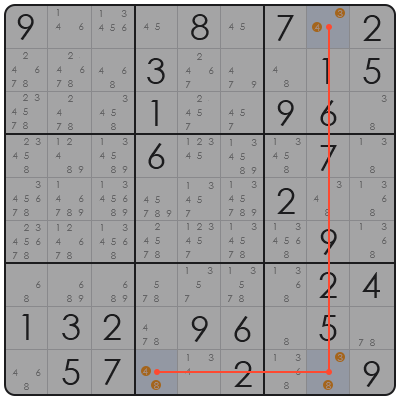
To truly beat Sudoku is to master the systematic application of logical deduction, filling every empty cell in a 9×9 grid while adhering to the fundamental rules that each row, column, and 3×3 block contains all digits from 1 to 9 without repetition. This process isn’t about guessing; it’s about rigorous analysis and pattern recognition, transforming an seemingly daunting grid into a solvable logical puzzle. For speed-solvers, understanding how to beat Sudoku quickly means developing an intuitive grasp of grid topology and rapid candidate elimination, allowing for efficient navigation through complex puzzles. Their approach prioritizes visual scanning for immediate deductions and the swift application of advanced techniques, minimizing `pencil marks` where possible through mental calculation. Mastery in this domain is a testament to refined cognitive processing and extensive practice. Casual players, too, can significantly enhance their enjoyment and progress by learning how to beat Sudoku through structured methods. This guide aims to demystify the process, offering a pathway from basic `logical deduction` to more sophisticated strategies. The satisfaction derived from solving a challenging Sudoku puzzle, purely through intellect, is immense and serves as a powerful mental exercise. Ultimately, beating Sudoku is a journey of continuous logical refinement, where each solved puzzle builds a deeper understanding of the game’s intricate mechanics. This article will provide a comprehensive roadmap, equipping you with the essential knowledge and techniques to conquer any Sudoku grid, from the simplest to the most expert-level puzzles.
The Logical Framework: How to Beat Sudoku Through Grid Topology
How to beat Sudoku fundamentally relies on understanding its combinatorial structure and the principle of unique placement within specific grid topologies, which govern the interaction of numbers across rows, columns, and 3×3 blocks. The 9×9 grid, comprising 81 cells, is segmented into nine rows, nine columns, and nine 3×3 ‘boxes’ or blocks, each serving as a distinct unit for constraint application.
The core mechanism involves `candidate elimination`: for every empty cell, the process of how to beat Sudoku dictates identifying all possible digits (candidates) it could contain, then systematically removing those that already exist within its respective row, column, or 3×3 block. This reduction of possibilities is purely deductive and forms the bedrock of all Sudoku solving techniques.
Based on logic-chain analysis, the game’s solvability hinges on propagating these constraints across the entire grid. Every time a number is definitively placed in a cell, it instantly eliminates that number as a candidate from all other cells in its row, column, and block, often revealing new ‘single candidates’ in other areas of the grid. This chain reaction of deductions is what propels the solver towards the solution.
The mathematical underpinning of Sudoku relates to Latin Squares, where each element appears only once in each row and column. Sudoku extends this by adding the block constraint, creating a richer tapestry of `cell constraints` that demand a multi-dimensional approach to logical inference. True mastery of how to beat Sudoku comes from internalizing these structural necessities and their deductive implications.
Strategic Implementation: A Step-by-Step Guide on How to Beat Sudoku
Implementing a strategy to beat Sudoku involves a systematic progression from basic candidate identification to advanced pattern recognition, ensuring no logical deduction is overlooked and minimizing errors. The initial phase focuses on easily identifiable placements, moving towards more complex analyses.
Start by identifying “Single Candidates”: scan each row, column, and 3×3 block for cells where only one number can logically fit (Naked Singles), or where a number can only appear in one specific cell within a unit (Hidden Singles). These are the easiest to find and provide immediate progress. For competitive solvers, rapid visual scanning is key at this stage.
The next crucial step is disciplined `pencil marks`. For every empty cell, meticulously write down all possible candidate digits. This foundational practice is non-negotiable for tackling harder puzzles. It externalizes the `cell constraints` for each position, making advanced patterns visible and preventing mental overload.
Utilize systematic `candidate elimination`: After placing a number, or identifying a strong deduction, immediately update your pencil marks. Cross out the newly placed number from all cells in its row, column, and block. Then, re-scan those affected units for new single candidates that may have emerged. This iterative process is fundamental to how to beat Sudoku consistently.
The structural necessity of regular re-evaluation means continuously alternating between focused analysis of individual cells and broader sweeps of rows, columns, and blocks. Always look for units where a specific candidate can only be placed in one remaining cell, even if that cell has multiple other candidates.
Advanced Logical Deduction: How to Beat Sudoku with Pattern Recognition
Beating complex Sudoku puzzles often requires mastering advanced logical deduction techniques that identify patterns across multiple cells and units, going beyond simple single-cell analysis to reveal deeper `grid topology` relationships. These techniques leverage `pencil marks` to uncover hidden structures.
One common advanced technique is identifying `Naked Pairs`, Triples, or Quadruples. If two cells within the same unit (row, column, or block) contain only the same two candidates (e.g., {2,5}), then those two candidates *must* occupy those two cells. Therefore, 2 and 5 can be eliminated as candidates from all other cells in that same unit. This principle extends to three or four cells with three or four common candidates respectively.
Equally vital are `Hidden Pairs`, Triples, or Quadruples. This occurs when two candidates (e.g., 7 and 9) are only possible in two specific cells within a unit, even if those cells also contain other candidates. If 7 and 9 appear *only* in cells A and B within a row, then cells A and B *must* contain 7 and 9, and all other candidates can be eliminated from cells A and B.
Based on logic-chain analysis, the `X-Wing` technique targets a specific candidate (e.g., ‘1’) across two rows and two columns. If a candidate appears in exactly two cells in a particular row, and those two cells align with two cells in *another* row that also contain only that same candidate, then that candidate can be eliminated from all other cells in those two columns, outside the two rows involved. This is a powerful form of `candidate elimination` over a larger area.
Comparative Strategies: Understanding Different Methods to Beat Sudoku
Comparing various Sudoku strategies reveals their unique strengths in terms of difficulty, frequency of use, and logical complexity, offering different pathways to beat Sudoku depending on the puzzle’s challenge level and the solver’s experience. Understanding these differences allows for adaptive problem-solving.
When considering how to beat Sudoku, strategies range from the most basic, ‘Single Candidate’ placements, to highly intricate ‘X-Wing’ or ‘Swordfish’ patterns. A table helps illustrate this spectrum, outlining the general characteristics of each approach. It’s not about one strategy being universally ‘better,’ but rather about applying the right tool for the right job.
For example, ‘Single Candidate’ identification (both Naked and Hidden Singles) is characterized by an ‘Easy’ difficulty level, ‘Very High’ frequency of use in any puzzle, and ‘Low’ logical complexity. It’s the starting point for anyone learning how to beat Sudoku, requiring direct observation and simple constraint application.
Intermediate strategies, like ‘Naked Pairs’ or ‘Hidden Pairs,’ fall into a ‘Medium’ difficulty category. They have a ‘High’ frequency of use in moderate to hard puzzles and involve ‘Medium’ logical complexity, demanding `pencil marks` and a bit more abstract thought to spot the inter-cell relationships within a unit.
Finally, advanced techniques such as the ‘X-Wing’ are typically ‘Hard’ in difficulty, appear with ‘Medium’ frequency in very challenging puzzles, and require ‘High’ logical complexity. These demand an understanding of how to beat Sudoku through multi-unit interactions and often necessitate meticulous `pencil marks` across the entire `grid topology` to detect.
Common Pitfalls: How to Avoid Mistakes When Learning How to Beat Sudoku
Avoiding common pitfalls is crucial for consistent success when learning how to beat Sudoku, preventing errors that can invalidate an entire puzzle and lead to frustrating restarts. Many solvers encounter similar stumbling blocks that can be easily circumvented with careful practice.
One of the most frequent mistakes is neglecting to use `pencil marks` consistently or accurately. Forgetting to mark all candidates or failing to erase eliminated candidates after placing a number can quickly lead to an incorrect grid state, making further `logical deduction` impossible. The structural necessity of precise record-keeping cannot be overstated for complex puzzles; it’s the external memory for your `candidate elimination` process.
Another pitfall is making assumption-based placements or ‘guessing’ when faced with a seemingly intractable situation. Beating Sudoku relies purely on logic; if a number cannot be definitively placed, it means you’ve either missed a deduction, or an advanced technique is required. Guessing almost inevitably leads to errors that are difficult to backtrack and resolve, undermining the entire solve.
Failing to re-scan the grid after each new number placement or significant candidate elimination is a common oversight. Every new entry or removal can create new opportunities for deductions (e.g., revealing a new Naked Single or making a Pair/Triple obvious). A systematic re-evaluation of affected rows, columns, and blocks is essential for maintaining momentum and discovering the next logical step.
FAQ: Essential Questions on How to Beat Sudoku
This FAQ section provides concise, high-value answers to frequently asked questions about how to beat Sudoku, designed for quick understanding and to provide immediate clarity on common queries.
Q: What is the most important skill to beat Sudoku? A: The most important skill is `logical deduction`, coupled with systematic `candidate elimination` and meticulous record-keeping using `pencil marks`.
Q: Can I beat Sudoku without guessing? A: Absolutely. Advanced Sudoku relies purely on logic; guessing is counterproductive and often leads to an unsolvable grid. Every correct placement must be logically provable.
Q: How long does it take to learn how to beat Sudoku effectively? A: Basic techniques for how to beat Sudoku can be grasped in a few hours, but mastering advanced strategies like `X-Wing` for `competitive solvers` takes consistent practice over weeks or months.
Q: Are there different difficulty levels for Sudoku? A: Yes, Sudoku difficulty is determined by the number of starting clues and the complexity of `logical deduction` techniques required to solve it, ranging from easy to expert.
Q: What are `cell constraints` in Sudoku? A: `Cell constraints` refer to the rules that dictate which numbers can be placed in a specific cell, based on existing numbers in its corresponding row, column, and 3×3 block, ensuring no repetitions.
To conclude, mastering how to beat Sudoku is a journey that emphasizes a ‘Logic-First’ approach, transforming what might seem like a daunting number puzzle into an engaging exercise in deductive reasoning. By consistently applying systematic techniques, from initial `candidate elimination` and diligent `pencil marks` to advanced `logical deduction` patterns like `Naked Pairs` and `X-Wings`, any solver can significantly improve their abilities. For competitive solvers and casual enthusiasts alike, the core message remains: practice, patience, and a deep understanding of `grid topology` are your most powerful tools. Embrace the logic, and you will not only beat Sudoku but truly master the art of the solve.