

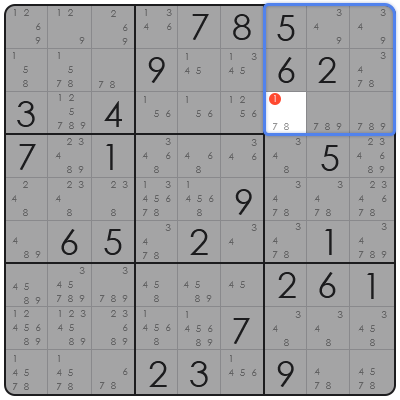
To truly understand how to solve Sudoku fast means to efficiently employ advanced logical deduction and pattern recognition to rapidly identify and place numbers within the 9×9 grid, minimizing guesswork and maximizing certainty. This approach transforms a potentially time-consuming puzzle into a streamlined exercise in cognitive agility, focusing on the relationships between cells, rows, columns, and blocks rather than mere trial and error. This definitive guide delves into the intricate blend of mathematical principles, grid topology, and established techniques like candidate elimination and pencil marks that form the bedrock of rapid Sudoku solving. We will explore how a deep appreciation for cell constraints and the unique properties of the Sudoku structure allows solvers to anticipate and deduce numbers with speed and precision. The insights provided are invaluable for both competitive speed-solvers aiming to shave seconds off their solve times and casual players looking to elevate their game beyond basic techniques. By adopting a systematic, logic-first methodology, anyone can significantly improve their ability to approach and conquer even the most challenging Sudoku puzzles efficiently and confidently.
The Logical Architecture: Understanding the Sudoku Grid for Speed
To truly understand how to solve Sudoku fast, one must first grasp the underlying mathematical and structural principles of the 9×9 grid, which is a lattice of cells, rows, columns, and 3×3 blocks, each governed by the rule of unique digits from 1 to 9. This fundamental framework dictates every possible placement, making Sudoku a puzzle of complete information where every solution is logically discoverable without guessing.
The core mechanism of speed solving relies on understanding cell constraints, where each cell’s potential values are limited by the digits already present in its associated row, column, and 3×3 block. This interconnectedness means that placing one number immediately impacts the candidate list for many other cells, creating a cascading effect of logical deduction that expert solvers exploit. Grid topology, the way these elements interact, is paramount to identifying opportunities for rapid candidate elimination.
Proficiency in candidate elimination is the cornerstone of how to solve Sudoku fast. Rather than focusing solely on where a number *can* go, a fast solver actively determines where numbers *cannot* go, systematically reducing the possibilities for each empty cell. This iterative process, often aided by efficient pencil marks, allows for the quick identification of naked and hidden singles, pairs, and other advanced patterns that propel the solve forward.
Core Techniques: The Foundation of Fast Sudoku Solving
Achieving speed in Sudoku hinges on mastering a hierarchy of logical deduction techniques, moving from simple hidden singles to complex patterns that reveal solutions with increasing efficiency. These techniques provide the structured approach necessary to navigate the grid and systematically reduce the number of possibilities.
Basic techniques like Naked Singles and Hidden Singles are the initial layer of candidate elimination and are crucial for how to solve Sudoku fast. A Naked Single is a cell where only one candidate remains after considering all row, column, and block constraints. A Hidden Single occurs when a digit can only be placed in one specific cell within a row, column, or block, despite that cell having multiple candidates. Quickly spotting these foundational placements is essential.
Beyond singles, effective use of pencil marks is an indispensable tool for tracking possibilities and identifying more complex patterns. Efficient pencil marking, focusing on cells with 2-3 candidates, helps visualize Naked Pairs, Hidden Pairs, Naked Triples, and Hidden Triples. These techniques involve sets of cells sharing candidates within a row, column, or block, allowing for significant candidate elimination in other cells and are vital for advancing quickly through a puzzle.
Mastering the Flow: A Step-by-Step Guide to Rapid Sudoku Solving
A systematic approach is crucial for how to solve Sudoku fast, involving a precise sequence of observation and application of techniques that minimize backtracking and maximize forward progress. This method ensures that no logical opportunity is missed, propelling the solver efficiently towards the solution.
**Step 1: Initial Scan and Obvious Singles.** Begin by quickly scanning the entire grid for Naked Singles. This involves looking for cells where, based on the fixed numbers in its row, column, and 3×3 block, only one possible digit can exist. Fill these immediately. Following this, look for any obvious Hidden Singles, where a digit can only fit in one particular cell within a row, column, or block. This initial sweep often reveals several numbers and significantly simplifies the grid.
**Step 2: Strategic Pencil Marking.** Once obvious singles are exhausted, move to strategic pencil marking. Instead of marking every single possible candidate for every empty cell, focus on cells with only two or three candidates. This targeted approach prevents clutter and makes it easier to spot patterns. Based on logic-chain analysis, carefully placed pencil marks are an asset, not a hindrance, for revealing subsequent deductions. Re-scan for new singles as you mark, as new constraints might appear.
**Step 3: Hunt for Naked/Hidden Pairs and Triples.** With candidates marked, systematically look for Naked Pairs (two cells in a unit with the exact same two candidates), Hidden Pairs (two candidates in a unit that appear only in two specific cells), and Triples. Identifying these allows you to eliminate those candidates from other cells within the same row, column, or block. For competitive solvers, this is a frequent and high-impact step.
**Step 4: Advanced Patterns (X-Wing, Swordfish).** For more challenging puzzles, applying advanced techniques like X-Wing, Swordfish, and Jellyfish becomes necessary. These patterns involve the elimination of candidates across multiple rows or columns based on the structural necessity of certain numbers. Understanding these complex interactions, though initially daunting, is key to breaking through deadlocks and maintaining speed.
**Step 5: Iteration and Review.** After placing any new number or eliminating a set of candidates, immediately re-evaluate the affected rows, columns, and blocks. New singles, pairs, or other patterns will often emerge. The structural necessity of a consistent grid demands this iterative process; each deduction opens new pathways, and continuous scanning ensures you capitalize on every opportunity to maintain your pace.
Comparing Speed Sudoku: ‘How to Solve Sudoku Fast’ vs. Other Strategies
How to solve Sudoku fast differentiates itself from casual solving by prioritizing efficiency through advanced logical deduction over brute-force trial and error, emphasizing a predictive and analytical approach to the grid. While all methods eventually lead to a solution, their speed and reliability vary drastically.
Compared to a ‘guess-and-check’ strategy, where a player places a number and then backtracks if it proves incorrect, fast Sudoku solving is inherently more reliable and consistent. Guessing introduces errors, wastes time, and offers no transferable skill beyond luck. A logical approach, conversely, builds a robust understanding of the grid, ensuring every move is justified by the puzzle’s rules and structural demands.
Even basic ‘singles only’ solving, while logical, is significantly slower than a comprehensive fast-solving strategy. The ability to identify Naked and Hidden Pairs, Triples, and advanced patterns like X-Wings or Chains reduces the number of ‘known’ cells required to unlock further deductions, thereby accelerating the entire process. The deeper understanding of grid topology provided by these advanced techniques is what truly differentiates fast solvers.
| Strategy | Difficulty Level | Frequency of Use | Logical Complexity | Speed Impact |
|—————————-|——————|——————|——————–|————–|
| How to Solve Sudoku Fast | Advanced | High | High | Very High |
| Trial & Error (Backtracking)| Beginner | Low (inefficient)| Low | Low |
| Basic Singles Only | Easy | High | Low | Moderate |
| X-Wing/Swordfish | Expert | Moderate | Very High | High |
Avoiding Roadblocks: Common Mistakes in Fast Sudoku Solving
Players often stumble in their pursuit of how to solve Sudoku fast by making preventable errors that derail their logical progression and introduce unnecessary delays. Recognizing and avoiding these common pitfalls is as crucial as mastering the techniques themselves.
**Mistake 1: Over-Pencil Marking.** A frequent error is marking every single possible candidate for every empty cell. While pencil marks are useful, excessive marking creates a visually cluttered grid, making it difficult to spot Naked Pairs, Hidden Triples, or other patterns quickly. Instead, practice selective pencil marking, focusing on cells with only two or three candidates, or those crucial for a specific strategy you’re attempting. This strategic limitation keeps the grid clean and readable.
**Mistake 2: Failing to Re-scan After Placement.** After placing a new number, many solvers neglect to immediately re-check the affected row, column, and 3×3 block for newly created singles or other simplified patterns. For competitive solvers, this oversight means missing immediate logical implications and forcing a redundant scan later. The structural necessity of consistent updates means every new placement *must* trigger a quick re-evaluation of its direct environment.
**Mistake 3: Guessing Under Pressure.** Despite aiming for speed, resorting to guessing when stuck is a counterproductive mistake. A true fast Sudoku solution is built purely on logical deduction. A single incorrect guess can lead to extensive backtracking, which is a significant time sink. If you’re stuck, it’s a sign you need to apply a more advanced candidate elimination technique or revisit your existing pencil marks for overlooked patterns, not to abandon the logic-first approach.
Frequently Asked Questions: Quick Answers on How to Solve Sudoku Fast
Common questions about how to solve Sudoku fast typically revolve around technique efficiency, practice methods, and the role of memory, all of which contribute to improving solve times.
**Q1: What’s the fastest way to start a Sudoku?** A1: Begin by scanning for Naked Singles across the entire grid, followed by Hidden Singles. Then, apply selective pencil marking to cells with 2-3 candidates to quickly identify pairs or triples.
**Q2: Should I use pencil marks for speed?** A2: Yes, but strategically. Only mark candidates for cells with limited possibilities (2-3 options). Over-marking creates visual noise, which can actually slow down pattern recognition.
**Q3: How much practice is needed to solve Sudoku fast?** A3: Consistent daily practice, focusing on understanding the underlying logical deduction and grid topology rather than just completing puzzles, is key to developing both speed and intuitive recognition.
**Q4: Are advanced techniques always necessary for speed?** A4: For harder puzzles, yes. Techniques like X-Wing, Swordfish, or various Chains are crucial for breaking through deadlocks and eliminating candidates that simple singles cannot address.
**Q5: Does memorization help in solving Sudoku fast?** A5: While understanding common patterns (e.g., how 1-9 distribute) is beneficial, pure memorization of specific board states is less effective than developing strong, adaptable logical deduction skills for any given grid.
Ultimately, mastering how to solve Sudoku fast is fundamentally about adopting a “Logic-First” approach. It’s a journey into the elegant simplicity and complex interplay of the 9×9 grid, where a deep understanding of candidate elimination, grid topology, and systematic application of advanced techniques triumphs over brute force. Consistent practice, coupled with an analytical mindset, will not only dramatically reduce your solve times but also sharpen your overall logical reasoning abilities, proving that true Sudoku mastery is always a process of informed deduction.