

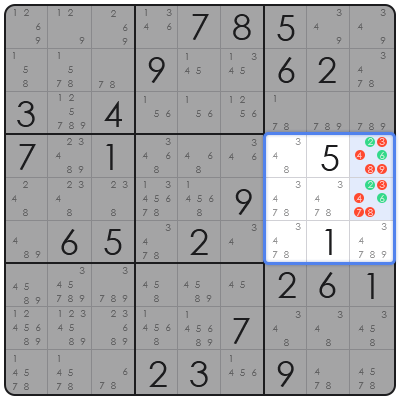
Creating a Sudoku website involves a meticulous blend of front-end aesthetics, robust back-end logic, and strategic data management to deliver an engaging and functional online puzzle experience. This process is more than just digitizing a classic game; it’s about engineering an interactive platform capable of generating, validating, and presenting countless unique puzzles to a global audience. From a digital entertainment perspective, a well-constructed Sudoku website solves the fundamental problem of accessibility and variety. Traditional Sudoku books offer a finite number of puzzles, which are easily exhausted. An online platform, however, can dynamically generate an infinite supply, offering varying difficulty levels and enhancing user engagement through features like timers, hints, and progress tracking. Based on structural analysis, the design considerations extend beyond mere gameplay. Key elements include ensuring mobile responsiveness, optimizing performance for seamless user interaction, and implementing secure database systems for user profiles and leaderboards. A comprehensive understanding of these architectural components is paramount for developing a successful and sustainable Sudoku website in today’s competitive online landscape.
The Core Architecture of a Sudoku Website
The core architecture of a Sudoku website involves a robust interplay between front-end user interfaces, back-end logic, and a persistent database to deliver a seamless puzzle experience. Architecturally, this typically follows a client-server model, where the client (web browser) handles the user interface and interactions, while the server manages puzzle generation, validation, and data storage.
From a framework perspective, the front end is often built using HTML for structure, CSS for styling, and JavaScript for interactive elements such as grid manipulation, number input, and visual feedback. Modern frameworks like React, Vue, or Angular can streamline this development, providing reusable components and efficient state management for complex user interfaces.
The back end, on the other hand, is responsible for the computational heavy lifting. This includes algorithms for generating unique and solvable Sudoku puzzles, logic for validating user inputs against the puzzle rules, and API endpoints to serve puzzles to the front end and receive user solutions. Common technologies for the back end include Node.js, Python (with frameworks like Django or Flask), Ruby on Rails, or PHP.
Step-by-Step: Frontend Development for Interactive Sudoku
Frontend development for an interactive Sudoku website primarily focuses on creating a responsive and intuitive user interface that allows players to engage directly with the puzzle. The first practical application involves structuring the Sudoku grid using HTML, often as a series of `div` elements or a `table` to represent cells, rows, and 3×3 blocks.
Styling is crucial for readability and user experience. CSS is used to define grid lines, differentiate 3×3 blocks, highlight selected cells, and style input numbers. Implementing a responsive design ensures the puzzle remains playable and visually appealing across various devices, from large desktop monitors to small mobile screens, adapting dynamically to screen real estate.
The dynamic interaction is powered by JavaScript. This involves event listeners for user clicks or key presses to select cells, input numbers, and trigger actions like ‘check solution’ or ‘get hint’. JavaScript also manages the game state on the client side, handling timers, difficulty selections, and potentially visual animations for correct or incorrect entries. Based on structural analysis, the responsiveness of these interactive elements significantly impacts user retention.
Step-by-Step: Backend Logic and Puzzle Generation
Backend logic and puzzle generation are critical for providing an endless supply of unique and solvable Sudoku puzzles, ensuring a consistent and challenging user experience. The core of this lies in implementing an efficient algorithm capable of creating a complete, valid Sudoku grid and then selectively removing numbers to form a solvable puzzle at a desired difficulty level.
A common approach for puzzle generation involves a backtracking algorithm. This method starts with an empty grid, attempts to fill each cell with a valid number, and backtracks when a conflict arises, trying a different number. Once a complete, valid grid is generated, numbers are removed one by one. Each removal must be followed by a solvability check to ensure the puzzle still has a unique solution. The number of initial empty cells directly correlates with the puzzle’s perceived difficulty.
Beyond generation, the backend must also handle puzzle validation. When a user submits a solution, the server needs to verify if all rules are met (no repeated numbers in rows, columns, or 3×3 blocks) and if the completed grid matches the original solution. This validation ensures fairness and prevents cheating, maintaining the integrity of leaderboards and user achievements.
Comparing Sudoku Website Development Approaches
Comparing Sudoku website development approaches involves evaluating various methodologies and technologies, each offering distinct advantages in terms of complexity, efficiency, and cost. The choice often depends on the project’s scale, budget, required features, and the development team’s expertise.
In practical application, the distinctions between a custom full-stack build and leveraging existing frameworks or even low-code solutions can significantly impact the initial development phase and long-term maintenance. Each approach presents a unique balance of control, speed, and resource allocation.
From a framework perspective, opting for established ecosystems can drastically reduce development time by providing pre-built components and libraries. However, this might introduce certain limitations or increase the learning curve for developers unfamiliar with the specific framework’s paradigms. Understanding these trade-offs is crucial for strategic decision-making.
Mitigating Common Development Pitfalls
Mitigating common development pitfalls in creating a Sudoku website is crucial for ensuring a robust, scalable, and user-friendly platform, addressing challenges related to puzzle generation, user experience, and infrastructure. One frequent mistake is relying on overly simplistic puzzle generation algorithms that produce repetitive or unsolvable puzzles, leading to user frustration.
To avoid this, it’s essential to implement or integrate a sophisticated backtracking algorithm that guarantees unique, solvable puzzles with varying difficulty levels. Thorough testing across all difficulty settings is paramount. Furthermore, neglecting mobile responsiveness and intuitive UI/UX is another significant pitfall. A Sudoku website must offer a seamless, touch-friendly experience on smartphones and tablets, as a substantial portion of users will access it via mobile devices.
Finally, overlooking scalability can lead to performance issues as user traffic grows. This includes inefficient database queries, unoptimized server-side puzzle generation, and inadequate hosting. Solutions involve employing efficient database indexing, caching frequently requested puzzles, distributing server load, and utilizing cloud hosting providers that can scale resources dynamically based on demand. Regular performance monitoring and load testing are key proactive measures.
Essential FAQs for Your Sudoku Website Project
Here are some essential frequently asked questions to consider when embarking on your Sudoku website development project, addressing common concerns for optimal implementation and strategy.
Q: What programming languages are best for a Sudoku website? A: JavaScript (frontend), Python/Node.js/PHP (backend) are popular choices, offering robust libraries for web development and algorithm implementation.
Q: How can I monetize a Sudoku website? A: Through advertising (display ads), premium subscriptions (ad-free, advanced features), in-app purchases (hints, custom themes), or sponsored content partnerships.
Q: Is it difficult to generate unique Sudoku puzzles? A: Generating unique, solvable Sudoku puzzles requires a backtracking algorithm, which can be complex but is widely implemented in various programming languages and available as open-source libraries.
Q: How important is mobile responsiveness for a Sudoku site? A: Extremely important. A significant portion of users will access your site on mobile devices, necessitating a seamless and touch-friendly interface for optimal engagement and accessibility.
Q: What are key SEO considerations for a Sudoku website? A: Optimize page titles and meta descriptions, ensure fast loading times, use structured data for game content, create engaging blog content, and build relevant backlinks for discoverability.
In conclusion, the journey of how to create sudoku website is a multifaceted endeavor, blending algorithmic complexity with user-centric design principles. By meticulously structuring the core architecture, implementing robust front-end interactivity, and refining back-end puzzle generation, developers can craft a highly engaging and sustainable digital platform. The long-term strategic value lies in its potential for broad appeal, continuous user engagement through fresh content, and diverse monetization avenues within the expanding digital entertainment landscape. Looking forward, the integration of advanced analytics for personalized puzzle delivery and AI-driven difficulty adjustments represents the next frontier for these interactive logic puzzles, further cementing their place in online recreation.