

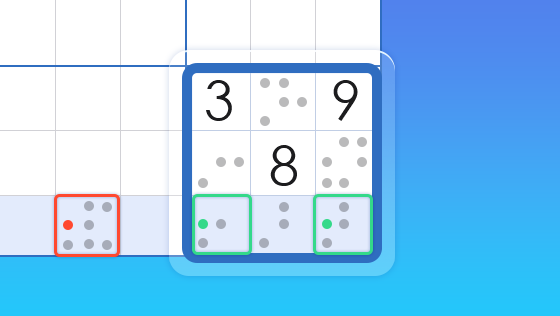
Generating a Sudoku puzzle programmatically in C involves crafting a sophisticated algorithm capable of constructing valid 9×9 grids that adhere to the game’s fundamental constraints. This process is a cornerstone in game development, offering profound insights into algorithmic design, data structures, and the practical application of recursive techniques. The significance of developing such a generator extends beyond mere game creation. It serves as an excellent proving ground for demonstrating algorithmic efficiency, refining understanding of complex data manipulation, and mastering recursion in a highly constrained environment. It effectively bridges theoretical computer science principles with tangible, functional software engineering challenges. Automating the creation of Sudoku puzzles solves a critical problem: eliminating the labor-intensive manual design process, guaranteeing puzzle solvability, and facilitating the generation of puzzles with varying difficulty levels. This capability is indispensable for scalable game development, educational tools, and applications requiring dynamic content generation. From a framework perspective, leveraging C ensures low-level control, optimizing performance for computationally intensive tasks like generating diverse and complex puzzles rapidly.
Core Principles of Sudoku Generation in C
Generating a Sudoku puzzle in C fundamentally relies on a systematic approach to fill a 9×9 grid while adhering to the game’s strict rules: each row, column, and 3×3 subgrid must contain digits 1 through 9 exactly once.
Based on structural analysis, the most common approach involves starting with an empty grid, intelligently filling it completely to create a solved Sudoku solution, and subsequently removing a select number of digits to form a solvable puzzle. This two-phase process is crucial for ensuring both validity and solvability of the final puzzle.
From an architectural standpoint, the Sudoku rules dictate specific constraints that must be meticulously checked during every grid population attempt. These checks encompass row safety, column safety, and 3×3 box safety, all of which are critical functions for maintaining the integrity and playability of the puzzle being generated.
Algorithmic Approaches for Puzzle Creation
Creating a Sudoku puzzle typically employs backtracking algorithms or constraint satisfaction techniques to fill the grid, ensuring all rules are met at each step of the generation process.
The backtracking method involves recursively attempting to place numbers in cells; if a number violates any Sudoku rule, the algorithm backtracks to the previous cell and systematically tries a different number. This systematic trial-and-error approach, when correctly implemented, guarantees the discovery of a valid solution if one exists, forming the basis of most generators.
Alternatively, more advanced methods like the Dancing Links algorithm (an implementation of Knuth’s Algorithm X) or the integration of sophisticated constraint programming libraries can be adapted for highly efficient Sudoku generation. While these often introduce a higher degree of complexity in their initial implementation, they can offer significant performance benefits for generating very large numbers of puzzles.
Step-by-Step Implementation: Building Your C Sudoku Generator
Implementing a Sudoku puzzle generator in C involves several distinct steps: setting up the grid data structure, creating helper functions for validation, developing a recursive backtracking solver, and finally, devising a robust number-removal strategy that ensures solvability.
1. **Initialize Grid**: Begin by declaring a 2D integer array (e.g., `int grid[9][9]`) and initialize all its elements to zero, representing empty cells. This provides a clean slate for the generation process.2. **Validation Functions**: Write essential utility functions, such as `is_safe(row, col, num)`, which meticulously checks if placing `num` at `(row, col)` is valid according to the current state of the Sudoku rules for rows, columns, and 3×3 blocks.3. **Recursive Solver**: Develop a `solve_sudoku()` function that employs a recursive backtracking approach. This function finds the next empty cell, iterates through numbers 1-9, and if a number is valid, places it and recursively calls itself. If a path leads to a dead end, it backtracks.4. **Fill Grid**: Invoke the `solve_sudoku()` function on the initially empty grid to generate a complete and valid Sudoku solution. This forms the blueprint for the puzzle.5. **Remove Numbers**: Randomly select and remove a predefined number of cells from the completed grid. This is often the most critical and challenging part, as it must ensure the remaining puzzle has a unique solution and a desired difficulty level.
In practical application, ensuring a unique solution after the number removal phase often necessitates an additional solving pass. This pass verifies that only one possible set of moves leads to the completed grid, which is a pivotal step that profoundly impacts the quality and integrity of the generated puzzle.
Optimizing Performance and Uniqueness in Sudoku Generation
Optimizing Sudoku generation involves implementing strategic approaches to reduce computational overhead during the grid filling process and employing rigorous methods to guarantee that the final generated puzzle possesses a single, unique solution.
Performance can be significantly enhanced by integrating intelligent heuristics within the backtracking solver. For instance, selecting the next empty cell based on the fewest available legal choices (the Minimum Remaining Values heuristic) can dramatically prune the search space. Additionally, using bitmasks for efficient tracking of used numbers in rows, columns, and 3×3 subgrids can further accelerate `is_safe` checks.
Ensuring uniqueness is paramount for delivering a high-quality puzzle. After numbers have been removed, a common and effective technique is to utilize the same solver algorithm but configure it to count all possible solutions. If the count is not precisely one, more numbers may need to be revealed, or the number removal pattern must be adjusted and re-verified to satisfy the unique solution constraint.
Comparative Analysis: Sudoku Generator Approaches
Various approaches exist for generating Sudoku puzzles, each presenting distinct characteristics concerning their complexity, operational efficiency, and the overall quality and solvability of the puzzles produced.
| Feature | Simple Backtracking (Fill & Remove) | Backtracking with Unique Solution Verification | Constraint Propagation | |————-|————————————-|————————————————|————————| | Complexity | Moderate | High (due to iterative validation) | High | | Efficiency | Good for initial generation | Moderate (uniqueness adds overhead) | Very High | | Cost (Dev) | Low to Moderate | Moderate | High | | Frequency | Very Common | Common (for professional output) | Less Common (academic) |
From a framework perspective, simple backtracking offers a highly accessible entry point for developers new to puzzle generation. However, methods incorporating unique solution verification represent the industry standard for producing robust, enjoyable, and professionally crafted puzzles. Advanced constraint propagation techniques, while demanding a deeper algorithmic understanding, offer superior efficiency and flexibility for highly optimized generation.
Common Pitfalls in Sudoku Puzzle Generation and Their Solutions
Developers frequently encounter critical challenges when programming Sudoku puzzle generation in C, including the inadvertent production of unsolvable puzzles, puzzles with multiple solutions, or processes that are significantly inefficient.
**Pitfall 1: Generating Puzzles with Multiple Solutions.** This critical issue arises when too many numbers are removed from the full grid, leaving ambiguous cells where a solver could legitimately place more than one digit without violating rules. **Solution:** Implement a rigorous unique solution verification step. After removing numbers, use your solver algorithm to count all possible solutions. If `count` is not exactly `1`, either re-add a number to a strategically chosen empty cell or completely re-generate the removal pattern.
**Pitfall 2: Extremely Slow Generation Times.** Inefficient backtracking implementations or redundant rule checks can lead to exceptionally long generation times, particularly for larger grids or when striving for more difficult puzzle configurations. **Solution:** Optimize `is_safe` checks by employing bitmasks for efficient tracking of used numbers across rows, columns, and 3×3 boxes. Additionally, consider intelligent strategies for pre-populating a few cells or using advanced cell selection heuristics (like MRV) to guide the solver more rapidly towards a solution.
Frequently Asked Questions About Sudoku Puzzle Generation in C
This section directly addresses common inquiries regarding the programmatic process of programming Sudoku puzzle generation using the C language.
**Q: Why use C for Sudoku generation?** **A:** C offers unparalleled low-level memory control and high execution speed, making it exceptionally well-suited for computationally intensive algorithmic tasks like complex puzzle generation where performance is paramount.
**Q: What’s the hardest part of generating a Sudoku?** **A:** Ensuring the generated puzzle has a single, unique solution is often the most challenging aspect, requiring careful verification after digits are strategically removed from a fully solved grid.
**Q: Can I control the difficulty of the generated puzzle?** **A:** Yes, difficulty is primarily controlled by the number of visible cells remaining and the complexity of the logical deductions required to solve it. Fewer starting numbers typically correlate with higher difficulty.
**Q: Is a random generator better than a fixed template?** **A:** A truly random generator provides an infinite supply of unique puzzles, which significantly enhances replayability and value. Fixed templates offer predictable difficulty but limit variety, less ideal for scalable applications.
In conclusion, mastering how to make a Sudoku puzzle in C represents a significant milestone in algorithmic proficiency, blending a deep understanding of data structures, recursion, and constraint satisfaction. This capability is not merely about game creation; it underpins broader principles of efficient problem-solving and automated content generation, offering substantial strategic value for developers aiming to build robust, engaging, and scalable software solutions. The analytical insights gained from this process extend far beyond the 9×9 grid, preparing practitioners for complex computational challenges in diverse computing fields.