

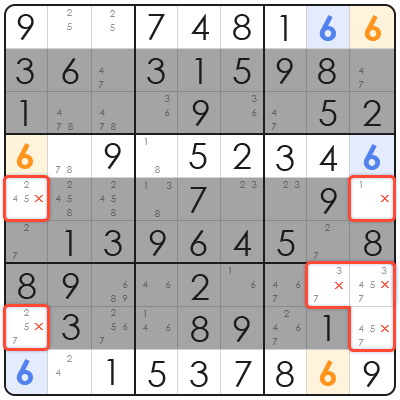
Playing Sudoku smartly involves a systematic approach to logical deduction, moving beyond simple number placement to anticipate and eliminate possibilities across the 9×9 grid. It is not merely about filling in numbers, but rather about applying a structured framework of reasoning to solve complex puzzles efficiently and accurately. This methodology transforms the seemingly random act of solving into an intricate exercise in pattern recognition and strategic elimination. The significance of mastering smart Sudoku techniques extends far beyond mere recreational enjoyment; it serves as a powerful tool for enhancing cognitive skills such as critical thinking, analytical reasoning, and sustained focus. Based on structural analysis, the systematic application of smart play methodologies offers a tangible pathway to improving problem-solving capabilities applicable in various professional domains requiring logical precision and strategic foresight. In the current landscape, many individuals approach Sudoku with trial-and-error methods, leading to frustration, inefficiencies, and an inability to tackle higher-difficulty puzzles. The primary problem that ‘how to play sudoku smartly’ solves is this inefficiency and reliance on guesswork. By adopting a disciplined, logic-driven framework, solvers can systematically unravel even the most daunting grids, transforming a challenging task into a rewarding exercise in intellectual mastery.
The Underlying Logic and Mechanics of Smart Sudoku Play
Smart Sudoku play is founded on a systematic application of logical deduction rules to eliminate possibilities and identify definite placements of numbers within the 9×9 grid. From a framework perspective, this involves understanding the core mechanics of ‘candidates’—the potential numbers that can occupy an empty cell—and how their distribution dictates subsequent moves. Techniques such as ‘naked singles’ and ‘hidden singles’ form the foundational layers, allowing immediate certainty where a number has only one possible location within its row, column, or 3×3 block.
Building upon these basics, smart play incorporates ‘naked pairs,’ ‘triples,’ and ‘quads,’ where two, three, or four cells within a confined area (row, column, or block) share the exact same two, three, or four candidates, respectively, thereby eliminating those candidates from all other cells in that same area. This mechanism significantly reduces the candidate pool, clarifying the grid for further deductions. Similarly, ‘hidden pairs,’ ‘triples,’ and ‘quads’ identify scenarios where a set of candidates appear exclusively within a specific set of cells, regardless of other candidates those cells might hold.
Advanced mechanics include ‘pointing pairs’ and ‘box-line reduction.’ Pointing pairs occur when a candidate is confined to a specific row or column within a 3×3 block, meaning that candidate must reside within that row or column in the block. Consequently, the same candidate can be eliminated from other cells in that row or column outside of that specific block. Conversely, box-line reduction applies when a candidate in a row or column is exclusively found within one 3×3 block, allowing elimination of that candidate from other cells within that block. These techniques, based on structural analysis, progressively narrow down the possibilities, guiding the solver towards the definitive solution.
Systematic Approach to Smart Sudoku Solving
To play Sudoku smartly, one systematically progresses through stages of candidate identification, pattern recognition, and elimination, moving from simple deductions to more complex techniques. In practical application, this begins with a comprehensive initial scan to identify all immediate ‘naked singles’—cells where only one number can logically fit based on the numbers already present in its row, column, and 3×3 block. This foundational step often unlocks several initial placements and sets the stage for deeper analysis.
The next crucial step involves marking all potential ‘candidates’ for every empty cell. This can be done mentally, with a pencil in traditional puzzles, or using digital tools. Once candidates are noted, the solver methodically searches for ‘hidden singles’—a number that is a candidate in only one cell within its respective row, column, or block, regardless of other candidates in that cell. This systematic candidate tracking is paramount, as it forms the basis for applying more advanced pattern-based strategies.
Subsequently, the smart solver actively seeks out more intricate patterns like ‘naked pairs/triples’ and ‘pointing pairs/triples.’ After applying these techniques, the entire grid should be re-evaluated for new ‘singles’ that may have emerged due to candidate eliminations. This iterative process of applying a technique, scanning for newly created singles, and then applying more advanced strategies is central to the systematic approach. For particularly challenging puzzles, advanced techniques such as ‘X-Wing,’ ‘Swordfish,’ or ‘Jellyfish’ may be employed, which involve identifying complex interactions between candidates across multiple rows and columns to achieve further eliminations. The key is to never guess, but always deduce, ensuring every placement is logically sound.
Comparative Analysis: Smart Sudoku vs. Brute Force and Guesswork
Smart Sudoku strategies fundamentally differ from brute-force trial-and-error or random guessing by leveraging systematic logic, resulting in superior efficiency, reduced complexity, and a higher frequency of successful, verifiable solutions. From a framework perspective, brute-force relies on arbitrarily placing numbers and then backtracking when a contradiction arises, a process that is mentally taxing and time-consuming. In contrast, smart play minimizes cognitive load by providing a clear path forward through deduction.
Regarding efficiency, smart strategies drastically cut down solution times. Instead of endlessly retracing steps due to incorrect guesses, a smart solver makes only logically sound moves. This ensures a steady progression towards the solution, preventing dead ends and the frustration associated with restarting or losing progress. Based on structural analysis, the deductive nature of smart play optimizes the path, whereas guessing introduces high variability and often requires significant rework.
Furthermore, the frequency of successful, verifiable solutions is demonstrably higher with smart techniques. Each step taken is based on irrefutable logic, ensuring accuracy. This stands in stark contrast to guesswork, where success is probabilistic and often requires multiple attempts. In practical application, the disciplined methodology of smart Sudoku provides a reliable framework for consistent achievement, a critical distinction in problem-solving scenarios where reliability is paramount.
Common Pitfalls in Sudoku Solving and Professional Solutions
Common pitfalls in Sudoku solving often stem from inadequate candidate tracking, rushing deductions, and abandoning systematic approaches, all of which can be mitigated with disciplined practice and adherence to logical methodologies. One frequent mistake is the incomplete or inaccurate marking of candidates. If a potential number is overlooked, or an incorrect candidate is marked, subsequent deductions will be flawed, leading to errors later in the puzzle. The professional solution is to always meticulously mark all candidates in pencil or use a digital tool’s candidate-marking feature, and to double-check these entries before proceeding.
Another significant pitfall is the tendency to make premature guesses, particularly when a puzzle seems to stall. This trial-and-error mentality contradicts the essence of smart play and often leads to tangled situations requiring extensive backtracking. From a framework perspective, a guess introduces an unverified premise into the logical chain. The professional advice is to resist guessing until all deductive techniques—from simple singles to advanced patterns—have been thoroughly exhausted. If a guess becomes absolutely necessary for an extremely difficult puzzle, it should be clearly marked as such, and a ‘what if’ branch should be mentally or physically tracked, allowing for easy backtracking if the guess proves incorrect.
Finally, many solvers fall into the trap of overlooking simple patterns after applying complex techniques, or becoming haphazard in their scan for new singles. After a major candidate elimination through an X-Wing, for instance, it’s common to miss a newly created naked or hidden single. In practical application, the solution involves adopting a cyclical approach: after every significant deduction or application of an advanced technique, always perform a quick re-scan for obvious singles across the entire grid. This ensures that no low-hanging fruit is missed and that the grid is always assessed for the simplest possible logical moves first.
Frequently Asked Questions About Smart Sudoku Strategies
Q: What is the most important first step to playing Sudoku smartly? A: The most critical first step is accurately identifying and marking all potential candidates for each empty cell, creating a visual map for subsequent logical deductions.
Q: Can smart Sudoku strategies be applied to all difficulty levels? A: Yes, smart strategies are universally applicable; they simplify easy puzzles and provide the essential framework for tackling complex and expert-level grids through advanced pattern recognition.
Q: How does practicing smart Sudoku improve cognitive skills? A: Regular practice with smart Sudoku enhances logical reasoning, attention to detail, pattern recognition, and working memory, providing significant cognitive benefits beyond the puzzle itself.
Q: Is it ever okay to guess when playing Sudoku smartly? A: In strict smart play, guessing is avoided. However, in extremely complex puzzles, a controlled ‘what if’ scenario can be explored, but only if all deductive options are exhausted and a clear backtracking point is established.
Q: What resources are best for learning advanced Sudoku techniques? A: Online tutorials, specialized Sudoku forums, and books dedicated to advanced strategies like X-Wing, Swordfish, and chaining are excellent resources for deepening your smart Sudoku expertise.
In conclusion, mastering how to play Sudoku smartly is not merely about solving puzzles; it’s about cultivating a robust framework for logical deduction, pattern recognition, and systematic problem-solving that transcends the confines of the grid. This analytical approach, based on structural analysis, offers profound long-term strategic value by honing cognitive abilities crucial in fields ranging from data analysis to strategic planning. The insights gained from disciplined Sudoku practice underscore the forward-looking industry trend towards enhancing human analytical capabilities through structured logical exercises, preparing individuals to tackle complex challenges with precision and unwavering confidence.