

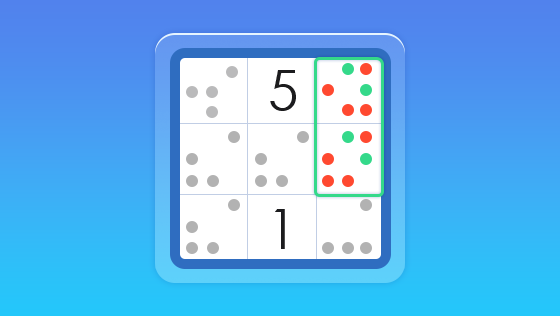
Hindu Sudoku, often referred to as Diagonal Sudoku or Sudoku X, represents an advanced evolution of the classic 9×9 number puzzle, integrating additional complex constraints that elevate its intellectual challenge. This variant requires not only that each row, column, and 3×3 block contains every digit from 1 to 9 exactly once, but also that each of the two main diagonals adheres to the same unique digit rule. The significance of mastering Hindu Sudoku extends beyond recreational puzzling; it hones critical analytical thinking, pattern recognition, and multi-dimensional logical deduction skills. These enhanced abilities are highly transferable to complex problem-solving scenarios encountered in various analytical fields, demanding simultaneous consideration of multiple interacting constraints. The primary problem Hindu Sudoku addresses for enthusiasts is the desire for a deeper, more intricate logical challenge that pushes beyond standard Sudoku methodologies. It compels solvers to develop integrated strategies that balance local (block) and global (diagonal) constraints, fostering a more holistic approach to complex system resolution.
Deconstructing Hindu Sudoku: Core Principles and Constraints
Hindu Sudoku fundamentally extends the classic Sudoku 9×9 grid by introducing two additional diagonal constraints, requiring numbers 1-9 to appear exactly once in each main diagonal, augmenting the traditional row, column, and 3×3 block rules.
Based on structural analysis, the two main diagonals — one from the top-left to bottom-right and the other from top-right to bottom-left — become active constraint sets, analogous to an additional two rows or columns. This unique characteristic is what differentiates it from standard Sudoku variants, creating a denser network of interdependencies.
From a framework perspective, understanding these layered constraints is paramount for effective strategy development. Each digit placed must satisfy all four types of constraints simultaneously, dramatically reducing the pool of valid candidates for any given cell and intensifying the deductive process.
Strategic Initialization: The Art of the First Pass
Solving Hindu Sudoku begins with a meticulous initial scan, systematically identifying immediate placements and high-impact cells by leveraging combined basic rules across all constraint types.
The first step involves standard Sudoku cross-hatching, where obvious numbers are placed by examining rows, columns, and 3×3 blocks. This familiar process helps populate the grid with initial concrete values, establishing a foundation for more complex deductions.
Crucially, the second step integrates diagonal cross-hatching: applying the same logic to the two main diagonals. If a digit is confined to a single cell within a diagonal by existing numbers, it can be immediately placed. This concurrent application of standard and diagonal rules is key to an efficient opening strategy.
Finally, candidate annotation involves judiciously marking potential numbers in cells where immediate placement isn’t possible, prioritizing cells with fewer remaining candidates. In practical application, thorough and accurate initial candidate marking drastically streamlines subsequent advanced techniques.
Advanced Deduction: Unlocking Complex Interdependencies
Advanced deduction in Hindu Sudoku employs techniques like naked/hidden singles, pairs, and pointing/claiming to resolve intricate interdependencies across all constraint types, moving beyond simple direct placements.
Naked and Hidden Subsets are powerful tools: identifying cells within a row, column, block, or *diagonal* that share a limited set of candidates allows for the elimination of those candidates from other cells. For instance, a ‘naked pair’ (two cells in a diagonal sharing only two candidates) restricts those candidates to those two cells within the diagonal.
Pointing and Claiming strategies are equally vital; if a candidate for a number within a block is confined to a single row or column within that block, then that candidate can be eliminated from the rest of that row or column outside the block. Similarly, if a candidate for a number within a diagonal is confined to a single block, it affects candidates within that block’s row/column/diagonal intersections.
Based on structural analysis, the interplay between the 3×3 blocks and the diagonals often reveals these advanced patterns. The successful application of these techniques demands a fluid mental model that constantly cross-references all active constraint sets.
Hindu Sudoku Versus Traditional Variants: A Comparative Analysis
Comparing Hindu Sudoku with traditional Sudoku and other variants highlights its elevated complexity and unique demands on spatial reasoning and dynamic pattern recognition, showcasing its distinct position within logic puzzles.
**Complexity:** Hindu Sudoku introduces two additional, global constraints (main diagonals), significantly increasing the search space and the difficulty of candidate elimination compared to classic Sudoku. This elevates the cognitive load, requiring solvers to manage more active constraint sets simultaneously.
**Efficiency:** While classic Sudoku often allows for faster initial progress due to fewer rules, Hindu Sudoku’s additional constraints mean that efficient solving requires more iterative verification and cross-referencing. This often leads to a slower but ultimately more robust and satisfying solving process, demanding greater patience and methodical execution.
**Frequency of Advanced Techniques:** From a framework perspective, advanced techniques like X-Wing, Swordfish, or even more complex chaining are often *more frequently indispensable* in Hindu Sudoku due to the tighter constraint environment. These techniques, which might be optional for simpler classic puzzles, become foundational for resolving Hindu Sudoku’s intricate interdependencies.
Navigating the Labyrinth: Common Pitfalls and Professional Solutions
Common pitfalls in solving Hindu Sudoku include neglecting diagonal constraints, premature guessing, and incomplete candidate updates, each addressable with methodical strategies and disciplined execution.
**Pitfall 1: Ignoring Diagonals:** Many solvers, accustomed to classic Sudoku, focus too heavily on rows, columns, and blocks, forgetting the critical diagonal rules. *Solution:* Continuously integrate diagonal checks into every step of candidate elimination and placement. Treat diagonals with the same weight and scrutiny as other constraint types, making them an active part of every logical deduction.
**Pitfall 2: Premature Guessing:** Faced with escalating complexity, some solvers resort to guessing when logical paths seem exhausted, which often leads to dead ends and grid corruption. *Solution:* In practical application, cultivate patience and exhaust all logical deduction possibilities before considering advanced, speculative strategies like forcing chains. Always use pencil marks rigorously and only guess when absolutely no other logical move remains, noting the guess for backtracking.
**Pitfall 3: Incomplete Candidate Updates:** Failing to systematically remove candidates from affected cells after a number is placed or eliminated is a frequent source of errors. *Solution:* Develop a systematic update routine. Every time a new number is confirmed, immediately eliminate it as a candidate from its row, column, block, *and both main diagonals* (if applicable), preventing cascade errors and maintaining grid integrity.
Hindu Sudoku FAQs: Quick Answers for Strategic Play
The frequently asked questions about Hindu Sudoku often revolve around its unique rules, ideal starting strategies, and the fundamental differences from standard Sudoku variants, offering crucial insights for new and experienced solvers.
**Q1: What defines Hindu Sudoku?** Hindu Sudoku adds the rule that numbers 1-9 must appear exactly once in each of the two main diagonals, in addition to the standard Sudoku rules for rows, columns, and 3×3 blocks.
**Q2: Is Hindu Sudoku harder than regular Sudoku?** Yes, the extra diagonal constraints significantly increase the puzzle’s complexity, demanding more sophisticated logical deduction and multi-constraint pattern recognition skills.
**Q3: What’s the best way to start a Hindu Sudoku puzzle?** Begin by identifying obvious numbers using standard cross-hatching, then immediately apply diagonal cross-hatching to find more initial placements, followed by systematic candidate marking.
**Q4: Can I use standard Sudoku strategies?** Yes, standard strategies like singles, pairs, and pointing work effectively, but they must be applied consistently across rows, columns, blocks, *and* the main diagonals to be successful.
**Q5: Are there apps or websites for Hindu Sudoku?** Many online platforms and mobile apps offer Hindu Sudoku, frequently labeled as “Diagonal Sudoku” or “X-Sudoku,” providing various difficulty levels for all skill sets.
Hindu Sudoku stands as a definitive challenge in the realm of logic puzzles, offering a robust platform for developing and refining advanced deductive reasoning and multi-constraint problem-solving skills. Mastering its unique rules and interdependencies not only provides immense personal satisfaction but also cultivates a highly valuable analytical mindset. From a long-term strategic perspective, the cognitive agility fostered by Hindu Sudoku is increasingly relevant in an era where professionals across all industries must navigate and optimize complex systems with interconnected variables, making its structured approach to problem-solving an invaluable asset.