

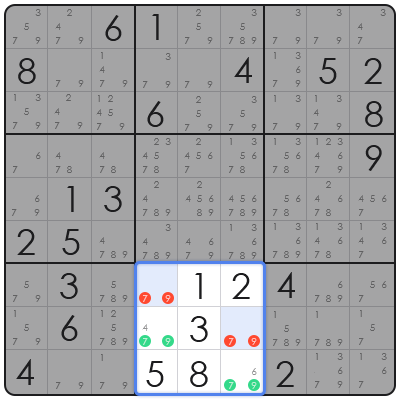
How to win expert Sudoku represents the apex of logic-based puzzle-solving, demanding not just basic numerical placement but sophisticated deduction and pattern recognition. This complex challenge transcends simple recreational activity, serving as a rigorous mental exercise that hones critical thinking and problem-solving skills akin to high-level strategic planning in various professional fields. Its intricate design inherently solves the problem of mental stagnation, offering a dynamic platform for cognitive development. Based on structural analysis, expert Sudoku grids are meticulously crafted to resist casual brute-force attempts, requiring players to employ advanced techniques beyond simple singles. The significance of mastering this level lies in its ability to cultivate a highly disciplined approach to complex problems, where every decision is interconnected and propagates consequences throughout the entire system. From a framework perspective, achieving proficiency in expert Sudoku involves internalizing a hierarchy of solving methods, from basic candidates to advanced chaining and forcing techniques. In practical application, the challenge of expert Sudoku mirrors real-world scenarios where readily apparent solutions are scarce, and success hinges on deep analysis and systematic elimination of possibilities. The primary problem it addresses is the common intellectual complacency that can arise from repetitive, predictable tasks; expert Sudoku continually pushes the boundaries of logical inference, forcing a continuous adaptation of strategy. This article will delve into the core methodologies and strategic frameworks essential for consistently conquering the most formidable Sudoku puzzles.
The Foundational Logic of Expert Sudoku: Beyond Basic Elimination
Understanding how to win expert Sudoku begins with a solid grasp of its foundational rules, which dictate that every row, column, and 3×3 block must contain the numbers 1 through 9 exactly once. While this seems straightforward, expert-level puzzles deliberately obscure obvious placements, requiring a multi-layered approach to uncovering hidden relationships. Based on structural analysis, the grid becomes a complex web of interconnected constraints, where each number’s potential location is influenced by up to 26 other cells.
From a framework perspective, expert Sudoku relies heavily on candidate elimination, but at a much more advanced level than simpler puzzles. Players must meticulously track all possible numbers for each empty cell, creating a matrix of candidates that is then systematically reduced through various deductions. This intricate process transforms the grid from a simple number placement task into a sophisticated exercise in combinatorial logic and conditional probability, demanding precision and foresight.
In practical application, recognizing the inherent structure of the 9×9 grid, subdivided into nine 3×3 blocks, is crucial. Each cell is part of one row, one column, and one block, forming a unique intersection that defines its possible values. Mastering expert Sudoku means not just seeing individual cells, but perceiving these interconnected sets as a single, dynamic system where a change in one cell can ripple through multiple others, thereby opening new deductions or confirming existing ones.
Advanced Candidate Techniques for Breakthroughs: Naked and Hidden Sets
Winning expert Sudoku often hinges on the ability to identify “Naked Sets,” which are groups of cells within a row, column, or block that share the same set of candidates, exclusively. For instance, if two cells in a row both only have candidates {1, 2}, then no other cell in that row can be 1 or 2, regardless of whether 1 or 2 is ultimately placed in either of those specific cells. Based on structural analysis, these sets act as powerful eliminators, swiftly reducing the complexity of the puzzle.
Equally critical are “Hidden Sets,” where a particular set of numbers (e.g., {3, 7}) can only appear in a specific set of cells (e.g., two cells) within a unit (row, column, or block), even if those cells have other candidates. From a framework perspective, identifying hidden sets requires a more comprehensive scan of candidates across a unit, often revealing numbers that were previously obscured by a multitude of other possibilities. This technique demands patient and meticulous observation, transforming seemingly intractable sections into solvable pathways.
In practical application, the ability to spot Naked and Hidden Pairs, Triples, and even Quadruples is a cornerstone of expert Sudoku strategy. These techniques are fundamental because they allow for the elimination of candidates from other cells within the unit, often leading to immediate placements or simplifying other deductions. Cultivating this observational skill is paramount for advancing beyond intermediate puzzles and effectively tackling expert-level challenges.
Strategic Grid Analysis and Pattern Recognition: X-Wings and Swordfish
To truly win expert Sudoku, players must master pattern recognition, particularly techniques like “X-Wings.” An X-Wing occurs when a candidate number is restricted to exactly two cells in two different rows, and those cells form a rectangle (share the same two columns). Based on structural analysis, this pattern allows for the elimination of that candidate from all other cells in those two columns, outside of the specific rows involved. It’s a powerful tool for systematic candidate reduction across the entire grid.
From a framework perspective, “Swordfish” is an even more advanced pattern, an extension of the X-Wing logic involving three rows and three columns. If a candidate number is restricted to two or three cells in three different rows, and these cells collectively span exactly three columns, then that candidate can be eliminated from all other cells in those three columns. Identifying Swordfish requires a more expansive view of the grid and the interaction between multiple units.
In practical application, recognizing these complex patterns demands significant practice and a systematic approach to scanning the grid for specific configurations of candidates. These strategies are not always immediately obvious and often require mental visualization or careful annotation of candidate numbers. Mastering X-Wings, Swordfish, and their more elaborate cousins like Jellyfish is a hallmark of an expert Sudoku player, providing the breakthroughs needed when simpler methods fail.
Step-by-Step Application of Advanced Techniques: A Methodical Approach
Step 1: Initial Candidate Marking. Begin by filling in all possible candidate numbers for every empty cell. This initial exhaustive scan provides the baseline data for all subsequent deductions. Based on structural analysis, this crucial first step transforms the puzzle from an intuitive guess-and-check to a data-driven logical process.
Step 2: Apply Basic Elimination and Singles. Systematically scan for Naked Singles (a cell with only one candidate) and Hidden Singles (a candidate that can only go in one cell within a unit). Repeat this process until no more singles can be found. This clears out obvious placements, simplifying the grid for advanced techniques.
Step 3: Identify Naked/Hidden Pairs, Triples, and Quadruples. Scrutinize rows, columns, and blocks for these candidate sets. Eliminating these candidates from other cells within their respective units often yields significant progress. From a framework perspective, this is where the puzzle begins to reveal its deeper structural connections, demanding careful, precise observation across multiple cells.
Step 4: Search for X-Wings and Swordfish. Once simpler techniques are exhausted, methodically look for these advanced patterns across rows and columns. This step requires visualizing candidate interactions across the entire grid, potentially involving multiple rows and columns simultaneously. This is where truly expert players differentiate themselves.
Step 5: Employ Finned X-Wings/Swordfish or Jellies (If Necessary). For the most stubborn expert puzzles, even more complex patterns like Finned X-Wings or Jellies might be required. These are variations that account for “extra” candidates, extending the logic of the basic patterns. This level of deduction demands exceptional patience and a very keen eye for intricate candidate relationships.
Step 6: Utilize Forcing Chains (AIC) or Guess-and-Check with Backtracking. As a last resort, particularly in highly complex scenarios, consider using “Alternating Inference Chains” or a controlled guess-and-check method, meticulously noting the starting point and being prepared to backtrack if the guess leads to a contradiction. In practical application, this is a high-risk, high-reward strategy that should be approached with caution and careful record-keeping.
Comparative Analysis: Expert Sudoku’s Unique Demands
When comparing how to win expert Sudoku with other popular logic puzzles, its distinct demands become clear. Unlike Kakuro, which relies on arithmetic sums, or Killer Sudoku, which adds cage sums, expert Sudoku purely leverages positional logic and elimination within a strict 9×9 grid. Its “Complexity” stems from the sheer number of hidden logical relationships rather than additional rules, demanding a deeper understanding of combinatorial possibilities.
From an “Efficiency” standpoint, solving expert Sudoku often involves a slower, more methodical pace than a puzzle like a Crossword, where pattern recognition and vocabulary can provide quick bursts of progress. Expert Sudoku requires sustained, focused attention and a sequential application of deductive rules. Its “Cost” (intellectual investment) is high in terms of learning advanced techniques, but the payoff is a profound enhancement of analytical reasoning.
The “Frequency” of encountering genuinely challenging deductions is consistently higher in expert Sudoku compared to simpler variants. Where a basic Sudoku might offer several naked singles per scan, an expert grid often presents long stretches of apparent deadlock, requiring the solver to dig much deeper into patterns like X-Wings or even advanced chaining. This constant need for higher-level deduction is what defines the expert experience.
Common Pitfalls and Professional Solutions in Expert Sudoku
Pitfall 1: Over-reliance on Brute Force Guessing. A common mistake when confronted with a seemingly intractable expert Sudoku is to resort to guessing without a solid logical basis. This almost always leads to errors and frustration, as complex puzzles are designed to punish random choices. Based on structural analysis, guessing introduces multiple potential points of failure, making backtracking incredibly difficult and time-consuming.
Solution: Cultivate patience and systematically re-examine the grid for missed candidate eliminations or advanced patterns. Often, a fresh perspective or a structured check of rows, columns, and blocks for Naked/Hidden sets or X-Wings will reveal a breakthrough. From a framework perspective, consistent application of known strategies is always superior to speculative moves.
Pitfall 2: Incomplete Candidate Tracking. Many expert Sudoku puzzles become difficult because solvers fail to meticulously track all possible candidates for every empty cell. Missing even one potential number can lead to incorrect deductions or prevent the identification of crucial patterns like Naked/Hidden Triples or X-Wings. In practical application, an incomplete candidate list is a recipe for stalled progress.
Solution: Employ a clear and consistent method for annotating candidates, whether digitally or with pencil marks. Regularly review and update candidates as numbers are placed, ensuring that the candidate list for each cell is always current and accurate. A disciplined approach to candidate management is non-negotiable for expert-level success.
Pitfall 3: Tunnel Vision. Focusing too intensely on one small section of the grid can cause solvers to miss critical interactions and patterns that span across multiple rows, columns, or blocks. Expert Sudoku often requires a holistic view, where a deduction in one corner can influence possibilities in another. Based on structural analysis, a narrow focus can lead to overlooking the very interconnectedness that defines these puzzles.
Solution: Regularly step back and scan the entire grid, looking for overarching patterns rather than just individual cell deductions. Systematically check each row, column, and 3×3 block for advanced techniques. From a framework perspective, maintaining a macro-level perspective while executing micro-level deductions is key to uncovering the deep logic embedded in expert puzzles.
Frequently Asked Questions (FAQ) on How to Win Expert Sudoku
Q1: What’s the biggest difference between hard and expert Sudoku?
A1: Expert Sudoku relies heavily on complex patterns like X-Wings, Swordfish, and chaining, whereas hard Sudoku can often be solved with basic candidate elimination and Naked/Hidden Pairs.
Q2: Is guessing ever a valid strategy in expert Sudoku?
A2: Generally no. True expert Sudoku is designed to be solvable purely by logic. Guessing, if used, should be a controlled “forcing chain” (Alternating Inference Chain) with explicit backtracking, not random.
Q3: How long does it typically take to solve an expert Sudoku?
A3: Completion time varies greatly, from 30 minutes to several hours, depending on the puzzle’s complexity and the solver’s experience. The focus is on systematic deduction, not speed.
Q4: Are there specific tools that help with expert Sudoku?
A4: Pencil marks (candidate notations) are essential. Digital solvers allow for easy candidate tracking and often highlight patterns, but the mental exercise is crucial for developing skills.
In conclusion, how to win expert Sudoku is not merely about numerical placement; it is a profound exercise in advanced logical deduction, pattern recognition, and disciplined problem-solving. Based on structural analysis, mastering these puzzles necessitates moving beyond basic singles to embrace sophisticated techniques such as Naked/Hidden Sets, X-Wings, and methodical candidate tracking. From a framework perspective, the consistent application of these strategies, coupled with patience and a global view of the grid, transforms seemingly impossible challenges into conquerable feats. The strategic value of engaging with expert Sudoku extends far beyond the puzzle itself, honing cognitive abilities that are highly transferable to complex analytical tasks in any professional domain, signifying a continuous pursuit of intellectual precision and resilience.