

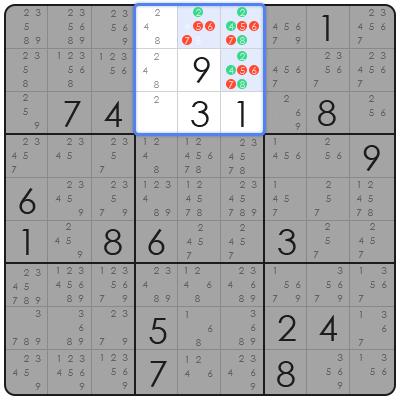
Working a Sudoku puzzle is more than just a pastime; it represents a fundamental exercise in systematic logic and deductive reasoning, skills highly valued across professional domains. This number-placement puzzle challenges individuals to fill a 9×9 grid, divided into nine 3×3 subgrids, with digits from 1 to 9. The overarching problem it solves is the sharpening of critical thinking and pattern recognition abilities, essential for navigating complex data and strategic planning in any analytical field. From a framework perspective, the enduring appeal of Sudoku lies in its clear, immutable rules, which paradoxically unlock an expansive landscape of problem-solving techniques. Unlike many subjective challenges, a Sudoku puzzle always has a unique solution discoverable through logical steps, never requiring guesswork. This characteristic makes it an ideal training ground for developing methodical approaches to ambiguous situations, fostering patience and meticulous attention to detail. In practical application, the ability to decompose a large problem into smaller, manageable constraints and then systematically resolve each element mirrors real-world analytical tasks. Sudoku cultivates a disciplined mindset, teaching practitioners to identify initial certainties, build upon them with successive deductions, and maintain an organized thought process. This article delves into the core mechanics and advanced strategies for how to work a sudoku puzzle, providing a definitive guide for leveraging this mental exercise to enhance professional cognitive acumen.
Deconstructing the Sudoku Grid: Core Principles and Constraints
Working a Sudoku puzzle fundamentally involves filling a 9×9 grid with digits such that each column, each row, and each of the nine 3×3 subgrids contains all of the digits from 1 to 9. This direct answer defines the core principle: uniqueness within three distinct constraint types – row, column, and block. Each cell within the grid is part of one row, one column, and one 3×3 block, creating a network of interdependencies that dictate possible digit placements.
Based on structural analysis, the initial configuration of a Sudoku grid provides a set of ‘givens’—pre-filled cells that serve as anchors for all subsequent deductions. The solver’s task is to use these givens to eliminate possibilities for other cells. For instance, if a row already contains the digit ‘5’, no other cell in that row can contain ‘5’. This simple rule forms the bedrock of candidate elimination, which is the primary mechanism for progressing through a puzzle.
Understanding the interaction between these constraints is paramount. A digit placed in a cell immediately impacts the valid candidates for 20 other cells (8 in its row, 8 in its column, and 4 in its block, excluding itself and cells already accounted for by row/column). This cascading effect of deduction necessitates a systematic approach, where each confirmed digit narrows down the possibilities elsewhere, gradually revealing the puzzle’s unique solution.
Systematic Approach to how to work a sudoku puzzle: A Guided Methodology
A systematic approach to working a Sudoku puzzle relies on iterative deduction and candidate elimination, transforming seemingly complex grids into solvable sequences. The first step involves ‘scanning,’ where the solver methodically checks each row, column, and 3×3 block for ‘single candidates’—cells where only one digit can logically be placed. This initial pass often reveals several immediate solutions, laying a solid foundation.
Subsequently, focus shifts to ‘hidden singles’ and ‘naked pairs/triples.’ A hidden single occurs when a digit can only be placed in one specific cell within a row, column, or block, even if that cell has multiple other potential candidates. Naked pairs or triples involve two or three cells in a constraint (row, column, or block) that can only contain the same two or three digits, regardless of their order. Identifying these patterns allows for the elimination of those digits as candidates from other cells within the same constraint.
In practical application, advanced techniques such as ‘pointing pairs/triples’ and ‘box/line reduction’ further streamline the process. Pointing pairs occur when a digit is confined to two or three cells within a single row or column inside a 3×3 block, allowing that digit to be eliminated from other cells in that row or column outside the block. Conversely, box/line reduction involves a digit being confined to a single row or column within a block, meaning it can be eliminated from the rest of that row or column in other blocks. Mastering these methods significantly reduces the number of possibilities, accelerating the path to completion without resorting to guesswork.
An organized methodology often involves using pencil marks to denote all possible candidates for each empty cell. As digits are confirmed, these pencil marks are updated. This meticulous tracking is crucial for identifying the more complex patterns and ensuring accuracy throughout the solving process. Consistent re-evaluation of the grid after each confirmed digit is also vital, as new deductions become possible with every solved cell.
Comparative Analytical Frameworks: Sudoku vs. Other Logic Exercises
From a framework perspective, how to work a sudoku puzzle offers a distinct blend of deductive reasoning and spatial awareness when compared to other intellectual challenges like chess or traditional crossword puzzles. Sudoku’s ‘Complexity’ is rooted in its discrete constraints and the fixed number of possibilities, making it a finite problem with a singular, verifiable solution. This contrasts with chess, which presents exponential strategic complexity and open-ended outcomes based on opponent interaction, or crosswords, which rely on linguistic knowledge and wordplay.
Regarding ‘Cognitive Skill Transferability,’ Sudoku excels in honing systematic thinking, error checking, and the ability to work backward from constraints—skills directly applicable to data analysis, debugging code, or project management. While chess develops long-term strategic planning and foresight, and crosswords enhance vocabulary and general knowledge, Sudoku uniquely emphasizes logical elimination and pattern identification within a highly structured environment. This makes its lessons particularly resonant for roles requiring meticulous attention to detail and robust logical validation.
In terms of ‘Accessibility,’ Sudoku has a low barrier to entry, requiring no specialized knowledge beyond basic numeracy and an understanding of its simple rules, unlike the steep learning curve of chess or the cultural and linguistic dependencies of crosswords. This universal accessibility ensures its broad appeal as a mental exercise, making it an efficient tool for cognitive training across diverse demographics and professional backgrounds, with minimal ‘Cost’ beyond the puzzle itself.
Common Pitfalls and Professional Strategies for Sudoku Success
Based on structural analysis, common pitfalls in working a Sudoku puzzle often stem from premature guessing or insufficient systematic scanning, leading to errors that propagate through the grid. One frequent mistake is ‘tunnel vision,’ focusing too intensely on one area of the grid while neglecting simpler deductions available elsewhere. This can lead to missed opportunities for quicker solves or unnecessary complexity.
A second common error is the failure to thoroughly update candidate lists after placing a digit. If pencil marks are not meticulously revised, incorrect assumptions about remaining possibilities will persist, leading to contradictions further down the line. This lack of rigorous process introduces noise into the deductive system, making the puzzle appear intractable.
Professional advice to avoid these pitfalls includes adopting a disciplined, multi-directional scanning approach—consistently checking rows, columns, and blocks for single candidates. Always verify each placed digit by ensuring it does not violate the rules for its row, column, and block. From a framework perspective, implementing a ‘pause and re-evaluate’ strategy, especially when feeling stuck, can break tunnel vision. Taking short breaks allows for a fresh perspective, often revealing overlooked deductions and preventing the frustration that can lead to impulsive guesswork. Meticulous organization of pencil marks is also non-negotiable for complex puzzles.
Frequently Asked Questions on how to work a sudoku puzzle
Q: What is the primary benefit of working Sudoku puzzles? A: The primary benefit is the enhancement of logical reasoning, systematic problem-solving, and critical thinking skills, which are transferable to many professional and daily life challenges.
Q: Are there advanced techniques for faster Sudoku solving? A: Yes, advanced techniques include ‘pointing pairs/triples,’ ‘box/line reduction,’ and ‘X-Wing’ strategies, which allow for more complex candidate eliminations and faster progression.
Q: Can Sudoku improve cognitive function? A: Studies suggest that regular engagement with logic puzzles like Sudoku can help maintain cognitive function, improve memory, and enhance focus and concentration, especially as one ages.
Q: What if I get stuck on a Sudoku puzzle? A: If stuck, re-scan the entire grid for simple candidates, re-check previous placements for errors, and consider taking a short break to approach the puzzle with a fresh perspective.
Q: Is guessing ever acceptable in Sudoku? A: No, true Sudoku solving relies solely on logical deduction. Guessing can lead to errors that are difficult to backtrack and goes against the puzzle’s fundamental principles of certainty.
In conclusion, how to work a sudoku puzzle transcends mere entertainment, serving as a powerful, accessible tool for developing and refining crucial cognitive abilities. Its structured environment provides a perfect laboratory for practicing systematic deduction, meticulous error checking, and pattern recognition—skills that are invaluable in any analytical or problem-solving role. The long-term strategic value lies in its consistent ability to challenge and expand an individual’s logical acumen, preparing them for the intricate demands of professional life. As industries continue to prioritize critical thinking and data-driven decision-making, the enduring relevance of engaging with such fundamental logic exercises remains undeniably clear, fostering a disciplined mindset for future innovations and complex problem resolution.