

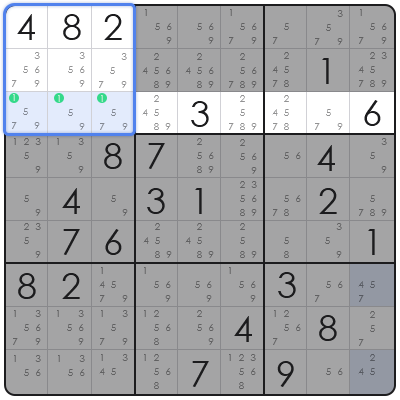
Solving Sudoku, at its core, involves a sophisticated application of combinatorial logic and pattern recognition, a process that can be approached through various manual and computational strategies. This classic number puzzle, originating in the late 1970s and gaining widespread popularity in the 2000s, presents a 9×9 grid to be filled with digits so that each column, each row, and each of the nine 3×3 subgrids contains all of the digits from 1 to 9. The challenge lies in deducing the correct placement of numbers based on a set of initial clues, demanding methodical thinking and an understanding of logical constraints. From a framework perspective, how can we solve Sudoku is not merely about guessing but about systematically eliminating possibilities and identifying certainties. The primary problem it solves, beyond recreational engagement, is serving as an excellent pedagogical tool for developing deductive reasoning, problem-solving skills, and even an entry point into algorithmic thinking. For computational analysis, it provides a well-defined constraint satisfaction problem that can be tackled with various algorithms, demonstrating the power of structured approaches to complex puzzles. In practical application, the methodologies for solving Sudoku range from intuitive human techniques, such as scanning and cross-hatching, to advanced computer algorithms like backtracking and constraint propagation. This article will delve into the underlying logic, strategic implementation, and comparative efficacy of these methods, providing a comprehensive guide for anyone seeking to master the art and science of Sudoku resolution. Based on structural analysis, understanding these techniques can enhance cognitive abilities and offer insights into broader problem-solving paradigms across different fields.
Technical Breakdown: The Foundational Logic of Sudoku Solving
The foundational logic of how we solve Sudoku rests on three fundamental rules: each row must contain digits 1-9 exactly once, each column must contain digits 1-9 exactly once, and each of the nine 3×3 subgrids (blocks) must contain digits 1-9 exactly once. This triple constraint system forms the basis for all deductive strategies, whether performed manually or computationally. The state of any given cell is dependent on the values of cells in its row, column, and block, creating a highly interconnected dependency graph.
Based on structural analysis, two primary types of deductions emerge: direct deduction and conditional deduction. Direct deduction involves immediately placing a number when it is the only possible candidate for a cell (Single Candidate) or when a number can only be placed in one specific cell within a row, column, or block (Hidden Single). From a framework perspective, these are low-complexity operations that significantly reduce the search space. More advanced direct deductions include Naked Pairs/Triples/Quads and Hidden Pairs/Triples/Quads, where sets of numbers or cells mutually constrain each other.
Algorithmic approaches often formalize these deductions. Backtracking is a common method, where the algorithm attempts to place a number in an empty cell and recursively tries to solve the rest of the puzzle. If a contradiction is met, it backtracks and tries a different number. Constraint propagation, on the other hand, involves systematically eliminating impossible candidates from cells based on newly placed numbers, propagating these changes throughout the grid to reveal further certainties. This iterative process is a cornerstone of efficient automated solvers.
Step-by-Step Implementation: Executing Sudoku Solving Strategies
Executing Sudoku solving strategies begins with scanning the grid for immediate certainties, often referred to as “cross-hatching” or “scanning for singles.” In practical application, this involves selecting a digit (say, ‘1’) and visually scanning each row, column, and 3×3 block to identify any cells where ‘1’ is the only possible candidate. This process is repeated for all digits from 1 to 9, and for all empty cells, marking potential candidates in small numbers (pencil marks) within each cell. This initial sweep significantly reduces the complexity of the puzzle.
Next, based on structural analysis of the remaining candidates, more advanced techniques are applied. Look for “Naked Pairs” or “Hidden Singles.” A Naked Pair occurs when two cells in the same row, column, or block have only two identical candidates (e.g., both can only be 3 or 5); these two candidates can then be eliminated from all other cells in that row, column, or block. A Hidden Single, conversely, is when a candidate number appears only once among all candidates in a particular row, column, or block, meaning it *must* go in that specific cell, even if that cell has other candidates.
For more challenging puzzles, recursive strategies like “What If” scenarios or advanced algorithmic techniques come into play. A “What If” approach involves tentatively placing a candidate number in a cell and following the logical consequences. If this leads to a contradiction (e.g., a number appearing twice in a row), then the initial assumption was incorrect, and that candidate can be eliminated. This mirrors a simplified form of a backtracking algorithm, where choices are made, consequences are evaluated, and if invalid, the path is abandoned.
Finally, after applying direct deduction and conditional strategies, the grid should gradually fill. Persistent application of these techniques, coupled with diligent candidate tracking, is paramount. From a framework perspective, the iterative nature of applying these rules and re-evaluating the grid state is crucial for successful resolution.
Comparative Analysis: Manual vs. Algorithmic Sudoku Solving
How can we solve Sudoku effectively involves understanding the distinct characteristics of manual human solving versus automated algorithmic approaches. Manual solving, while rewarding for cognitive development, is often characterized by higher complexity in execution, moderate efficiency dependent on human skill, and zero direct financial cost. It excels in pattern recognition and intuitive leaps but is prone to human error and can be slow for difficult puzzles.
From a framework perspective, algorithmic solutions, such as those employing backtracking or constraint propagation, offer superior efficiency and near-zero error rates once correctly implemented. Their complexity lies primarily in the initial programming and optimization, with the execution phase being highly automated and rapid. The cost can range from free (open-source implementations) to significant (development of highly optimized, custom solvers). These systems demonstrate high frequency of application in research and competitive programming scenarios.
Comparing these approaches: Manual methods prioritize the journey of logical deduction, enhancing human cognitive abilities. They involve a low “development cost” but potentially high “execution cost” in terms of time and mental effort. Algorithmic solutions, however, invert this. They incur an upfront “development cost” (programming) but then offer extremely low “execution cost” and unparalleled speed for solving even the most complex puzzles. The choice between them depends on the objective: personal growth versus rapid, infallible resolution.
Common Pitfalls and Professional Solutions in Sudoku Resolution
A frequent mistake in how we solve Sudoku manually is inaccurate “pencil marking” or candidate tracking. This oversight can lead to incorrect deductions, dead ends, and frustration, often requiring a full restart of the puzzle. The professional solution is to adopt a systematic and meticulous approach to marking all possible candidates for each empty cell, double-checking entries, and updating candidates diligently as numbers are placed. Based on structural analysis, maintaining a clean and accurate candidate list is the single most important factor for complex puzzles.
Another common pitfall is falling into a “guessing trap” too early without exhausting all logical deductions. While some advanced human strategies or algorithmic approaches (like backtracking) involve making educated guesses, relying on pure chance prematurely often leads to errors and inefficient problem-solving. From a framework perspective, the solution is to prioritize deterministic logical steps first, such as singles, hidden singles, and pairs/triples, before resorting to trial-and-error. Only when no more direct deductions are apparent should conditional strategies be considered.
Finally, many solvers neglect the importance of focusing on high-density areas (rows, columns, or blocks with many filled cells) or highly constrained numbers (digits that appear frequently in the initial grid). This lack of strategic focus can make a puzzle seem harder than it is. In practical application, professional solvers recommend starting with these areas or numbers as they are more likely to yield immediate deductions and propagate solutions faster across the grid. This targeted approach minimizes unproductive scanning and maximizes the efficiency of each step.
Frequently Asked Questions About Sudoku Solving
**Q: What is the fastest way to solve Sudoku?**A: The fastest way to solve Sudoku for a human involves a combination of scanning for singles, identifying hidden and naked pairs/triples, and systematic elimination. Algorithmic solvers, using techniques like backtracking and constraint propagation, are significantly faster than any human.
**Q: Are all Sudoku puzzles solvable?**A: Yes, all valid Sudoku puzzles are designed to have at least one unique solution. Puzzles with multiple solutions are considered ill-posed. If a puzzle has no solution, it means the initial setup contained a contradiction.
**Q: What is the hardest Sudoku strategy?**A: From a framework perspective, the hardest human strategies often involve advanced ‘chaining’ techniques like X-Wing, Swordfish, and Jellyfish, or highly complex ‘What If’ scenarios that require tracking multiple hypothetical paths simultaneously.
**Q: Can AI solve Sudoku?**A: Absolutely. AI and computer programs excel at solving Sudoku using algorithms such as backtracking, dancing links (Knuth’s Algorithm X), and various forms of constraint satisfaction problem solvers. They can resolve puzzles in milliseconds.
**Q: Is Sudoku good for your brain?**A: Yes, based on structural analysis, playing Sudoku regularly can enhance logical thinking, memory, concentration, and problem-solving skills. It engages critical areas of the brain involved in deductive reasoning.
In conclusion, how can we solve Sudoku is a multifaceted challenge that bridges recreational logic with sophisticated computational principles. Whether approached through meticulous manual deductions or by leveraging the speed and efficiency of algorithms, the core lies in understanding and applying the fundamental constraints of the grid. From a framework perspective, mastering Sudoku solving techniques offers not only a satisfying intellectual pursuit but also cultivates valuable analytical skills transferable to diverse problem domains. The transition from simple pattern recognition to complex conditional logic showcases the elegance of structured problem-solving. The continuous evolution of automated solvers also highlights the ongoing advancements in artificial intelligence and constraint satisfaction, pushing the boundaries of what is computationally feasible. The strategic value of engaging with Sudoku, therefore, extends beyond mere pastime, serving as a microcosm for developing rigorous, systematic thinking essential in any professional field.