

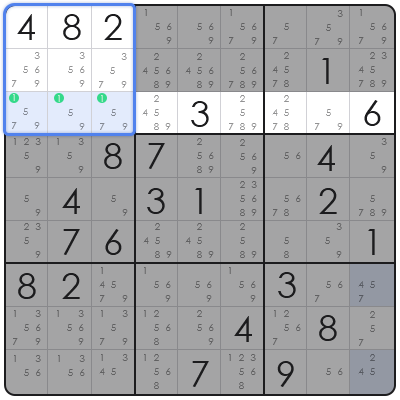
The enduring popularity of Sudoku puzzles belies the intricate computational and logical processes required to construct them. Far from being random arrangements of numbers, each valid Sudoku is a precisely engineered grid designed to offer a unique, solvable challenge to enthusiasts worldwide. Understanding how do they create sudoku puzzles unveils a fascinating intersection of mathematics, computer science, and recreational design. At its core, Sudoku generation involves the intelligent application of combinatorics and constraint satisfaction. The objective is not merely to produce a grid that adheres to the fundamental rules of number placement, but to craft an experience where the solver progresses through logical deductions, avoiding guesswork. This meticulous approach is what distinguishes a well-designed puzzle from a mere collection of numbers. The primary problem that sophisticated Sudoku generation addresses is the need for an endless supply of high-quality puzzles, each with a guaranteed unique solution and a discernible difficulty level. In an age where digital distribution and daily challenges are paramount, automated and robust methods for how do they create sudoku puzzles are indispensable for maintaining player engagement and the integrity of the game.
The Core Principles of Sudoku Puzzle Generation
Sudoku puzzle generation fundamentally relies on combinatorics and constraint satisfaction, ensuring each row, column, and 3×3 block contains digits 1-9 without repetition. From a framework perspective, the foundational element is a fully solved 9×9 grid, which serves as the blueprint for the puzzle. Without a complete, valid grid, the process of creating a solvable puzzle with hidden clues is impossible.
Based on structural analysis, two main paradigms exist: starting with a full grid and removing numbers, or attempting to build a puzzle from scratch by placing clues. The former, more common and reliable method, ensures that the underlying structure is always sound. The complexity arises in the judicious selection of numbers to remove, as each removal must preserve the grid’s unique solvability, transforming it into a compelling challenge rather than an unsolvable maze.
The most critical principle in how do they create sudoku puzzles is guaranteeing a unique solution. A Sudoku puzzle without a single, unambiguous path to completion undermines the entire solving experience. This necessitates robust validation mechanisms at every step of the generation process, often involving advanced backtracking algorithms or dedicated satisfiability solvers to confirm uniqueness after each number removal.
Algorithmic Approaches to Sudoku Creation
Algorithmic approaches to Sudoku creation typically involve either a generation-and-removal strategy or a direct construction method, both leveraging computational logic to ensure puzzle integrity and diversity. The generation-and-removal method is by far the most prevalent, beginning with the creation of a fully solved Sudoku grid, which is itself a non-trivial algorithmic task often performed using recursive backtracking.
In practical application, once a complete grid is established, numbers are iteratively removed from cells. For each removal, a Sudoku solver is executed to determine if the remaining clues still lead to a unique solution. This iterative process continues until a desired number of clues is reached, or no further numbers can be removed without compromising uniqueness. The order and choice of cells for removal are crucial for controlling the puzzle’s eventual difficulty and structure.
Advanced techniques for how do they create sudoku puzzles also incorporate metrics for difficulty assessment. These metrics often analyze the ‘solvability chain’ of a puzzle – the types and sequences of logical deductions a human solver would need to employ. Puzzles requiring more complex logical steps (e.g., hidden singles, naked pairs, X-wing strategies) are rated as more difficult, guiding the number removal process to achieve specific challenge levels.
A Step-by-Step Guide to Constructing a Sudoku
Constructing a Sudoku puzzle involves a multi-stage process, starting with a fully solved grid and iteratively removing cells while validating uniqueness and solvability at each juncture. This method, based on a ‘reverse engineering’ approach, is favored for its reliability in producing valid puzzles.
**Step 1: Generate a Complete, Valid Sudoku Grid.** The initial step requires creating a 9×9 grid where every row, column, and 3×3 block contains the digits 1-9 exactly once. This is typically achieved using a recursive backtracking algorithm: fill cells one by one, ensuring valid placement according to Sudoku rules. If a number cannot be placed, backtrack and try a different number. Once a full grid is achieved, this serves as the solution for the puzzle being created.
**Step 2: Iteratively Remove Numbers and Validate Uniqueness.** From the complete grid, select a cell and remove its number. Immediately after removal, employ a Sudoku solver algorithm to check if the partially filled grid still possesses a unique solution. If it does, keep the number removed; if not, restore the number and try removing a different cell. This step is repeated until a predefined number of clues remain or no more numbers can be safely removed without violating the unique solution constraint. The order of cell removal can be randomized or strategically chosen to influence difficulty.
**Step 3: Determine and Refine Difficulty.** The final set of clues determines the puzzle’s difficulty. Automated systems often use various heuristics to categorize difficulty, such as counting the number of hidden singles, naked pairs, or other advanced solving techniques required. If a puzzle is too easy or too hard, the generation process might backtrack to Step 2 to add or remove clues, striving for the desired challenge level based on the analysis of its solving path.
Comparing Sudoku Generation Methods
Comparing how do they create sudoku puzzles methods reveals distinct trade-offs in complexity, efficiency, and the quality of puzzles produced, influencing their suitability for different applications within the puzzle design industry. From a framework perspective, two prominent algorithmic strategies stand out: the Fill-and-Remove approach and direct Constraint Programming.
The Fill-and-Remove method, discussed previously, involves first generating a full grid and then removing cells while maintaining uniqueness. Constraint Programming, on the other hand, defines the Sudoku rules as constraints and then uses a solver to find a configuration of clues that satisfies these constraints and leads to a unique solution. Manual design, while less frequent for mass production, offers unique insights into human creativity in puzzle construction. Based on structural analysis, their characteristics differ significantly:
| Feature | Fill-and-Remove Method | Constraint Programming | Manual Design (Human-Centric) |
|————————–|———————————————-|—————————————-|—————————————|
| **Complexity (Implementation)** | Moderate (backtracking for grid, solver for uniqueness) | High (requires advanced solver libraries) | Extremely High (human ingenuity, iterative testing) |
| **Efficiency (Generation Speed)** | Varies; can be slow due to repeated uniqueness checks | Generally Fast (highly optimized solvers) | Very Slow (iterative human trial and error) |
| **Control over Difficulty** | Good (by clue count and removal strategy) | Excellent (by defining specific constraint patterns) | Excellent (artist’s deliberate choice of strategies) |
| **Puzzle Diversity** | High (randomness in initial grid and removal) | High (can explore diverse solution spaces) | Moderate (limited by designer’s style) |
In practical application, while Constraint Programming offers superior control and efficiency for generating vast numbers of puzzles with specific difficulty profiles, the Fill-and-Remove method remains popular for its conceptual simplicity and robust output when combined with efficient uniqueness solvers. Manual design, though labor-intensive, often yields puzzles with a unique ‘flavor’ or aesthetic not easily replicated by algorithms.
Common Challenges and Solutions in Puzzle Design
In the realm of how do they create sudoku puzzles, common pitfalls often revolve around ensuring unique solutions, managing difficulty, and avoiding trivial or symmetrical patterns that diminish the solving experience. These challenges require thoughtful algorithmic design and rigorous testing.
**Pitfall 1: Generating Puzzles with Multiple Solutions.** A frequent mistake is failing to guarantee a single, unique solution. If a puzzle has more than one way to be solved, it loses its challenge and integrity. The solution lies in implementing robust uniqueness checking after *every* number removal during the generation phase. This typically involves running a Sudoku solver on the partial grid and verifying that it finds exactly one solution. Any removal that leads to multiple solutions must be undone, and an alternative cell considered.
**Pitfall 2: Inconsistent or Uncalibrated Difficulty.** Puzzles can be either too easy, offering no challenge, or too hard, requiring guessing. From a framework perspective, this means the generated difficulty doesn’t match the intended target. The solution involves integrating sophisticated difficulty metrics into the generation algorithm. These metrics simulate human solving strategies and rank puzzles based on the complexity of the logical steps required. This allows the generator to fine-tune clue placement and density to achieve specific difficulty targets, often through iterative refinement.
**Pitfall 3: Trivial or Undesirable Patterns.** Some generated puzzles might be solvable purely by scanning, or exhibit overly simplistic symmetry that makes them feel uninspired. Based on structural analysis, this can happen if the number removal is too random or lacks strategic consideration. A professional solution involves adding aesthetic constraints or post-processing steps. This could include favoring asymmetrical clue distributions, ensuring a minimum number of clues in each block, or even pattern recognition to avoid common ‘easy’ setups, thereby enhancing the puzzle’s intrinsic appeal and forcing more diverse solving techniques.
Frequently Asked Questions about Sudoku Creation
Understanding how do they create sudoku puzzles often involves addressing key queries regarding algorithms, uniqueness, and practical generation techniques that impact the puzzle design industry.
**Q1: How is a Sudoku puzzle guaranteed to have only one solution?** A: Uniqueness is typically guaranteed by iteratively removing numbers from a complete grid and, after each removal, running a dedicated solver that confirms only one path leads to the original solution. If multiple solutions are found, the removal is reverted.
**Q2: What is the minimum number of clues a Sudoku can have for a unique solution?** A: Empirically, 17 clues are widely believed to be the minimum number required for a standard 9×9 Sudoku to have a unique solution, though this has not been mathematically proven for all possible grids.
**Q3: Can Sudoku puzzles be created manually?** A: Yes, skilled puzzle designers do create Sudoku puzzles by hand, meticulously placing numbers and verifying uniqueness. However, this is an extremely time-consuming and labor-intensive process compared to algorithmic generation.
**Q4: How do they vary the difficulty of Sudoku puzzles?** A: Difficulty is primarily varied by controlling the number and strategic placement of initial clues. Fewer clues, or clues placed to obscure direct deductions, generally lead to higher difficulty, requiring more complex logical steps to solve.
**Q5: What programming languages are commonly used to generate Sudoku?** A: Python, Java, C++, and JavaScript are popular choices due to their strong support for algorithms, data structures, and the ease of implementing backtracking and constraint satisfaction solvers required for Sudoku generation.
The sophisticated process of how do they create sudoku puzzles is a testament to the elegant interplay between mathematical logic and computational power. What appears to be a simple number game is, in reality, a product of meticulously designed algorithms and rigorous validation. This deep dive into the structural analysis and algorithmic underpinnings reveals that the generation of Sudoku puzzles is not merely about arranging numbers, but about crafting intellectually stimulating challenges that continue to captivate minds globally, solidifying its strategic value in the realm of cognitive engagement and puzzle design.